



Ninety Years of Alaska, and Fishe Is Here for It
There are a few places where Alaska seems to gather all at once.
The smell of fair food drifts across the midway. A cabbage is large enough to need its own transportation plan. Kids lean over livestock pens. Music carries across the grounds. Artists, farmers, makers, families, old friends and visitors from Outside all end up wandering the same paths beneath the mountains.
The Alaska State Fair is one of those places.
And this year feels especially meaningful. The 2026 Alaska State Fair celebrates its 90th anniversary, and Fishe is thrilled to be part of it with a booth in Palmer—back among the people, stories, colors and outdoor spirit that make Alaska home.
The Fair runs August 21 through September 7, 2026, from 11 a.m. to 10 p.m., with the grounds closed Tuesdays and Wednesdays. This year’s commemorative theme says it perfectly: “Celebrating 90 years with you!” See current Alaska State Fair information.
In This Story
Why This Fair Feels Like Home for Fishe
Fishe was born in Alaska, shaped by women who spend their lives around water, weather, fish, mountains and the particular kind of adventure that comes with living here. That makes the Alaska State Fair more than another stop on an event calendar for us.
It feels personal.

The Fair celebrates many of the same things we love about Alaska: people who make things with their hands, people who grow things against the odds, families passing traditions between generations, communities gathering outside, and a healthy refusal to be boring.
Fishe has always believed outdoor gear can be functional without disappearing into the background. The Fair has a similar streak. Alaska does not do ordinary very well—and neither does a 138-pound cabbage.
Why this story is rooted in Alaska
We built this article from the Alaska State Fair’s own historical records and annual reporting, University of Alaska Fairbanks growing guidance, current 2026 Fair information, and Fishe’s live Shopify catalog and sales data.
It Started With Farmers, a New Community and One Ambitious Fair
To understand why the Alaska State Fair matters so much, you have to go back before Alaska was even a state.
In 1935, the federal government established the Matanuska Colony in the Valley during the Great Depression. More than 200 families arrived to build farms, homes and a new agricultural community around Palmer. The following March, members of Northland Pioneer Grange No. 1 decided the growing community needed a fair.
The Matanuska Valley Agricultural and Industrial Fair Association was formed, and organizers raised $1,200 by selling stock to get the first fair off the ground.
From September 4 through September 7, 1936, Palmer held its inaugural fair. Admission was $1 for adults. A season pass cost $2. Children under eight got in free.
And it already sounded wonderfully Alaskan. There was a fair queen, a baby show, boxing, horse racing, dancing, rodeo and baseball. Agricultural exhibits filled the grounds with cabbages, grain, carrots, onions, celery, peas and other crops grown by Valley farmers.
The first Fair also coincided with the opening of the Knik River Bridge, which connected Anchorage and the Valley by road. Combined with the Alaska Railroad, Palmer suddenly became far more accessible to visitors. In a very real sense, the Fair arrived at the same moment the Valley itself was becoming more connected to the rest of Alaska. Explore the Fair’s official history.
From a 23-Pound Cabbage to a 138-Pound World Record
Then came the cabbages.
In 1941, an Alaska Railroad manager put up a $25 prize for the largest cabbage. Valley grower Max Sherrod won with a 23-pounder, beginning one of the Fair’s most famous traditions.
By modern Alaska State Fair standards, 23 pounds would almost look petite.
In 2012, Palmer grower Scott Robb brought in a cabbage weighing 138.25 pounds, setting a world record. The Fair’s history is now so intertwined with enormous produce that giant cabbage growing has become part horticulture, part competition and part Alaska folklore.
And while Alaska’s famously long summer days help, there is more science—and a lot more work—behind the monsters. The University of Alaska Fairbanks Cooperative Extension explains that long summer daylight plays an important role, but genetics are even more important when growers are chasing enormous size. Serious competitors start plants months before spring truly arrives. Read UAF’s giant cabbage growing guide.
So no, you cannot simply leave a normal cabbage outside under the midnight sun and return to find a Volkswagen-sized vegetable. These growers earn it.
The tradition continues in 2026 with the 30th Annual Giant Cabbage Weigh-Off on September 4.
The Fair Grew Right Along With the Cabbages
The Fair temporarily paused from 1942 through 1946 during World War II. When it returned, it kept evolving.
Carnival rides arrived in 1950. An air show followed in 1951. By 1960, attendance had reached 30,000—and presidential candidate John F. Kennedy visited the Fair while campaigning.
In 1967, the Fair moved to its current location, drawing 72,000 visitors that year alone.
What began as a four-day agricultural gathering is now one of Alaska’s defining end-of-summer traditions. And the remarkable part is that agriculture never disappeared beneath all that growth.
There are bigger concerts now. Bigger rides. More food. More vendors. More entertainment. But walk toward the farm exhibits and the heart of the original 1936 Fair is still there.
“Grow something. Raise something. Make something. Share it with your neighbors.”
What Makes an Alaska State Fair Day So Much Fun?
Trying to explain the Alaska State Fair to someone who has never been is difficult because the best part is how many completely different Alaskas fit inside the same grounds.
You can watch livestock judging and then wander into an art exhibit. Eat something you absolutely did not need to deep-fry. Listen to a fiddle contest. Watch a lumberjack show. Find handwork, photography, quilts, beekeeping, flowers and giant crops.
And then things get wonderfully specific.
The 2026 highlights include a Worm Petting Zoo, livestock costume contest, Alaska State Fair Fiddle Contest, Alaska Native Arts Market, seal-skinning demonstrations and tasting, the Midnight Sun Great Pumpkin Weigh-Off, sourdough bread competition, acrobats, strongman events, rodeo, youth markets and the Giant Cabbage Weigh-Off. Browse the current Fair highlights.
There are big-name concerts and carnival rides, of course. But the strange little discoveries are often the best part—the thing you did not know was happening until you rounded a corner and suddenly found yourself watching a fiddle contest, an antique tractor pull or someone explaining how to grow a cabbage requiring two people and a stretcher to move.
“The strange little discoveries are often the best part.”
This Is Also Serious Business for Alaska
All the fun can make it easy to overlook how significant the Fair has become economically.
The Alaska State Fair operates as a local, self-sustaining nonprofit organization, with revenue from successful fairs and year-round activities reinvested into its facilities, programming and community work.
Its 2024 Annual Report measured a record $50.9 million economic impact. That same year, 370,485 visits were recorded at the Fair, along with 7,660 competitive exhibits. View the Alaska State Fair 2024 Annual Report.
The crowds kept growing. The 2025 Fair set another all-time attendance record at 388,798, while the 4-H/FFA Junior Market Livestock Auction generated $742,000 through the sale of 136 animals. Competitive exhibit entries climbed to 8,831.
Those numbers help tell the bigger story. Fair spending reaches well beyond an admission gate. Visitors travel to Palmer. They eat. They shop. They buy from small vendors. They attend concerts. They stay in the region. Local makers meet new customers. Agricultural producers gain visibility. Young people learn that the animal they spent months raising has genuine economic value.
The Fair creates a temporary marketplace on an enormous scale while keeping distinctly local traditions at its center.
Ninety Years Later, It Is Still About Community
Perhaps the best evidence of the Fair’s importance is that it has never become only one thing.
It is an agricultural show, but also a concert venue. It is a tourism draw, but also somewhere Palmer families have returned to for generations. It is a place to sell something, but also a place to enter your first pie, show your first animal, hang your first photograph or watch your kid compete.
It is large enough to create tens of millions of dollars in measured economic activity and still personal enough that a blue ribbon can mean everything to one family.
That tension between big Alaska and small-town Alaska is part of what makes the Fair special.

Come Find Fishe at the Fair
That is exactly why we are so excited to be there.
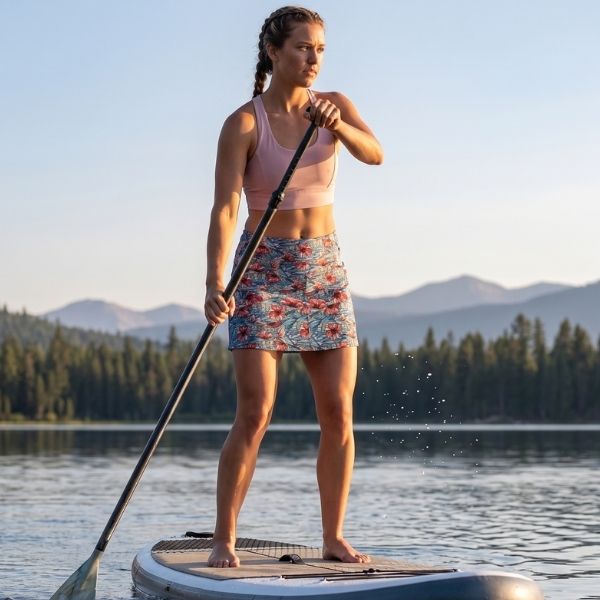
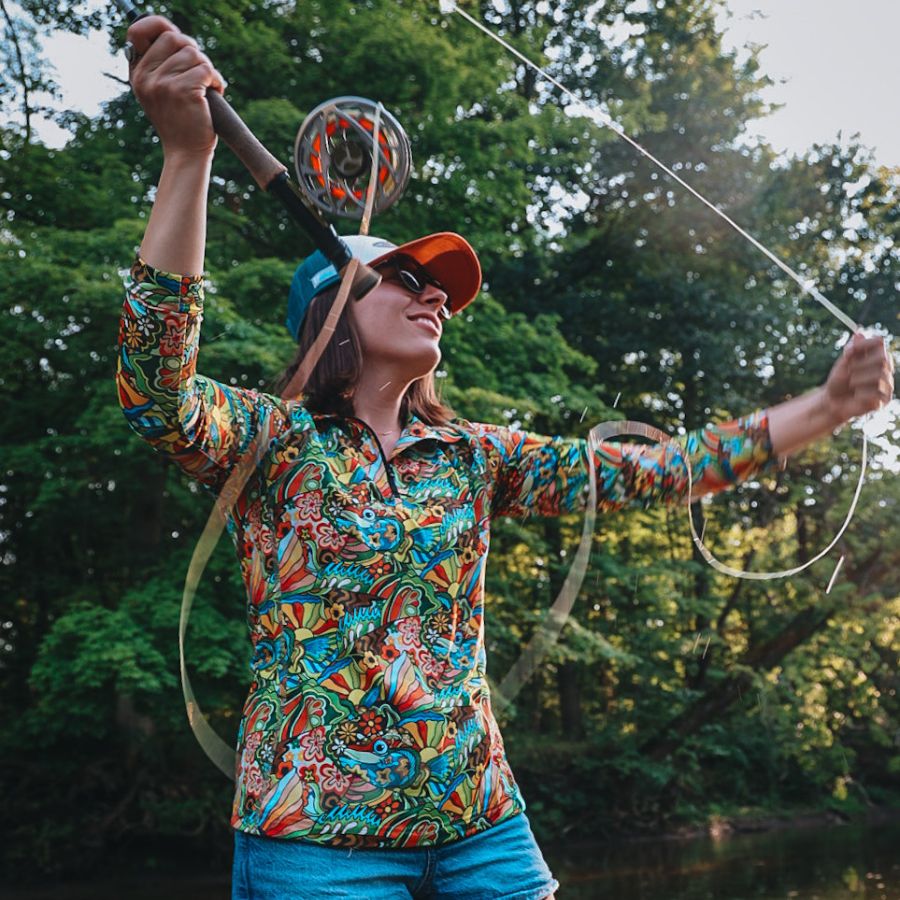
Fishe has a booth at the 2026 Alaska State Fair, and we cannot wait to see familiar faces, meet women discovering Fishe for the first time, talk fishing, swap stories and put some of our most-loved gear into people’s hands.

Online shopping is convenient. Trying something on, feeling the fabric, seeing the colors in person and talking with an actual Fishe human is different.
And at the Alaska State Fair, that feels exactly right.
A Few Fishe Favorites Worth Looking For
We pulled current Fishe sales data before choosing these favorites, rather than filling this section with whatever happened to be newest. These are proven customer favorites with active product pages and current sellable inventory.

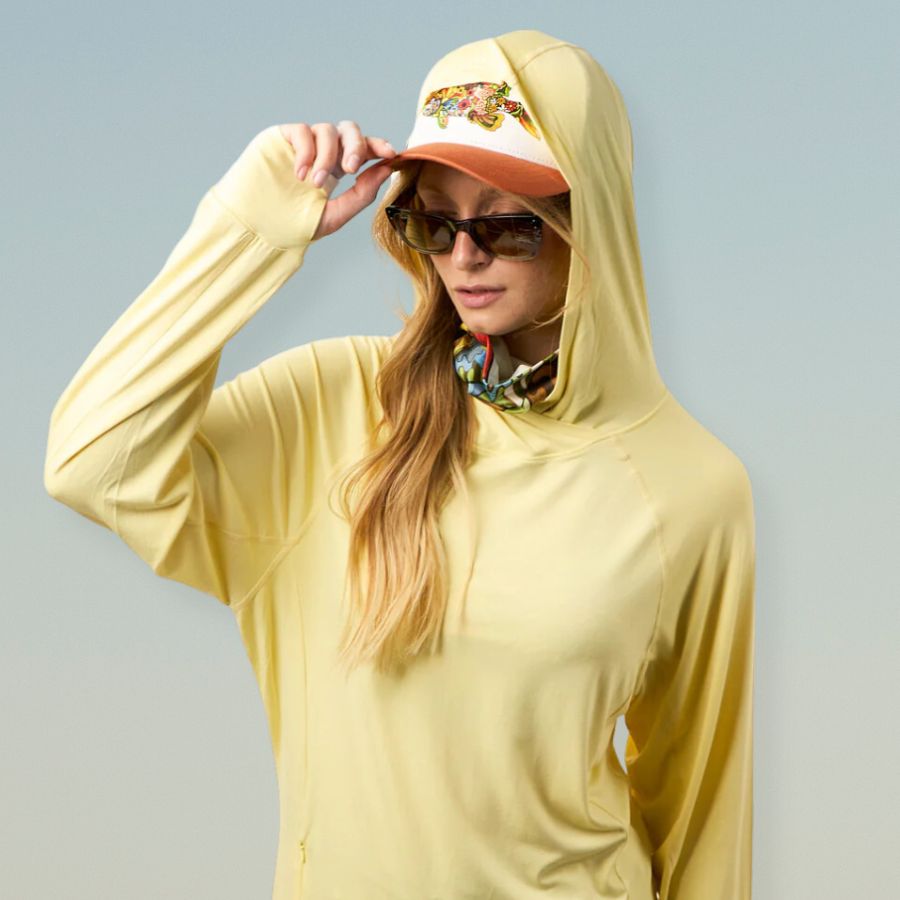
Radiant Redfish Solstice Hooded Sunshirt
Lightweight, quick-dry UPF 50+ coverage for bright Alaska days outside.

Charvana Thermal 1/4 Zip Top
A breathable brushed thermal layer for when an Alaska afternoon starts cooling off.

Boho Bass Backpack Dry Bag
Roll-top storage, padded straps and bold Fishe color for carrying layers and everyday adventure gear.

Enchanted Grayling 6" Ankle Deck Boot
Fishe artwork meets XTRATUF construction for wet grass, muddy trails and slick surfaces.
The 2026 Alaska State Fair at a Glance
The Fair is at 2075 Glenn Highway in Palmer, roughly an hour north of Anchorage.
For 2026, the Fair runs August 21 through September 7, from 11 a.m. to 10 p.m., and is closed Tuesday and Wednesday on August 25–26 and September 1–2.
Schedules can change, so check the official Fair program before building your day around a particular contest, concert or demonstration.
And leave some room for wandering. The unexpected part tends to be the good part.
Conclusion
Ninety years is a long time to keep gathering.
Long enough for a four-day agricultural fair to become one of Alaska’s most recognizable traditions. Long enough for a 23-pound prize cabbage to evolve into a 138-pound world record. Long enough for generations of families to make the same late-summer drive toward Palmer and know exactly what it means when the mountains come into view and the fairgrounds begin to appear.
Yet the remarkable thing about the Alaska State Fair is how recognizable its original heart still is.
“People growing. People making. People showing up.”
Fishe is proud to be one small part of that story in 2026.
So come find us. Tell us where you fish. Show us what you are wearing. Ask about a pattern. Try on something you have only seen online. Bring the family. Go see the cabbage. Eat something unreasonable.
We’ll see you in Palmer.
FAQ
When is the 2026 Alaska State Fair?
The 2026 Alaska State Fair runs from August 21 through September 7, 2026. Fair hours are 11 a.m. to 10 p.m., with the Fair closed Tuesdays and Wednesdays on August 25–26 and September 1–2.
Where is the Alaska State Fair?
The Alaska State Fair is held at 2075 Glenn Highway in Palmer, Alaska, approximately an hour north of Anchorage.
How old is the Alaska State Fair?
The first Palmer fair was held September 4–7, 1936, making 2026 its 90th anniversary year.
Why is the Alaska State Fair famous for giant vegetables?
Alaska’s long summer daylight and cool growing conditions help crops thrive, while competitive growers also rely on giant varieties, careful feeding, irrigation and very early starts.
What is the biggest cabbage grown for the Alaska State Fair?
Palmer grower Scott Robb entered a 138.25-pound cabbage in 2012, setting a world record.
What can you do at the Alaska State Fair besides ride carnival rides?
The Fair includes concerts, agriculture, livestock, giant vegetable competitions, arts and crafts, food competitions, Alaska Native cultural programming, demonstrations, youth activities, rodeo and live entertainment.
How important is the Alaska State Fair to the local economy?
The Fair’s 2024 Annual Report measured a $50.9 million economic impact and recorded 370,485 Fair visits that year. Attendance reached a record 388,798 in 2025.
Will Fishe be at the 2026 Alaska State Fair?
Yes. Fishe has a booth at the 2026 Alaska State Fair in Palmer. Stop by to meet the team, see Fishe gear in person and celebrate the Fair’s 90th anniversary with us.
Related Reading

Visit FisheWear in Anchorage
Find Fishe in Alaska beyond the Fair at our Anchorage locations.

What to Wear Summer Fishing in Alaska
Build a practical Alaska layering system for sun, wind, rain and changing temperatures.

FisheWear Featured in Alaska Business Magazine
Revisit an early chapter in Fishe’s Alaska-grown story and the community behind the brand.
Sources
- Alaska State Fair — Fair History — founding, Palmer agricultural roots, giant cabbage tradition and major milestones.
- Alaska State Fair — 2024 Annual Report — economic impact, attendance and competitive exhibit figures.
- Alaska State Fair — 2026 Fair Information — current dates, hours and location.
- Alaska State Fair — 2026 Highlights — current contests, demonstrations and entertainment.
- UAF Cooperative Extension — Growing Giant Alaska Cabbages — daylight, growing conditions and variety selection.
