


2026 Special Report on Fishing
Women Want to Fish. The Data Shows What Helps Them Stay.
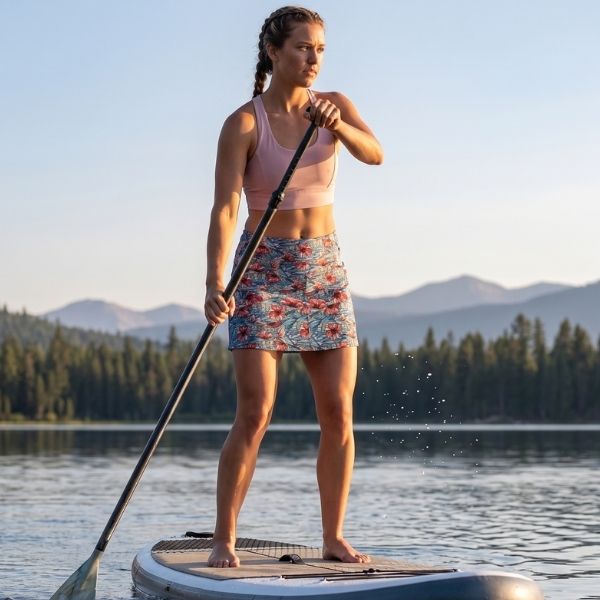
Women are not waiting on the edge of the fishing world. They are already on the water—in boats, on riverbanks, beside their kids, learning new casts, returning to familiar places, and reshaping what an angler looks like.
The new 2026 Special Report on Fishing, covering participation in 2025, shows both the scale of that movement and the work still ahead.
The quick take
The report estimates that 21.1 million women fished in 2025. That is 5.4 million more female anglers than a decade earlier, representing 34 percent growth since 2015.
21.1 million
Female anglers in 2025
34% growth
Increase since 2015
2.6 million
First-time female anglers
The report also found that:
- Women represented 37 percent of all fishing participants.
- Women represented 41 percent of first-time participants.
- The number of first-time female anglers rose to 2.6 million, up 30 percent from 2024.
- Approximately 11 million women who did not fish in 2025 expressed interest in trying it.
- 53 percent of current female anglers said they would like to fish more often.
Those are not signs of a fringe audience. They show a large, active fishing community and an even larger pool of women interested in finding their way onto the water.
Source: American Sportfishing Association and Outdoor Foundation, 2026 Special Report on Fishing.
In This Story
The growth story is real—even after a one-year dip

Female participation slipped slightly from 21.3 million in 2024 to 21.1 million in 2025. The female participation rate also moved from 14 percent to 13 percent.
One year does not erase a decade. The longer trend remains clear: female participation has grown by more than one-third since 2015.
A shallow reading might say women lost interest in fishing during 2025. The fuller picture is that millions more women fish today than a decade ago, first-time participation accelerated, and another 11 million women are considering joining them.
The opportunity is not simply convincing women that fishing exists. It is creating clearer, friendlier pathways from curiosity to a first trip—and from a first trip to a lasting place in the fishing community.
Recruitment is only half the story
The report's broader participation analysis found that fishing lost 19 million participants between 2024 and 2025 while gaining or regaining 18 million.
Among those who stopped participating, 51 percent were women, even though women made up 37 percent of all anglers. That does not mean half of female anglers quit. It means women were overrepresented among the people who did not return that year.
53 percent of female anglers said they would like to fish more often.
Together, those findings point toward a retention question: What makes it easier for a woman to return for the next trip?
The answer is unlikely to be one product, one class, or one message. It is a combination of access, knowledge, comfort, companionship, confidence, time, and the simple belief that she belongs there.
Fishing is a shared experience for many women
Only 12 percent of women in the report said they typically fished alone, compared with 22 percent of men. Women were also more likely to fish in groups of three or more.
Across gender, age, and ethnicity, roughly three in four anglers associated fishing with quality time spent with family or friends. Female anglers were especially likely to connect fishing with outdoor time and childhood memories.
Community is not a decorative layer placed on top of fishing. For many people, it is one of the reasons to go.
That can look like joining a class, booking a trip with friends, learning from a family member, returning to the same local water, or simply being invited.
Fishe's connection to women's fishing classes and trips provides one practical route for women who want experience without having to figure out every detail alone.
The barriers are practical, not mysterious

When anglers were asked what made fishing less enjoyable, the most common answers included crowded fishing spots, uncomfortable weather, not catching fish, unclean water, equipment expense, and not having the right knowledge or gear.
Those barriers were reported across the full angler sample, not as women-only findings. Still, they offer a useful framework for better experiences:
- Make local access easier to understand.
- Explain equipment without turning it into a wall of jargon.
- Help people dress for sun, wind, spray, heat, and changing temperatures.
- Normalize learning with a friend, guide, or class.
- Define a successful day by more than the number of fish caught.
The report found that local information about nearby water was the resource anglers most wanted. How-to videos, on-water guides, short lessons, and more affordable access to equipment also ranked highly.
What women wear can remove friction from the day

Clothing cannot create access to water or replace a patient teacher. It can, however, remove avoidable discomfort.
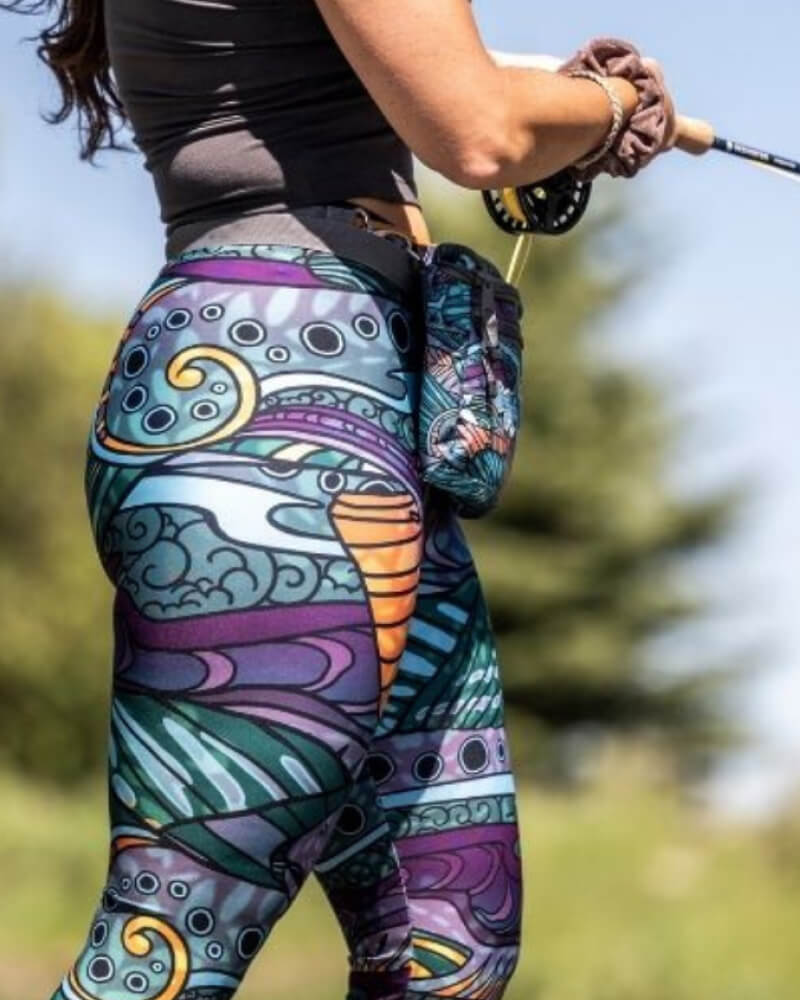
For a warm day, that may mean breathable women's fishing tops and sunshirts, comfortable fishing leggings built for movement, sun coverage, and a layer that can handle a cool morning.
For a wading day, it may mean understanding the difference between base layers, women's wading gear, boots, and what belongs in a pack.
For a boat or shoreline day, it may be as simple as keeping essentials organized and dry. The point is not to make fishing feel equipment-heavy. It is to help each woman choose what suits her water, weather, and kind of trip.
Helpful gear, not a requirement list
Three current best sellers for different conditions
These active Fishe best sellers offer three practical pathways: sun coverage, comfortable movement, and an easy layer for changing conditions.

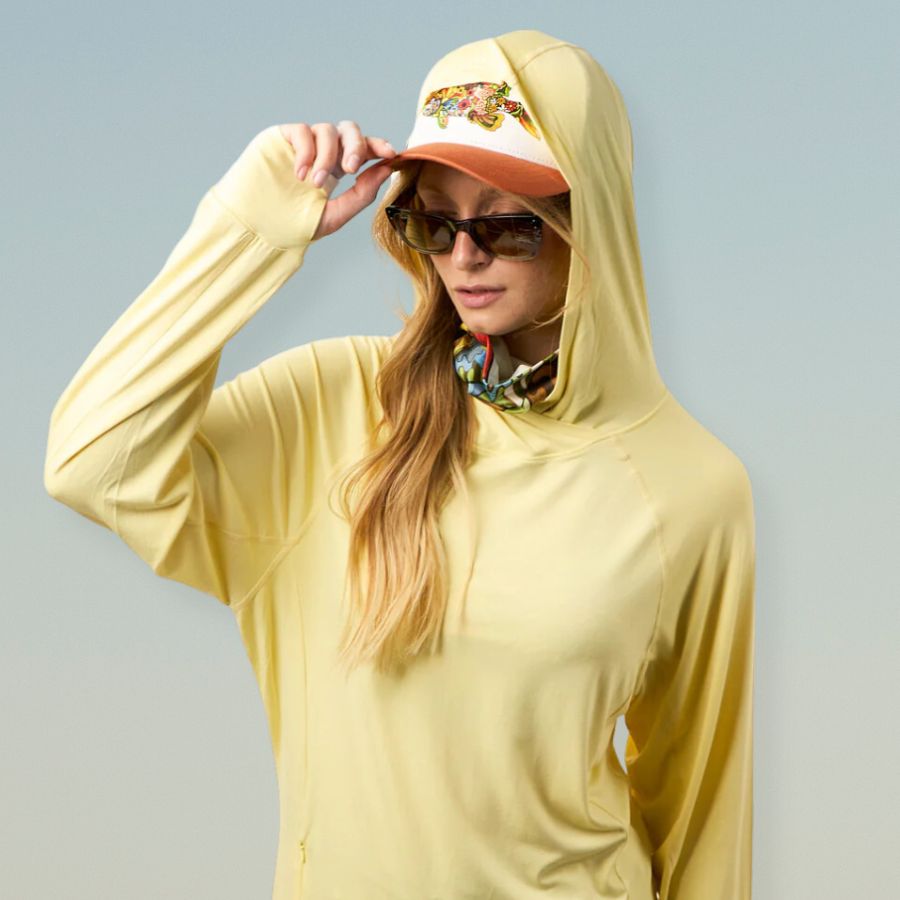
Radiant Redfish Solstice Hooded Sunshirt
A hooded sunshirt for bright days and added coverage on the water.

HaliBorealis Pocket Leggings
Pocket leggings built for comfortable movement and useful side storage.

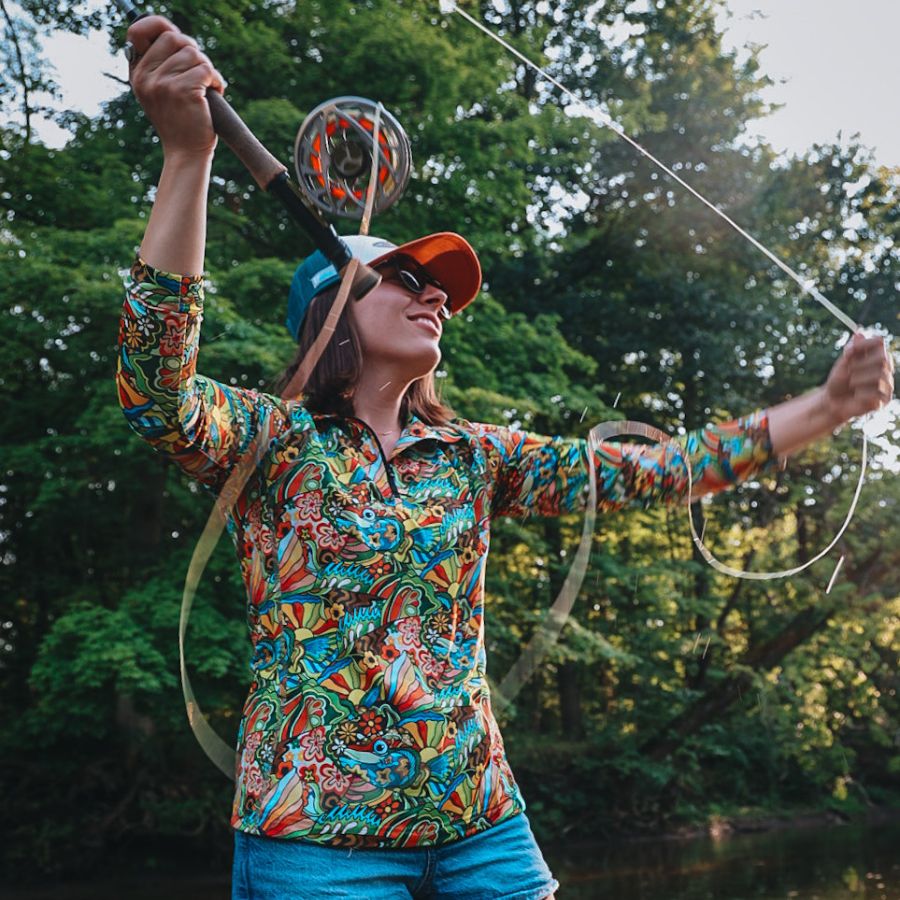
Enchanted Grayling 1/4 Zip Sunshirt
A versatile quarter-zip sunshirt for fishing and outdoor days.
This is bigger than a participation number
Twenty-one million is an impressive figure, but it does not capture the individual moments behind it: a first cast, a lesson from a friend, a child watching the water, or a group laughing through a windy day when the fish are not cooperating.
Fishe was built around the belief that women already belonged in fishing and deserved gear that reflected how they actually moved through the outdoors.
That idea feels even more relevant when the numbers show millions of women participating—and millions more standing close to the edge, interested but not yet involved.
The future of women in fishing will not be built by telling women to fit an old picture of an angler. It will be built by making more room for the many ways they already fish.
Why you should trust us
Fishe is an Alaska-born brand centered on women who fish. Our perspective comes from the practical realities of water, weather, movement, layering, community, and gear that has to work beyond a product photo.
For this article, we used the American Sportfishing Association and Outdoor Foundation's national participation research. We separated the report's findings from our interpretation and avoided treating one year of data as the whole story.
Conclusion
The clearest message in the 2026 report is not that women might become important to fishing someday. They are already essential to its present and future.
The next challenge is helping the woman who is curious take her first step, helping the new angler build confidence, and helping the experienced angler find more reasons—and fewer barriers—to return.
That work happens through access, information, invitation, community, and gear that supports the day instead of complicating it.
Most of all, it happens every time another woman is welcomed onto the water as the angler she already is.
Frequently Asked Questions
How many women fish in the United States?
The 2026 Special Report on Fishing estimates that 21.1 million American women ages six and older fished during 2025. Women represented 37 percent of all fishing participants.
Is women's fishing participation growing?
Yes over the long term. Female participation grew from 15.7 million in 2015 to 21.1 million in 2025, an increase of 34 percent. Participation dipped slightly between 2024 and 2025, so both the yearly change and longer trend should be considered.
How many women tried fishing for the first time in 2025?
Approximately 2.6 million women were first-time fishing participants in 2025, up from 2 million in 2024. Women represented 41 percent of all first-time participants.
Are more women interested in trying fishing?
The report estimates that approximately 11 million women who did not participate in 2025 were interested in fishing. That suggests a large opportunity for accessible lessons, local information, invitations, and beginner resources.
What prevents people from fishing more often?
Common barriers included crowded water, uncomfortable weather, not catching fish, unclean water, equipment expense, and lack of knowledge. These findings cover anglers overall and should not be presented as women-only barriers.
Do women usually fish alone or with other people?
Most women in the report fished with other people. Only 12 percent said they typically fished alone, while half usually fished in groups of three or more.
What does a beginner woman need for fishing?
Start with a valid license when required, basic equipment appropriate for the water and species, weather-ready clothing, sun protection, water, and simple safety essentials. A friend, guide, class, or local shop can help keep the first setup manageable.
Where can women learn to fly fish?
Look for reputable local guides, state agency programs, fly shops, clubs, and women-centered classes. Fishe also connects anglers with Women's Flyfishing classes and trips.
Related Reading

Women’s Fishing Clothes That Actually Work
Build a practical fishing outfit around movement, layering, weather, and the kind of water ahead.

Growing Up Fishing
Read a Fishe story about the early experiences and people that help fishing become part of a life.

Women in Fly Fishing: What the Latest Participation Data Reveals
Women are entering fly fishing at a higher first-timer rate than men. The latest participation data reveals why the next invitation, outing and welcoming commun
