


Fly Fishing or Spin Fishing? Start With the Experience You Want
Both setups can lead to a great day. The better choice depends less on whether one is "best" and more on what you want to catch, where you plan to fish, and how you want the experience to feel.
This is a practical, beginner-friendly comparison. The guide breaks down the real differences without making either style sound intimidating. By the end, you should know which setup makes the most sense for your first trip - or why you may eventually enjoy owning both.
In This Guide
Why You Should Trust This Article
Fishe was built by women who fish. The team spends real time around rivers, lakes, saltwater, guides, shops, and fishing communities.
This comparison uses established fishing mechanics, current beginner guidance, and Fishe's own inventory. It helps readers choose a setup without overlapping the Fly Rods & Reels collection.
Quick Takeaway
- Choose a fly rod when presentation, casting rhythm, shallow water, and the experience of fly fishing are central to the trip.
- Choose a spinning rod when you want a faster learning curve, broad lure and bait options, and easy versatility across many waters.
- Neither setup is only for beginners or experts. Both can be simple to start and endlessly technical to master.
- Your target species and fishing location matter more than gender. Comfort, grip, rod weight, balance, and fit matter for every angler.


How a Fly Rod and Spinning Rod Work
How a fly rod casts
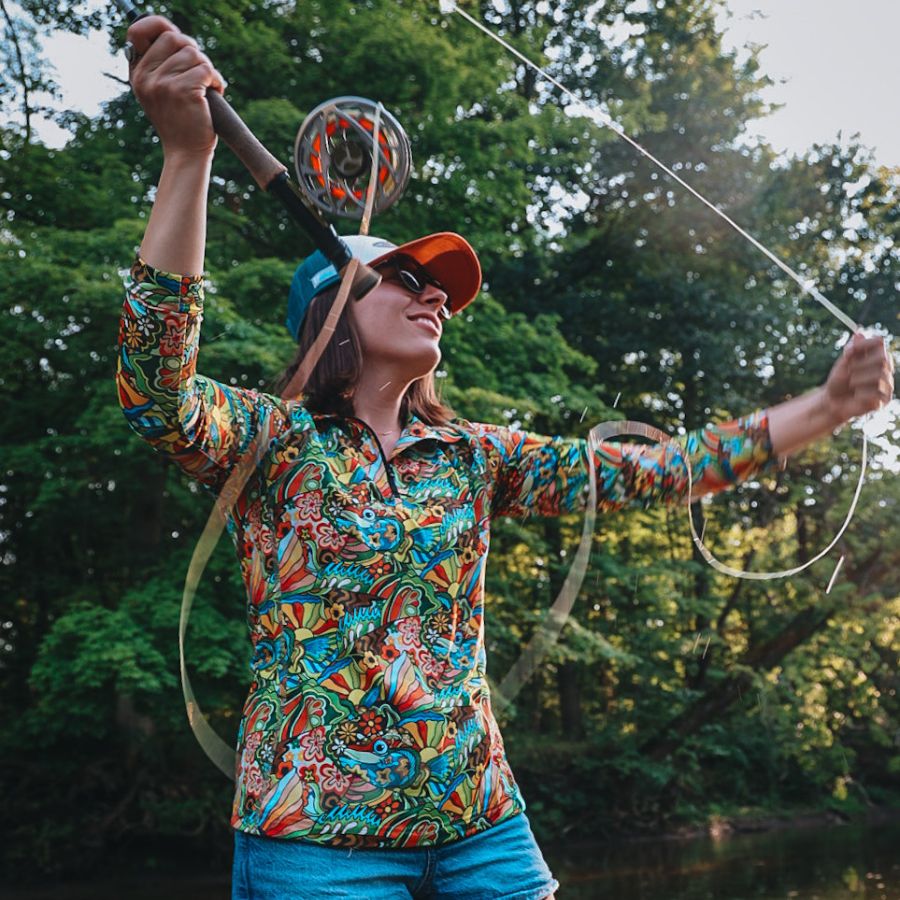
In fly fishing, the weighted fly line carries a very light artificial fly toward the target. The rod bends and loads as the angler moves the line, then releases that energy during the cast.
This is why fly casting has its recognizable back-and-forth rhythm. The angler is controlling the line, leader, and fly presentation rather than simply throwing the weight of a lure.
How a spinning rod casts
With spinning gear, the weight of the lure, sinker, or bait pulls the line from a stationary spool. The casting motion is usually straightforward, and many beginners can make a functional cast after a short introduction.
Spinning setups can handle a wide range of lures and bait. They are common on lakes, shorelines, docks, rivers, and boats because they adapt easily to different species and conditions.
Fly Rod vs. Spinning Rod: The Differences That Matter
Casting technique
The casting weight comes from different places. Fly casting asks for more timing and line control. Spinning generally gets a new angler fishing sooner.
Presentation
A fly rod can place a nearly weightless fly softly on the surface or control a drifting nymph through current. That delicate presentation is a major advantage when fish are feeding selectively.
A spinning rod is excellent for covering water with spoons, plugs, jigs, soft plastics, and bait. It can also deliver heavier offerings farther with less specialized casting technique.
Learning curve
Spinning gear often wins the first-hour test. The basic cast is easier to understand, and managing the line usually feels familiar quickly.
Fly fishing takes more practice at the beginning, but it does not require perfect casting before you can enjoy it. A lesson, patient friend, or guide can shorten the learning curve significantly.
Versatility
Spinning tackle works across an enormous variety of freshwater and saltwater situations. Fly gear is also versatile, but the rod, line, leader, and fly typically need to be matched more intentionally to the species and water.
Physical comfort
Do not choose based on the idea that women need a special "women's technique." Instead, focus on balance, grip, and fatigue.
A lighter, well-balanced setup can feel better for a full day than a poorly balanced rod that is technically shorter or marketed as easier.
When to Choose a Fly Rod
Choose a fly rod when the experience matters. A fly rod is likely the right starting point when the style of fishing itself is part of the attraction. You may love the cast, the connection to current, the visual take, or the challenge of matching what fish are eating.

- You plan to fish trout streams, rivers, shallow flats, or water where presentation matters.
- You want to fish dry flies, nymphs, streamers, or other artificial flies.
- You enjoy learning a skill through practice and repetition.
- You want more control over line, drift, and fly placement.
- You are joining a fly-fishing class, guided trip, or community.
A 5-weight is a common freshwater starting point. Your ideal weight changes with the fish, flies, wind, and water, so seek local advice before buying.
Explore Fishe's current options in the Fly Rods & Reels collection.
When to Choose a Spinning Rod
Choose spinning gear for quick versatility. A spinning rod is a strong choice when you want to get fishing quickly and use many different lure or bait styles.

It is practical and approachable. When appropriately matched, it can catch nearly every popular gamefish.
- You are fishing from a dock, beach, boat, lake shore, or riverbank.
- You want to cast lures, jigs, spoons, plugs, soft plastics, or bait.
- You want a simple setup for family trips or casual outings.
- You need to cover more water or cast heavier presentations.
- You plan to target several species with one general-purpose outfit.
The rod power, action, length, reel size, and line should still match the target fish. A local tackle shop can help you avoid buying a setup that is too heavy or too light for your water.
What About Choosing Both?
Many anglers use both systems. A fly rod may come out for trout, salmon, shallow saltwater, or days focused on presentation.

A spinning rod may be the easy choice for a family lake trip, surf casting, trolling, or exploring unfamiliar water.
Learning both also makes you a more adaptable angler. You begin to notice how fish respond to movement, depth, speed, profile, and presentation rather than thinking of fishing as one fixed method.
A simple decision question
Ask yourself: "Do I want the fastest route to casting a broad range of lures, or do I specifically want to learn the fly-fishing experience?" Your honest answer will usually point to the right first setup.
Build the Rest of Your Fishing Kit Around the Trip
Build the kit around the actual trip. Your rod is only one part of staying comfortable and prepared. Think about sun coverage, layers, footwear, weather, safe storage, polarized eyewear, water, and the kind of bag that fits the day.
Use the Women's Fishing Clothing Guide for apparel planning, then explore fishing bags and packs for carrying essentials.
Frequently Asked Questions
Is a fly rod harder to use than a spinning rod?
A fly rod usually takes more initial instruction because the line creates the cast. A spinning rod is typically quicker for a beginner to cast, but both systems reward practice.
Can you use regular fishing lures on a fly rod?
Fly rods are designed around fly line and artificial flies. Some heavier streamers resemble small lures, but standard spinning lures are generally too heavy and should be used with spinning or casting tackle.
Can you catch the same fish with both?
Often, yes. Trout, bass, salmon, panfish, and many saltwater species can be caught with either method. The presentation, tackle strength, and fishing conditions determine which setup is more practical.
What is the best first fly rod weight?
A 5-weight is a common general-purpose recommendation for freshwater trout and similar fishing, but it is not universal. Smaller streams, large salmon, windy saltwater, and heavy flies require different setups.
Do women need a shorter or lighter fishing rod?
Not automatically. Choose for the angler's body, casting comfort, target species, and conditions. Grip comfort and balance can matter as much as rod length or total weight.
Related Reading

Fishe + SaraBella Fly Rod Review
A closer look at a custom rod collaboration and one angler's experience fishing it.

Saltwater Fly Fishing Essentials
Practical additions that can make a saltwater fly-fishing trip more comfortable.

Why Fishing Sunglasses Matter
Understand polarization, UV protection, glare reduction, and eye safety on the water.
