


Fly Rod Decision Guide
Choose a Fly Rod That Fits Your Water, Cast and Body
Choosing a fly rod can feel harder than it should. The labels are full of numbers, the actions sound technical, and plenty of advice starts with a product before it starts with the angler.
The better approach is to begin with where you fish, what you cast, and how the rod feels. A well-matched setup should help you cast with less effort, manage your line with more control, and stay comfortable through a full day on the water.
This guide explains rod weight, length, action, grip comfort, fatigue, freshwater and saltwater choices, and the difference between useful women-specific design and color alone.
Quick Takeaways
- Choose rod weight for the fly, wind, water and fish—not for the angler’s gender or body size.
- Use rod length to solve a real problem: tighter casting room, greater reach, better mending or more line control.
- Match rod action to your timing. A faster rod is not automatically a better rod.
- Grip diameter, swing weight and balance affect fatigue more than the catalog weight alone.
- Judge the complete setup. The rod, line, reel, leader and fly should work as one system.
- Color can make a rod feel personal, but function is what makes equipment genuinely useful for women anglers.
In This Guide
A Women-Angler Perspective
Built From a Lifetime on the Water
Fishe began with Linda Leary’s own fishing life. Linda started fishing with her father in northern Maine when she was six years old, carried that connection to Alaska, and founded Fishe in 2015 after a lifetime of making do with fishing clothing that was not designed with women in mind.
Since then, Fishe has built women-first fishing apparel and a community around the practical details that shape a day outside: fit, movement, comfort, weather, confidence, and gear that supports the angler instead of asking her to adapt to it.
That same perspective shapes this guide. The technical definitions come from established fly-fishing education, including Fly Fishers International and Orvis, while the recommendations stay focused on how the complete setup feels and functions for a real woman angler.
The Fly Rods & Reels collection remains the shopping destination. This guide is the decision-support layer that helps you understand what belongs in your hand before you buy.
Start With the Water, the Fly and the Fish
A rod does not become right because it is marketed to women. It becomes right for your fishing when it carries the needed line and flies, controls the fish, and works with your casting style without wearing you down.
Answer these questions first
- Will you fish small creeks, larger rivers, lakes, or saltwater flats?
- Are you casting tiny dry flies, weighted nymph rigs, streamers, or larger saltwater patterns?
- What species and typical fish size are you targeting?
- Will wind, current, brush, or long casts be a regular part of the day?
- Does the grip feel secure without forcing your hand to stay tense?
Choose for the fishing you will do most often, not the most extreme trip you might take someday. A rod that fits 80 percent of your real fishing will usually serve you better than one chosen for a single imagined scenario.
Rod Weight: Match the Line to the Job

Rod weight describes the line job, not the angler’s body size. Fly Fishers International explains that fly-line weights refer to the first 30 feet of line and that rods and lines should carry matching number designations.
That is why a 5-weight rod is normally paired with a 5-weight line. See the FFI fly-fishing glossary.
A practical weight guide
- 2- to 4-weight: delicate presentations, smaller trout or panfish, and lighter flies in protected water.
- 5-weight: a versatile freshwater choice for many trout situations and a common first setup.
- 6-weight: more authority for wind, larger flies, stillwater, bass, and heavier nymph or streamer rigs.
- 7- to 8-weight: larger freshwater species, bigger flies, stronger wind, and many inshore saltwater situations.
- 9-weight and above: heavier saltwater work, very large flies, or powerful fish that require more lifting strength.
Do not choose the lightest rod simply because it feels dainty in a shop. Going too light can create more work, open your loops, and force repeated casts, while going heavier than necessary adds swing weight and makes a long day more demanding.
The goal is the lightest setup that handles your real flies, wind and fish.
Choose the Rod, Line and Reel as One System
A rod never casts by itself. The fly line determines how the rod loads, the reel changes balance in the hand, and the leader and fly change how much energy the cast must carry and turn over.
The same rod can feel dramatically different with another line or reel. A line that loads the rod at your normal fishing distance may feel intuitive, while a mismatched line can make you speed up, overpower the stroke, or struggle to feel what the blank is doing.
During a test cast, notice the whole outfit
- Can you feel the rod load at the distance you actually fish?
- Does the reel help the outfit balance, or does the tip continually pull downward?
- Can the line carry the leader and the type of fly you use most often?
- Can you make a useful presentation without repeated false casts or a clenched grip?
When possible, test the rod with the line you intend to use and an approximate leader and fly. A complete setup reveals more than a bare rod.
Rod Length: Reach, Control and Room to Cast
Most single-hand freshwater rods fall near the 8- to 9-foot range, but length changes more than casting distance. It affects line control, leverage, mending, roll casting, reach across currents, and how easily you can move through tight cover.
Shorter rods can help when
- brush and tree cover limit the casting stroke;
- casts are short and precise;
- you want a compact setup for confined water.
Longer rods can help when
- you need more reach for mending or high-sticking;
- you fish from a float tube or stillwater bank;
- keeping line off conflicting currents matters.
Small water does not always require a short rod. Orvis notes that rods between 8 and 9 feet can still be useful on many small streams because added reach helps keep line off the water.
Review the small-stream rod lesson.
Think about casting room and line control. Length should solve the more common of those two problems.
Rod Action: Match the Rod to Your Casting Rhythm

Rod action describes where and how deeply a rod bends and how quickly it recovers. The labels are useful, but they are not perfectly standardized across manufacturers, and the fly line changes how the rod loads.
What the common action labels generally mean
- Fast action: bends mostly toward the tip, recovers quickly, and can create tight loops and higher line speed. It can be useful in wind or when distance matters, but some beginners struggle to feel it load.
- Moderate or medium action: bends farther into the middle of the blank and often gives the caster more time to feel the rod. It is a versatile choice for mixed freshwater techniques.
- Slow action: bends more deeply through the rod and rewards a smooth, deliberate stroke. It can feel wonderfully connected at shorter distances but may not suit every large-fly or windy application.
Orvis describes action as a combination of flex and recovery and emphasizes that faster is not automatically better. The useful action is the one supporting your natural tempo and fishing task.
Read the rod-action explanation.
When testing a rod, cast it with the line and approximate leader you expect to use. A parking-lot wiggle cannot show the full system under load.
Grip Comfort and Balance Matter More Than the Catalog Weight

Two rods can have similar listed weights and feel completely different in motion. The difference often comes from grip diameter, grip shape, reel choice, and how mass is distributed along the blank.
A grip that is too large may force your hand to stay open and tense, while one that is too narrow may encourage squeezing. Grip tension travels up the arm into the wrist, forearm, shoulder, and neck after hundreds of casts.
Use this five-minute grip test
- Hold the rod with the reel attached and your wrist in a neutral position.
- Relax your fingers, then close them only enough to control the grip.
- Make several short casting motions without forcing extra speed.
- Notice whether your thumb, index finger, forearm, or shoulder immediately tightens.
- Compare another grip shape or diameter before deciding.
Many anglers benefit from a rod that feels light in motion, not merely light on a scale. A tip-heavy setup creates more wrist torque, while a reel balancing the rod closer to the hand can make the outfit calmer and easier to control.
Fatigue Is Often a Setup and Mechanics Problem
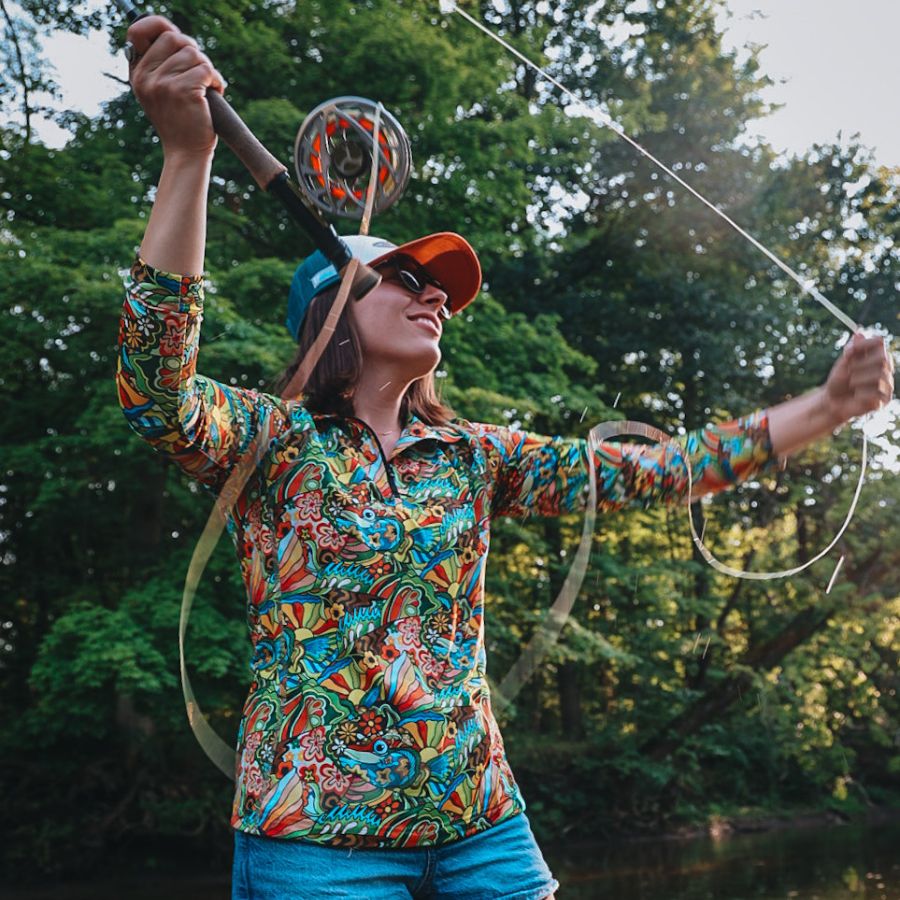
Strength can help with any outdoor activity, but efficient casting is not a power contest. The rod stores and releases energy, so a matched setup and well-timed stroke let the angler guide the process instead of muscling line through the air.
More effort is not always more line speed. Gripping harder, pushing farther, or accelerating too early can widen the casting arc and create fatigue without improving the cast.
Signs the setup may be fighting you
- Your hand stays clenched between casts.
- Your wrist, forearm, or shoulder tires quickly at normal fishing distance.
- You cannot feel the rod load unless you force the stroke.
- The tip feels heavy before you add a fly or indicator.
- You need repeated false casts to move a normal amount of line.
Before buying a different rod, check the complete system: line taper, reel balance, leader, fly weight, and casting technique. A short lesson can reveal whether the rod is wrong for you or whether one mechanical change will make the current setup feel completely different.
Freshwater Versus Saltwater Fly Rod Setups

Freshwater and saltwater choices overlap, but saltwater often adds wind, larger flies, quick shots, stronger fish, and corrosion. Those demands change the whole outfit, often requiring heavier line weights, powerful butt sections, durable hardware, dependable drag, and adequate backing.
For common freshwater fishing
A 5-weight is a versatile starting point for many trout situations. Move lighter for delicate small-water work or heavier for bass, large streamers, stillwater, wind, and larger fish.
For common inshore saltwater fishing
An 8-weight is a frequent starting point for species such as bonefish or redfish, while stronger wind, larger flies, or more powerful fish may call for a 9- or 10-weight.
Orvis’s saltwater equipment lesson explains why saltwater rods and lines are generally heavier: the setup must carry larger flies, work in wind, and control stronger fish. See the saltwater equipment overview.
Saltwater anglers should also rinse the rod, reel, and line after exposure. For more trip-specific preparation, read Fishe’s guide to underrated saltwater fly-fishing essentials.
Beginner Versus Experienced Setups
Beginners do not need an inferior rod. They need a setup that makes feedback easier to feel, covers their most common fishing, and leaves room to improve without creating unnecessary complexity.
A strong beginner setup prioritizes
- a versatile line weight for local water;
- a balanced rod, reel, and line;
- an action the caster can feel loading;
- a comfortable grip and manageable swing weight;
- a simple floating-line system where appropriate.
An experienced setup may prioritize
- a specialized taper for a specific technique;
- extra reach for mending or tight-line methods;
- fast recovery for wind and quick presentations;
- a lighter or heavier rod for a narrow species range;
- multiple rods that divide freshwater and saltwater jobs.
The experienced choice is not automatically faster, lighter, or more expensive. It is simply more specific. Buy specialization after you understand the limitation you are trying to solve.
When a second rod earns its place
Do not add another rod simply because you have become more experienced. Add one when a limitation keeps repeating.
Your trout rod may not comfortably carry bass streamers, your saltwater setup may feel too heavy for small creeks, or your usual rod length may make a specialized technique harder than it needs to be.
A second rod should solve a recurring job. That keeps the collection purposeful instead of turning every new fishing plan into another purchase.
Why Color Alone Does Not Make a Fly Rod Women-Specific
Color can make equipment joyful, expressive, and unmistakably yours. That matters. It can help more women see themselves in a sport that has too often treated them as an afterthought.
But color does not change grip diameter, swing weight, rod action, balance, component durability, or casting mechanics. A rod is functionally women-specific only when its design choices meaningfully address the angler’s experience.
Look for function behind the design
- Does the grip fit your hand without excessive tension?
- Does the complete outfit balance comfortably?
- Can you feel the rod load at your normal casting distance?
- Does the rod handle your typical flies and conditions?
- Can you fish it for hours without unnecessary fatigue?
A beautiful rod can absolutely be the right rod. Function and personality should belong together.
Fishe’s collaboration story with SaraBella shows how performance, craftsmanship, personalization, and visual identity can share one setup. Read the Fishe + SaraBella fly rod review.
Your Fly Rod Decision Checklist
- Name your primary water: small stream, river, lake, or saltwater.
- Name your typical flies: delicate dries, nymph rigs, streamers, poppers, or saltwater patterns.
- Choose the line weight: enough authority for the fly, wind, and fish without unnecessary mass.
- Match the system: confirm the line, reel, leader and typical fly make the rod easier—not harder—to cast.
- Choose the length: balance casting room with reach and line control.
- Choose the action: match your timing, preferred feel, and conditions.
- Test the grip: hold and cast without squeezing.
- Balance the outfit: evaluate the rod with the reel and line attached.
- Cast before buying: use a realistic leader and fly when possible.
Once you know those answers, the collection becomes much easier to navigate. Explore Fly Rods & Reels as the shopping destination, then use this checklist to compare each option by function rather than hype.
Complete the setup with practical fly-fishing tools and accessories, and choose storage that protects the gear you have already taken time to match.
Frequently Asked Questions
What is the best fly rod weight for a beginner woman?
A 5-weight is a common all-around freshwater starting point, especially for trout, but it is not universal. Choose the weight for your local water, fly size, wind, and target species—not for your gender or body size.
Is a lighter fly rod always easier to cast?
No. A lighter rod can feel pleasant with small flies, but it may require more effort when casting heavier rigs or fighting wind. The easiest setup is usually the one correctly matched to the line, fly, and conditions.
What fly rod length is best for women?
There is no women-only length. Many anglers use rods around 9 feet because they balance casting versatility and line control. Shorter or longer rods may be better when brush, mending, stillwater, or specialized techniques change the job.
Is fast action or moderate action better for a beginner?
Many beginners find moderate or moderate-fast rods easier to feel loading because the timing is less abrupt. Some beginners still prefer fast action, especially when wind or larger flies are common, so casting both is the best test.
How should a fly rod grip feel in my hand?
Your fingers should close around the grip without stretching wide or squeezing hard. The wrist should stay relatively neutral, and the rod should feel controllable with a relaxed hand.
Why does my casting arm get tired so quickly?
Common causes include gripping too tightly, using a tip-heavy setup, forcing the stroke, carrying a fly that is too large for the line, or false casting more than necessary. Check the complete setup and your mechanics before assuming you need a stronger arm.
Can I use the same fly rod in freshwater and saltwater?
Sometimes. An 8-weight can cross between freshwater bass or salmon applications and some inshore saltwater fishing. Saltwater use still requires appropriate hardware, reel capacity, drag, line, and careful rinsing after exposure.
Does a women-specific fly rod need to be shorter?
No. Height and gender do not automatically determine rod length. Water type, casting room, line-control needs, grip fit, and the way the full outfit balances are more useful decision factors.
Does rod color affect performance?
No, but it can affect how connected you feel to your gear. Choose a color or pattern you love, then confirm that the rod also fits the fishing, your hand, and your casting style.
The Right Fly Rod Should Help You Fish More Freely
The best rod is not the one with the loudest claim or highest price. It is the one that disappears into the cast—balanced enough to relax your hand, responsive enough to communicate, and capable enough for the water in front of you.
Start with the job and pay attention to feel. Let color and personality complete the choice rather than substitute for it.
The rod should fit your fishing life. It should never be shaped by an outdated idea of what women need.
Related Reading

Fishe + SaraBella Fly Rod: Ryan Scavo’s Review
See how craftsmanship, personal design, and on-water performance come together in a custom fly rod.

5 Underrated Saltwater Fly Fishing Essentials
Prepare for sun, wind, line management, hydration, and the practical details that make a saltwater trip easier.

Wendy Williamson: From Trout to Musky
Follow one guide’s evolution into warmwater fly fishing and learn what changes when the flies and fish get bigger.
