


Alaska Summer Fishing Guide
What to Wear Fishing in Alaska When Summer Changes Its Mind
Alaska can change the rules in one fishing day. Bright sun can become cold wind or drizzle, then return to a glassy warm afternoon. The answer is a small system you can adjust without losing time on the water.
The smartest summer fishing outfit starts with adaptable tops: a comfortable base, a thermal quarter-zip for cold starts, a breathable sun layer for active hours, and a waterproof shell packed separately for real rain.
This guide keeps Linda Leary’s original Alaska layering wisdom and updates it with current Fishe tops, official weather guidance, cold-water safety, sun protection, and a practical packing checklist.
Why Trust This Alaska Layering Guide?
Linda’s original lesson still holds: comfort comes from layers you can add, vent, and remove. Fishe grew from her life as an Alaska angler and her frustration with fishing gear that did not serve women well.
This rebuild pairs that lived experience with current evidence. Alaska Department of Fish and Game guidance, National Weather Service cold-water information, CDC sun recommendations, current Fishe product specifications, and verified customer purchasing patterns shape the advice below.
Pack for the fishing plan, not a generic idea of Alaska. Your guide or lodge knows the boat, river, weather, wading, baggage limits, and exact outerwear your day requires.
The Quick Answer: Build Four Adjustable Layers
1. Comfortable Base
Choose a close, non-bulky layer that moves moisture and sits comfortably under everything else.
2. Thermal Quarter-Zip
Add breathable warmth for cold launches, windy boat rides, and long periods of low movement.
3. Sun Layer
Use a lightweight long-sleeve quarter-zip or hooded sunshirt when the day brightens or activity rises.
4. Waterproof Shell
Keep a true rain shell ready for precipitation, spray, and wind. A sunshirt does not replace it.
The system changes with the trip. River wading, a saltwater charter, a floatplane day, and bank fishing do not create the same exposure, so confirm the final list with your outfitter.
For Southeast Alaska specifically, the Alaska Department of Fish and Game recommends several light layers, waterproof jackets and pants, and insect repellent. The agency notes an average summer temperature of 65°F in that region, alongside substantial annual rain.
Start Cold Days With a Thermal Quarter-Zip
Cold starts do not always require a bulky top. A midweight thermal quarter-zip can hold warmth near your core, fit under waders or a shell, and open at the neck when the boat slows or the sun comes out.

Charvana Thermal 1/4 Zip Top
Use this as the warm working layer. Its brushed thermal fabric is designed to trap heat while remaining breathable, and the stand collar adds coverage without the bulk of a fixed hood.
Flat seams help reduce friction through a long day, while the quarter-zip lets you release heat without removing the entire layer. Wear it over a light base or on its own when conditions allow.
Explore the Charvana Thermal TopPack the thermal layer in a dry bag if you do not need it at launch. A warm, dry top becomes far more valuable after rain, spray, or an unexpected temperature drop.
Make a Quarter-Zip Sunshirt Your All-Day Layer
A lightweight quarter-zip earns its place when the day moves between cool shade, open water, and brighter afternoon conditions. Long sleeves add coverage, while the zipper and stand collar give you quick control at the neck.
The CDC notes that UV reaches you on cloudy days and reflects from water. Protective clothing helps, but exposed skin still needs broad-spectrum sunscreen and regular reapplication.

Enchanted Grayling 1/4 Zip Sunshirt
This is the versatile active layer. The lightweight fabric offers UPF 50+ coverage, moisture-wicking performance, and a cool-touch feel for casting, walking, and moving through changing conditions.
The stand collar and chin guard make the zipped position more comfortable. Open the quarter-zip as activity rises, then close it when wind picks up across the water.
Explore Enchanted GraylingChoose Color Without Giving Up Function
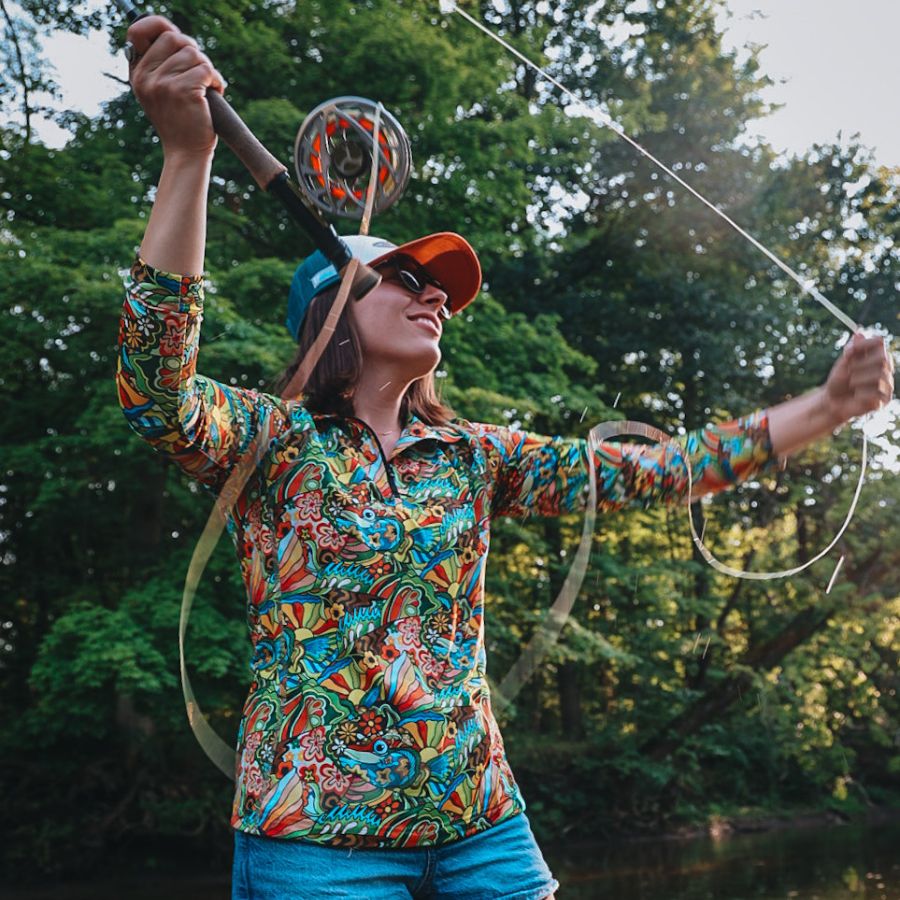
Technical clothing does not have to disappear into the landscape. A strong print can help your fishing outfit feel personal while the shape, fabric, and coverage still do the practical work.

Radiant Redfish 1/4 Zip Sunshirt
Reach for Radiant Redfish when you want high-energy color. The sunshirt combines UPF 50+ coverage with moisture-wicking, breathable fabric and an adjustable quarter-zip front.
The stand collar adds coverage around the neck, and the chin guard keeps the fully zipped position comfortable. It is a useful alternative to Enchanted Grayling when the fit need is the same but the visual mood is different.
Explore Radiant RedfishUse a Hooded Sunshirt for Extra Head and Hand Coverage
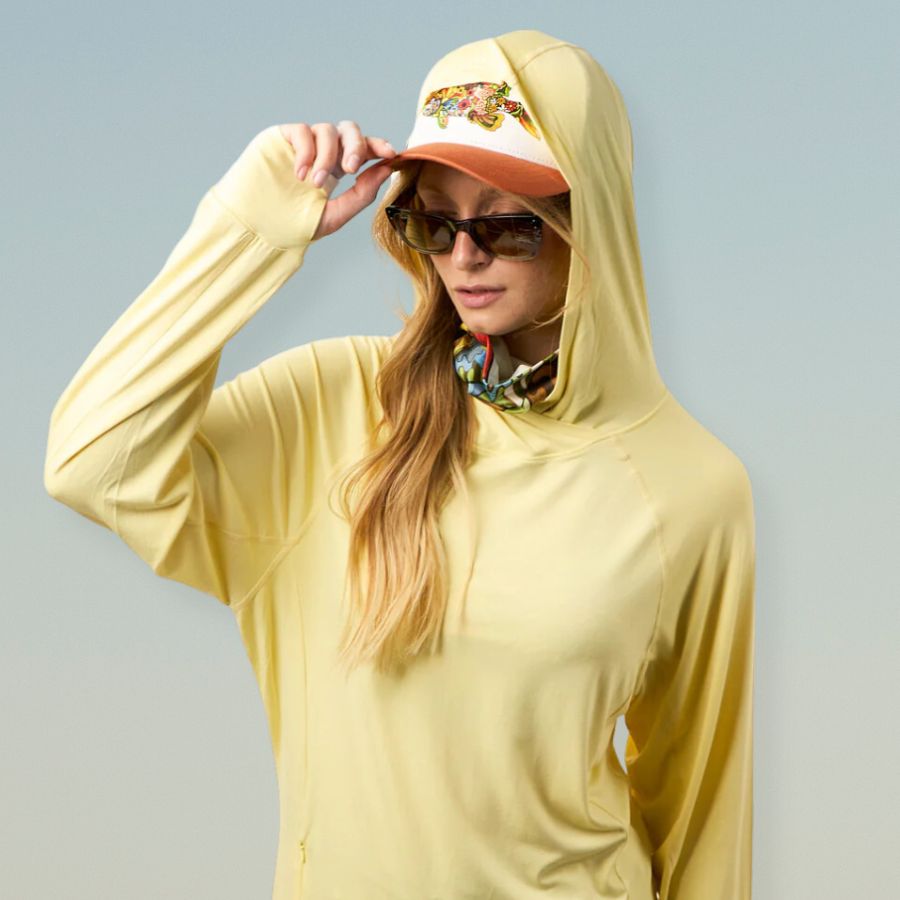
A hooded sunshirt solves a different problem than a thermal top. It adds lightweight shade around the head and neck and can extend coverage over the hands without turning the outfit into a cold-weather system.

HaliBorealis Solstice Hooded Sunshirt
This is the light-coverage option for brighter stretches. It is made from 100% recycled polyester with UPF 50+ protection and quick-dry performance.
Raglan sleeves support casting mobility, thumbholes help hold the sleeves in place, and the hood includes a ponytail opening. The Alaska-inspired HaliBorealis print connects Pacific halibut with the movement of northern lights.
Explore HaliBorealisA hood is useful for sun and light wind, but it is not a substitute for a waterproof shell or an approved personal flotation device when the trip calls for either.
Keep Rain Protection and Cold-Water Safety Separate
Fishe tops can build warmth, movement, and sun coverage, but a summer Alaska kit still needs destination-appropriate outerwear. Pack the waterproof jacket, rain pants, waders, boots, and life jacket your guide recommends.
Warm air does not mean warm water. The National Weather Service warns that sudden cold-water immersion is dangerous even when conditions on land feel comfortable.
Match the Lower Half to the Fishing Plan
For river wading, choose smooth, non-bulky layers that fit under waders without bunching. For a charter boat, prioritize warmth, waterproof outer layers, secure footwear, and traction appropriate to the deck.
Read the outfitter’s packing list before buying or packing specialized gear. Waders, boots, soles, studs, outerwear, and life-jacket requirements can change with the fishery, operator, aircraft, and water.
Summer Alaska Fishing Clothing Checklist
Next to Skin
Comfortable moisture-managing base top, base bottoms, and extra dry socks.
Warmth
Thermal quarter-zip, packable insulating layer, warm hat, and light gloves.
Sun
UPF sunshirt, hat, polarized sunglasses, broad-spectrum sunscreen, and lip protection.
Rain
Waterproof shell and rain pants selected for the boat, river, or lodge plan.
Water
Guide-approved waders, boots, and personal flotation device where required or appropriate.
Backup
One complete dry change, insect repellent, medication, and a waterproof place to carry it.
Test the entire system before the trip. Sit, cast, bend, climb steps, pull on waders, and move your arms overhead. A good layer should support the day without constant adjustment.
If baggage weight matters, pack pieces that can serve more than one role and ask whether laundry is available. The Orvis Alaska packing guide also recommends confirming the final list with your guide instead of bringing everything you own.
Browse the current Fishe fishing tops and sunshirts or compare the Thermal 1/4 Zip Top collection before building your system.
Frequently Asked Questions
What should I wear fishing in Alaska in summer?
Wear adjustable layers: a comfortable base, a thermal or midweight top, a lightweight long-sleeve sun layer, and destination-appropriate waterproof outerwear. Add the waders, boots, hat, gloves, and life jacket your guide recommends.
Do I need a thermal top for Alaska fishing in July?
Often, yes. A thermal top can help during cold launches, wind, rain, boat travel, and low-activity periods. Pack it dry and remove or vent it when the day warms.
Why are quarter-zips useful for fishing?
A quarter-zip lets you adjust airflow at the neck without removing the layer. A stand collar can also add coverage when wind, sun, or temperatures change.
Do I need sun protection while fishing in Alaska?
Yes. UV exposure can occur on cloudy days and reflect from water. Wear protective clothing and sunglasses, apply broad-spectrum sunscreen to exposed skin, and reapply as directed.
What should I wear under fishing waders?
Choose smooth, moisture-managing layers that fit without bunching. Adjust insulation to water temperature, air temperature, activity, and your guide’s advice rather than relying on one outfit for every trip.
Final Note: Pack Options, Not Anxiety
Alaska rewards preparation, but preparation does not mean carrying a closet. Build a small system in which every top has a job: warmth, ventilation, sun coverage, rain protection, or a dry backup.
When the weather shifts, make one simple adjustment and keep fishing. That is the real value of layers: less time worrying about the forecast and more time present for the water in front of you.
Shop Women’s Fishing SunshirtsRelated Reading

The Best Women’s Fishing Shirts for Layering and Sun Coverage
Compare fishing-shirt features for movement, changing weather, and long days outside.

Fishing Waders for Women: What to Wear Underneath
Build a comfortable under-wader system without bunching, bulk, or guesswork.

Introducing HaliBorealis
Discover the Alaska story behind the halibut-and-northern-lights print.
