


Sun protection for long days outside
UPF Protection Clothing: What It Means and How to Choose It
The sun rarely announces when it has become too much. On the water, exposure builds while you cast, row, paddle, or watch the next seam. By the time your skin feels hot, the day has already been bright for hours.
UPF protection clothing gives covered skin a dependable fabric barrier. The best pieces also breathe, dry quickly, and move naturally, making them practical gear for fishing—not just another layer to tolerate.
The quick answer
UPF stands for Ultraviolet Protection Factor. It tells you how much UVA and UVB radiation can pass through a fabric and reach your skin.
A UPF 50 fabric allows about 1/50th of UV radiation through, meaning it blocks approximately 98 percent. The Skin Cancer Foundation classifies UPF 30–49 as very good protection and UPF 50+ as excellent.
UPF 50
Allows roughly 2 percent of UV radiation through fabric.
UVA + UVB
UPF evaluates fabric protection across both types of ultraviolet radiation.
One part of the plan
Pair protective clothing with shade, a hat, sunglasses, and sunscreen on exposed skin.
In This Guide
What does UPF mean on clothing?

UPF is a fabric rating, not a description of how thick or heavy a garment feels. A lightweight technical shirt can carry a strong UPF rating when its construction limits ultraviolet transmission.
The number is simple to read. UPF 30 allows roughly 1/30th of UV radiation through; UPF 50 allows roughly 1/50th through. A higher UPF number means less UV reaches covered skin.
That makes a labeled garment easier to evaluate than an ordinary long sleeve. Color, fiber, weave, fit, stretch, moisture, and wear can all affect how much protection unrated clothing provides.
ASTM’s UV-protective textile labeling standard bases label language on instrumentally measured protection data. A UPF label therefore communicates more than coverage alone.
How does UPF clothing work?
UPF clothing works by limiting the ultraviolet radiation that passes through its fabric. The protection comes from the complete textile system—the fibers, knit or weave, color, density, treatments when used, and the way the garment fits.
Fabric construction
Tighter, denser construction generally leaves fewer openings for UV radiation to pass through.
Fit and stretch
Fabric stretched tightly across the body may become less protective because its structure opens.
Wet conditions
Some ordinary fabrics lose protection when wet, which matters around spray, sweat, and water.
The CDC recommends tightly woven clothing and notes that a wet T-shirt offers less protection than a dry one. Purpose-built sun apparel gives you a known rating instead of relying on guesswork.
Why sun protection matters so much on the water

Fishing combines open sky, long exposure, and reflected light. You may also stay in one position for an extended drift or spend hours focused on fish instead of your skin.
The CDC notes that UV rays can reflect from water, sand, snow, and other surfaces. Cool air and cloud cover do not make UV exposure disappear.
Clothing is especially useful because it protects the skin it covers without needing reapplication. Sunscreen still belongs on exposed areas such as the face, ears, neck, and hands.
The American Academy of Dermatology recommends a layered approach: shade, sun-protective clothing, broad-spectrum water-resistant sunscreen, and extra care around water, snow, and sand.
UPF vs. SPF: what is the difference?
The acronyms sound similar, but they apply to different parts of your sun-protection system.
UPF is for fabric
It indicates how much UVA and UVB radiation can pass through clothing and reach your skin.
SPF is for sunscreen
It primarily describes protection from UVB, the radiation most associated with sunburn.
Use both where needed
Cover what you can comfortably cover, then apply sunscreen to the skin that remains exposed.
UPF clothing does not replace every other sun-safety step. It reduces the amount of exposed skin you need to manage and makes protection easier to maintain through an active day.
Does UPF clothing really work?
Yes. UPF is designed to communicate measurable ultraviolet protection through fabric. A labeled UPF 50 garment blocks approximately 98 percent of UV radiation under the conditions represented by its rating.
The useful question is not whether UPF works. It is whether the garment combines that protection with enough comfort, coverage, and mobility for you to keep wearing it.
An ordinary shirt can provide some protection, but not every shirt protects equally. A visible long sleeve may still be loosely constructed, stretched, worn thin, or less protective when wet.
For frequent, extended outdoor exposure, a known UPF rating removes uncertainty. That is valuable when your day includes water, sweat, changing weather, and more hours outside than planned.
Does UPF clothing keep you cool?

UPF describes ultraviolet protection, not cooling performance. A garment can have a strong UPF rating and still feel uncomfortable if its weight, fit, ventilation, or moisture management does not suit the conditions.
For hot fishing days, look beyond the number. Breathable construction, quick-dry fabric, useful venting, and comfortable stretch determine whether a layer feels livable at noon.
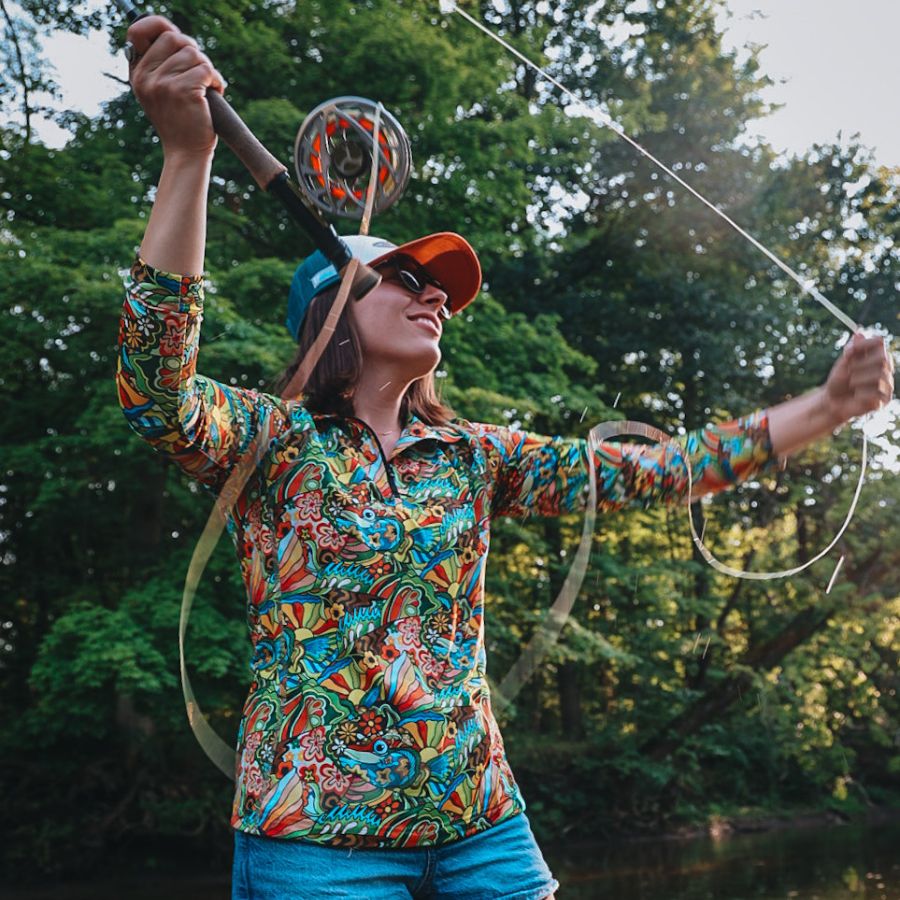
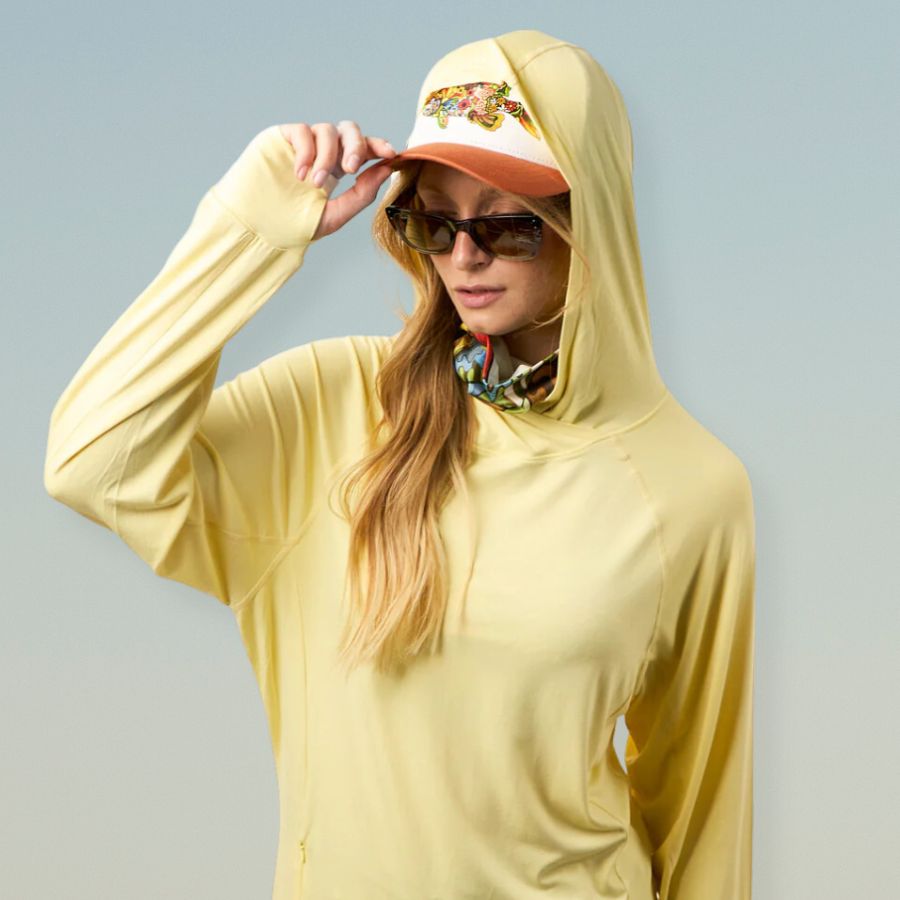
A quarter zip offers adjustable airflow and neck coverage. A lightweight hood adds protection around the head and neck. Thumbholes help sleeves stay over the wrists and backs of the hands.
The best option is not automatically the lightest garment. It is the one that balances protection, airflow, coverage, movement, and the conditions you expect.
How to choose UPF protection clothing for fishing
1. Start with a clear rating
For long, bright days, a labeled UPF 50 or UPF 50+ garment provides excellent fabric protection. Do not assume every long sleeve is equivalent.
2. Match coverage to your exposure
Think about where you burn first. A collar, hood, thumbholes, long sleeves, full-length bottoms, a hat, and a neck tube can close common gaps.
3. Check movement before appearance
Raise your arms, rotate your shoulders, and mimic a cast. The shirt should not pull across your back, climb your torso, or force constant adjustment.
4. Plan for heat and moisture
Choose breathable, quick-dry fabric for sweat and spray. Avoid a fit so tight that the fabric remains stretched across large areas.
5. Choose something you will actually wear
Sun protection only helps when it stays on your body. Fit, fabric feel, color, and personal style are practical considerations because they influence what you reach for repeatedly.
Three current Fishe best sellers
Choose your coverage for the day
These active, well-stocked sunshirts solve different on-water needs. Each uses UPF 50+ fabric, but the coverage, ventilation, and storage details differ.

FisheWaters 1/4 Zip Sunshirt
Cool-touch fabric, moisture management, a stand collar, and adjustable quarter-zip coverage.

Radiant Redfish Solstice Hooded Sunshirt
A lightweight hood, thumbholes, raglan sleeves, and a ponytail opening for added coverage.

Tropical Tarpon Coastline Hybrid Sunshirt
Push-up knit sleeves, secure pockets, and quick-dry performance for active boat and river days.
How to care for UPF clothing
Always follow the garment label because materials and finishes differ. Good care protects the fit and fabric integrity that help the garment perform.
- Wash according to the product care instructions, usually with mild detergent.
- Avoid bleach unless the label specifically permits it.
- Limit unnecessary high heat and abrasive treatment.
- Replace garments that have become very thin, damaged, or permanently stretched.
- Rinse salt, sunscreen residue, and grime after demanding days when the care label allows.
ASTM’s preparation standard for UV-protective textiles includes laundering and environmental exposure before testing. That reflects a practical truth: sun apparel should be evaluated as gear that gets used.
Why trust this guide
Fishe is an Alaska-born brand built around women who fish. We evaluate sun clothing through the realities of open water, repeated casting, sweat, spray, changing weather, and women-first fit.
For the technical claims in this guide, we used current guidance from the CDC, American Academy of Dermatology, Skin Cancer Foundation, and ASTM International. Product details and availability were verified directly in Shopify before publication.
The bottom line
UPF protection clothing is not magic, and it does not replace every sun-safety habit. It is a reliable way to reduce the UV radiation reaching covered skin while you spend time outside.
For fishing, the strongest garment combines a clear UPF rating with breathable comfort, useful coverage, and unrestricted movement. If it works with your body and your day, you are more likely to keep it on.
Dress for the hours you hope to have: open water, bright sky, changing wind, and one more cast than you planned.
Frequently Asked Questions
What is UPF clothing?
UPF clothing is fabric-rated apparel designed to limit ultraviolet radiation reaching your skin. The rating covers both UVA and UVB transmission through the material.
What does UPF 50 mean?
UPF 50 means approximately 1/50th, or 2 percent, of UV radiation passes through the fabric. In other words, it blocks about 98 percent.
Is UPF 50+ better than UPF 50?
UPF 50+ is the highest labeling category and indicates excellent protection. Both UPF 50 and UPF 50+ provide strong coverage when the garment fits and is used as intended.
Does UPF clothing replace sunscreen?
No. UPF clothing protects the skin it covers. Use broad-spectrum water-resistant sunscreen on exposed areas and combine it with shade, a hat, and UV-blocking sunglasses.
Does UPF clothing keep you cool?
UPF measures UV protection, not cooling. Lightweight fabric, airflow, moisture management, fit, venting, and coverage determine how comfortable a garment feels in heat.
How long does UPF clothing last?
It depends on the fabric, construction, wear, and care. Follow the label and replace garments that become very thin, damaged, or permanently stretched.
Related Reading

The Best Women’s Fishing Shirts
Compare fishing-shirt features for layering, movement, drying speed, and sun coverage.

What to Wear Flats Fishing
Build a practical clothing system for tropical sun, reflected glare, heat, and saltwater.

Women’s Fishing Clothing That Works
Choose fishing apparel around weather, comfort, mobility, and the water ahead.
