


Spring Fishing Tips: How to Read the Season, Not Just the Fish
|
|
Time to read 11 min

|
|
Time to read 11 min
The best spring fishing tips are rarely the loudest ones. They are not always the ones shouting about the hottest lure, the perfect retrieve, or the magic water temperature. More often, spring rewards the angler who notices small things first: a warm bank holding light a little longer, bait flickering where there was nothing yesterday, a muddy seam clearing just enough to feel alive.
That is what makes spring so maddening and so beautiful. It is a season of clues, not certainty. Fish are moving, but not always where you expect. Weather changes fast. Water levels rise, stain, drop, and surprise you again. One hour can feel empty; the next can feel electric. And if you fish long enough in spring, you start to understand something deeper than tactics: the season is telling you what to do, if you slow down enough to listen.
Fishing is hardly a niche ritual anymore. In 2024, 57.9 million Americans fished, the highest participation on record, and women held steady at 21.3 million anglers, with women also making up 39% of first-time participants. That matters, because it means more women are stepping into a season that can feel equal parts inviting and overwhelming.
This piece is for that moment. Not just for catching more fish, though it should help with that too. It is for learning how to see spring more clearly, trust what the water is showing you, and build a day that feels smarter, calmer, and more connected from the very first cast.
Spring has a personality all its own. Winter often feels stable in its own hard way, and summer usually settles into more readable patterns. Spring does not. Spring is transition made visible. Water warms unevenly. Flows change quickly. Light lingers longer. Fish shift from winter conservation toward movement, feeding, and, for many species, spawning behavior.
That is not just angler folklore. The U.S. Fish & Wildlife Service notes that anglers often mark the seasons by changing water temperatures and fish behavior, and in spring, warming water can create faster action, especially in shallow areas and sunlit water.
The mistake many people make is treating spring like a checklist. They want one answer: where are the fish now? But spring is rarely that tidy. It is a moving target. A windy bank can come alive in the afternoon. A creek mouth that looked dead in the morning can suddenly hold bait. A stretch that was too cold three days ago can become the most interesting water you see all day.
That is why spring fishing feels more alive than many other seasons. You are not just fishing for fish. You are fishing for evidence.
If you want to fish spring better, stop looking only at your tackle tray. Start with the world around the water.
Watch the light before you watch the surface
Sun matters in spring in a different way than it does in midsummer. After long cold stretches, a bank that gets early or sustained sun can warm faster than nearby shaded water. That does not guarantee fish, but it often changes the equation. Warmth concentrates life. It wakes up insects, loosens fish from slower winter rhythms, and can pull bait shallow.
Pay attention to runoff color
Not all stained water is bad water. Spring often brings snowmelt, rain, and changing flows, and with them comes color. Sometimes that color is too much. Sometimes it is exactly what you want: enough stain to give fish confidence, enough visibility for them to still hunt effectively. The right kind of dirty can be alive.
Notice birds and bait
One of the simplest spring fishing tips is also one of the best: if the food is there, the story is already moving. Bait dimpling, birds working, nervous water near a flat or current seam, even a sudden sense that a place feels busier than it did on your last visit—all of that matters. Spring reveals itself through motion first.
Read the wind as a feature, not an inconvenience
A lot of anglers treat wind as a problem to overcome. In spring, it is often information. Wind can push warmer surface water, move bait, stir up shorelines, and activate a bank that looked plain under calm conditions. You still have to fish it well, but a windy shoreline is often worth more attention, not less.
One reason spring frustrates people is that fish are often in between. They are not always deep in winter patterns anymore, but they are not fully committed to obvious spring locations either. The in-between water is where your day is won or lost.
Think transition edges:
This is why “where are they?” is often the wrong first question. The better question is: where can a fish be comfortable and opportunistic at the same time?
For many species, spring is about balancing risk and reward. Fish want to feed more aggressively than they did in winter, but they still respond to abrupt weather swings, muddy inflows, and cold-water setbacks. That is why one of the smartest things you can do is avoid running straight to the most obvious shallow water and calling it a day. Instead, fish the route. Fish where they pause before they commit.
Lure choice matters. Fly choice matters. Presentation matters. But in spring, anglers often overrate the object and underrate the context.
Speed matters more than novelty
In many spring windows, a lure or fly that stays in the zone and moves at the right pace will outperform the “perfect” pattern fished badly. Cold mornings may ask for patience. A warming afternoon may reward a livelier retrieve. The same fish can want very different things six hours apart.
Angle matters more than confidence bait mythology
One of the easiest ways to improve spring fishing is to change the angle of your presentation before you change the lure. Fish holding near transition edges, current seams, or warming flats may respond differently depending on whether the bait comes across them, past them, or slightly above them. Sometimes the water is right and the cast is wrong.
Coverage matters more than stubbornness
Spring rewards movement with purpose. Not frantic running around, but honest observation followed by adjustment. If a bank should be good and gives you nothing—not a follow, not a swirl, not a bait flicker, not a reason to stay—believe that too. A blank stretch is still information.
A lot of spring fishing advice talks about fish behavior and barely touches what your body is going through. That is a miss. Because in spring, comfort is not separate from performance. Comfort is what allows you to stay observant long enough to notice the clues.
The National Weather Service’s cold-water safety guidance makes this point bluntly: warm air does not necessarily mean warm water, and anglers should dress for water temperature, not air temperature. Spring can create a false sense of security, especially around rivers, lakes, and boats.
That matters on a human level too. Cold feet make people rush. Wet sleeves shorten patience. Windburn and glare wear down focus. A jacket that binds through the shoulders changes the way you cast. Leggings or base layers that stay damp can shift a whole day from grounded to miserable. You do not read water well when your body is busy complaining.
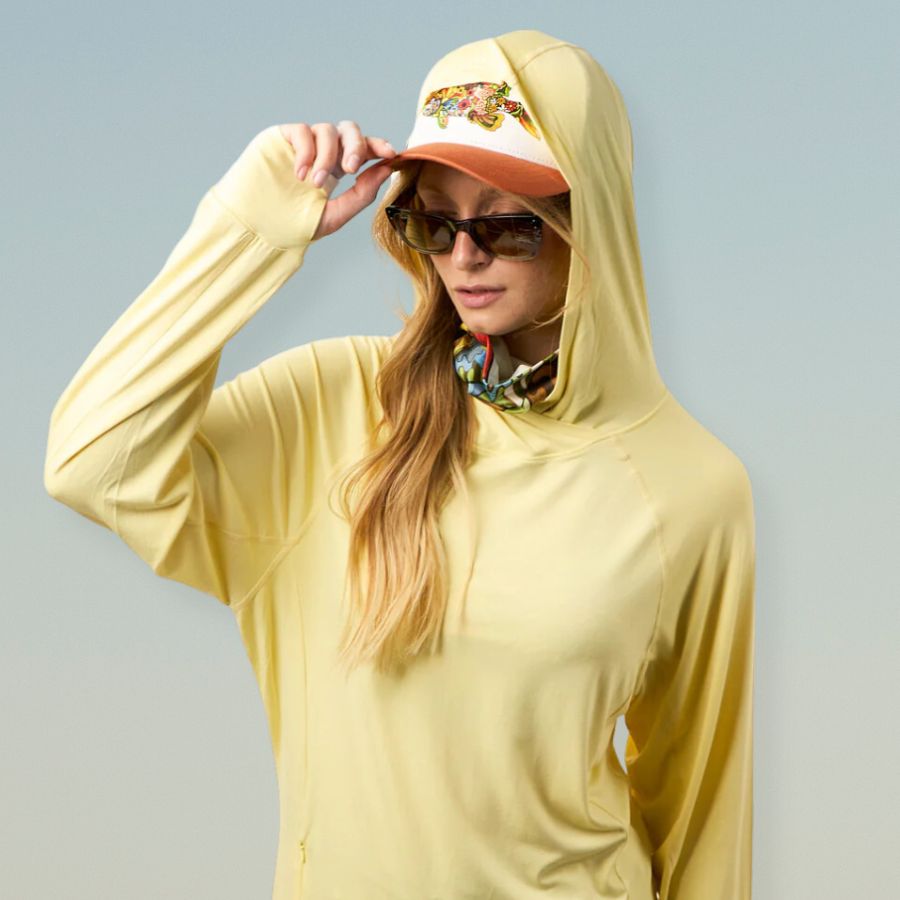
For women on the water, this is even more important because fit is never trivial. It affects mobility, layering, temperature management, and how long you can stay in the game without mentally checking out. The right spring setup should let you move, cast, strip, hike, crouch, row, and stand still in wind without feeling trapped in your own gear.
This is one reason spring is such an important season for women’s fishing apparel to get right. If your gear helps you forget yourself, you can finally pay attention to the water.
We care about spring fishing because it asks more of an angler than easy seasons do. It asks you to notice before you know. It asks you to stay patient when the day is still deciding what it wants to be. It asks you to think about comfort, confidence, fish behavior, movement, and weather all at once.
We also know this from the side of real life, not just theory. More women are on the water now than ever before, and more of them are new, returning, or finding their own way into fishing culture instead of inheriting it in a straight line. That makes practical, respectful guidance matter. Fishing should feel welcoming without being watered down.
And the broader outdoor world keeps proving this is not a fringe story. In 2024, the U.S. outdoor recreation economy accounted for $696.7 billion of current-dollar GDP, and boating and fishing was the largest conventional activity at $38.4 billion. This is a huge part of how Americans live, move, travel, and spend time outside.
So when we talk about spring, we are not trying to fill space with seasonal clichés. We are trying to help you become the kind of angler who notices more, adapts faster, and feels better doing it.
Spring fishing can feel solitary in the best way, but it is also deeply shared. The 2025 Special Report on Fishing found that only 1 in 5 anglers typically fish alone, while nearly 8 in 10 usually fish in groups of two to five. Spending time with family and friends was also a major driver for first-time participants.
That is worth saying out loud because some of the best spring fishing days are not the most productive ones. They are the days that re-open something after winter. The first float. The first bank-walk. The first day somebody new comes with you. The first afternoon the light feels soft again instead of harsh and cold.
Spring is a re-entry season. It is when people come back to themselves as anglers. It is when confidence gets rebuilt. It is when a short day can matter more than a heroic one. If you are introducing a friend, daughter, partner, or hesitant beginner to fishing, spring can be a beautiful time to do it—especially when you choose forgiving water, keep expectations low, and let curiosity lead.
Spring is also when your habits matter. Fish are stressed by rapid seasonal changes. Many waters are busy with spawning activity. Access points get muddy, crowded, and vulnerable. And gear can move unwanted hitchhikers from one place to another.
That is why a few basics deserve to stay basic: check regulations before you go, handle fish quickly and wet-handed, and clean your gear before moving waters. The U.S. Fish & Wildlife Service continues to emphasize quick, careful release practices and the familiar Clean, Drain, Dry approach to help prevent the spread of invasive species.
Good spring fishing is not just about catching fish in a changing season. It is also about moving through that season with some restraint, some awareness, and some gratitude.
Conclusion
The most useful spring fishing tips are the ones that teach you how to pay attention.
Yes, fish change with warming water. Yes, shallow banks, transitional edges, bait movement, and afternoon windows can all matter. Yes, your lure or fly still has a role. But the deeper lesson of spring is that nothing works in isolation. Not weather. Not water color. Not presentation. Not clothing. Not confidence.
Everything is connected. That is what makes spring feel alive in a way no other season quite does. It asks you to observe first and decide second. To trust hints instead of demanding certainty. To accept that some days will feel quiet until they are suddenly not. To understand that a good day on the water is often built from ten small correct reads, not one dramatic answer.
And maybe that is why spring stays with people. It is not just a season of fish returning, bait moving, rivers rising, and banks warming. It is a season of anglers waking back up too.
If you are heading out soon, go lighter on certainty and heavier on attention. The clues are already there.
Start by watching the water before you start changing baits. Look for warmer shallow areas, bait activity, current seams, and banks that get sunlight. For many beginners, the biggest leap in spring fishing comes from learning where to look first, not from buying more gear.
It can be both, which is why spring confuses people. Fish often use transitional water—areas near shallow feeding or spawning zones with quick access to deeper safety. In many cases, the best spring fishing happens around the route, not just the destination.
Because spring is unstable by nature. Weather swings, runoff, wind, water temperature, and bait movement can all change quickly, sometimes within the same day. That is why spring fishing rewards anglers who stay observant and flexible.
Late morning into afternoon is often strong, especially after cool nights, because sunlight can warm key areas and activate bait and fish behavior. But local conditions matter, so it is smarter to think in terms of warming windows than fixed clock times.
Dress for water temperature and changing conditions, not just the forecast. Build around light, adjustable layers, wind protection, quick-dry materials, and pieces that let you cast and move comfortably. Spring punishes bad layering faster than many anglers expect.
No. A little stain can actually help by giving fish confidence and helping them move shallower. The trick is learning the difference between dead, blown-out water and water that still has enough visibility and life to fish well.
Yes. Women held steady at 21.3 million anglers in 2024, tying all-time highs, and represented 39% of first-time participants. That is one reason better, more thoughtful spring fishing content for women matters right now.
Because summer often settles into more stable patterns, while spring is built on change. Fish move, water color shifts, temperatures rise and fall, and productive areas can change fast. Spring is less about routine and more about interpretation.


