

Women’s Fishing Clothing That Actually Works on the Water
|
|
Time to read 14 min

|
|
Time to read 14 min
There is a big difference between getting dressed for the outdoors and getting dressed for a full day of fishing.
A river morning can start cold, turn bright and hot by noon, then shift again when wind comes up or rain moves in. You are moving, standing, hiking, casting, bending, wading, stripping line, unlayering, and relayering.
The best women’s fishing clothing is not just about looking the part. It is about staying comfortable long enough to fish well, move freely, and still feel like yourself at the end of the day.
That is where so many women get frustrated. Generic leggings, a random rain shell, and whatever long sleeve shirt is clean might get you outside, but they do not always hold up on the water.
Fishing asks more of clothing than a casual hike or a quick walk around town. It asks for mobility, sun protection, weather protection, better pocket logic, quicker drying, and a fit that works with a female body instead of against it.
Good fishing clothing helps you think less about your body and more about the water.
If you have ever wondered what women should wear fishing, how to build a better fishing outfit, or what makes purpose-built apparel worth it, this is the place to start.
Fishing clothing has one job on paper: protect you from the elements. In real life, it has several.
It needs to shield skin from long hours of sun, manage sweat, dry quickly, move with your cast, layer cleanly under waders or bibs, and still feel comfortable when you are walking to the river, climbing in and out of a boat, or crouching at the bank. That is a much more specific performance brief than “outdoor clothes.”
Sun protection is one of the clearest examples. The Skin Cancer Foundation explains that UPF measures how much ultraviolet radiation a fabric allows through, and that UPF 50 blocks 98 percent of the sun’s rays. The American Cancer Society and National Weather Service also recommend protective clothing, hats, sunglasses, and broad-spectrum sunscreen as part of practical sun safety outdoors.
That matters in fishing because you are often exposed longer than you think. Water reflects light. Boats and open river bars offer little shade. Even cool days can bring a lot of UV exposure. A good fishing shirt is not just a shirt. It is part of your protection system.
The same logic applies to fit and movement. Women’s fishing gear works best when it understands real fishing motion: shoulder rotation while casting, repetitive arm movement, bending at the waist, climbing over rocks, kneeling at the bank, and layering without bulk. If your clothing pulls, bunches, rides up, traps sweat, or chafes under waders, it is not doing its job.
The best answer depends on weather, water type, and whether you are wading, boating, hiking in, or staying close to the truck. But most practical women’s fishing outfits are built from the same core idea:
a moisture-managing base
a breathable sun or mid layer
a protective outer layer when needed
smart accessories that finish the system
For many days, especially in warm or mixed conditions, a functional setup looks like this:
a technical fishing shirt or sun hoodie
supportive leggings, fishing pants, or lightweight quick-dry bottoms
a hat with real coverage
polarized sunglasses
light insulating or weatherproof layers packed nearby
socks and footwear chosen for your wading or boat setup
This is the part many people miss: the goal is not to wear more clothing. The goal is to wear the right clothing in the right sequence.
What sits against your skin controls comfort more than almost anything else. If it traps sweat, stays damp, or rubs in the wrong places, the rest of the outfit suffers.
For cool mornings, a thin base layer that moves moisture matters. For sunny days, a soft sun shirt or hooded technical top can do the job on its own. REI’s layering guidance still holds up well here: the base layer manages moisture, the mid layer adds warmth, and the shell protects against wind and precipitation.
Your working layer is what you spend most of the day actually fishing in. For many women, that means one of two things:
a long-sleeve women’s fishing shirt with UPF, breathability, and sleeve structure that stays put
a lightweight technical hoodie for sun, airflow, and easy layering
This is where women’s fishing shirts usually outperform ordinary long sleeves. A basic cotton shirt can get heavy, stay wet, and feel clammy. A real fishing shirt is more likely to dry quickly, vent better, and hold up through repeated movement.
Outerwear should solve a specific problem. Rain gear should keep weather out without turning into a humid plastic bag. A women’s fishing jacket should protect against wind and drizzle while still letting you move your arms and shoulders naturally. The best shell is often the one you forget you are wearing because it disappears into the day until you need it.
The easiest way to think about fishing clothing for women is by function, not by item category. Build the outfit around what each piece must do.
For cold starts, thin base layers help regulate warmth without creating too much bulk under waders. For variable conditions, light synthetic or performance blends are usually more practical than cotton because they dry faster and manage sweat better.
Look for:
low-bulk construction
soft seams
no bunching at the waist
enough stretch for hiking and casting
comfort under straps, waders, or bibs
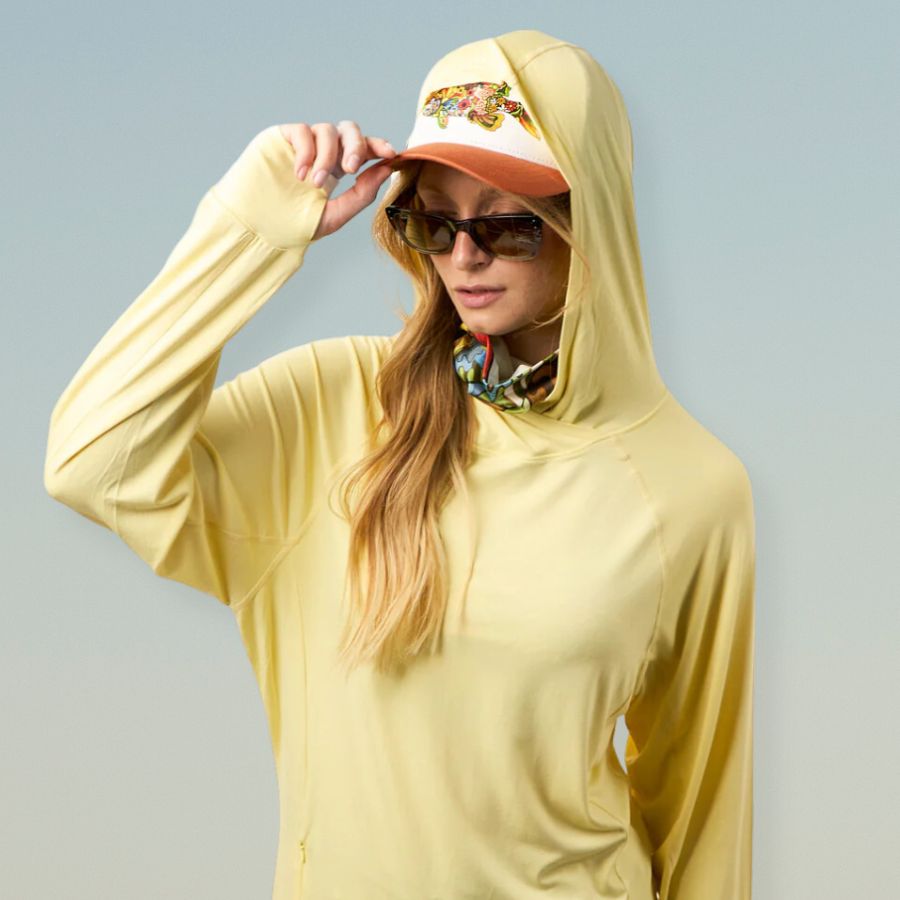
This is often the real hero of women’s fly fishing clothing. A good sun layer does not just protect skin; it makes the whole day easier. Long sleeves, neck coverage, breathable fabric, thumb loops when useful, and a fit that does not fight your body all matter.
The Skin Cancer Foundation notes that clothing can be one of the simplest forms of sun protection, and its UPF guidance gives anglers a useful benchmark when comparing garments.
A light fleece, grid fleece, or insulated layer works when mornings are cold or wind picks up. This layer should trap warmth without making your shoulders feel restricted. In fishing, warmth that kills range of motion is a bad trade.
The best mid layers:
breathe well
do not feel bulky under outerwear
move cleanly through the shoulders
stay comfortable when damp air or spray shows up
Women’s fishing rain gear should not be an afterthought. Fishing often means standing still in weather longer than you would on a trail. A shell that technically works for commuting may not work well when you are casting in wind, kneeling at the bank, or living in it for several hours.
A strong women’s fishing jacket should offer:
waterproof or highly water-resistant protection based on conditions
enough breathability for active use
a hood that works in wind
cuffs that help manage water intrusion
mobility through the shoulders and elbows
Patagonia’s shell guidance emphasizes the difference between lighter weather coverage and true waterproof/breathable shells, which is a useful distinction when choosing rain gear for fishing instead of general casual use.
If you are not wearing waders, lightweight fishing pants or quick-dry bottoms usually outperform ordinary leggings in hot, buggy, or brushy environments. If you are wearing waders, the job changes: now you want bottoms that layer smoothly underneath and do not twist, overheat, or rub.
Good bottoms for fishing should support:
unrestricted movement
quick drying
comfort while sitting, wading, and walking
easy layering under waders
enough durability for boat decks, rocks, and trails
Accessories are not decorative in fishing. They are performance pieces.
Think:
a brimmed hat or cap
polarized sunglasses
sun gaiter or neck coverage
socks that match your temperature and boot setup
fingerless or sun gloves if needed
packable rain layer
extra dry layer in the truck or dry bag
Often, the difference between a fine day and a miserable one is a single forgotten accessory.
This comparison matters because a lot of women already own activewear and wonder whether they really need special fishing gear. Sometimes activewear works. Often it works only halfway.
That is the good news. Stretch, softness, and comfort are already there.
That is the missing part, here is where the gap usually shows up:
basic long sleeves may not offer dependable UPF or all-day comfort in heat
everyday leggings can feel sticky, exposed, or under-protected around brush, boat hardware, or changing weather
casual rain shells may not breathe well enough for active fishing
fashion-forward layers may look good dockside but fail under waders or sustained sun
A women’s fishing shirt usually earns its place through function:
faster drying
better venting
better sleeve structure
more purposeful sun coverage
more durable performance around water
An ordinary shell might keep rain off during a short walk. A fishing-specific layer has to handle longer exposure, more arm motion, wind, damp gear contact, and repeated use in unstable weather.
The real issue is not style. It is whether the outfit still works after hour four.
Style-only clothing often performs well in the parking lot and poorly on the river. A technical fishing outfit keeps earning its place throughout the day. The best version, of course, does both.
Fishing weather rarely holds still. That is why the smartest women’s fishing attire is modular.
In heat, your clothing should help you stay covered without feeling trapped.
Prioritize:
UPF-rated long sleeves or hooded sun layers
breathable fabrics
lightweight bottoms
wide-brim or structured hat
sunglasses
minimal but strategic layering
The National Weather Service recommends protective clothing, hats, sunglasses, and checking UV conditions when planning outdoor time. On bright days, this is not just comfort advice; it is exposure management.
This is where layering wins. Start light enough to move, but pack or wear:
a moisture-managing base
a warm but breathable mid layer
an outer shell if wind or rain is in play
Orvis’ guidance on layering for fly fishing points out how important moisture management is for warmth and comfort, especially when wearing breathable waders.
Rain is not just wet. It is often a comfort multiplier. Once you are damp, chilled, and wind-hit, your energy drops fast.
For real fishing rain gear, look for:
trustworthy weather protection
breathable construction
cuffs and hood design that actually work
easy movement while casting
packability when weather breaks
When layering under waders, bulk becomes the enemy. The goal is warmth without crowding, sweating, or pressure points.
Best practice:
skip thick, awkward seams
avoid overly bulky fleece
choose smooth layers that slide and breathe
think in systems, not random pieces
Fly fishing creates very specific demands that general outdoor apparel does not always address.
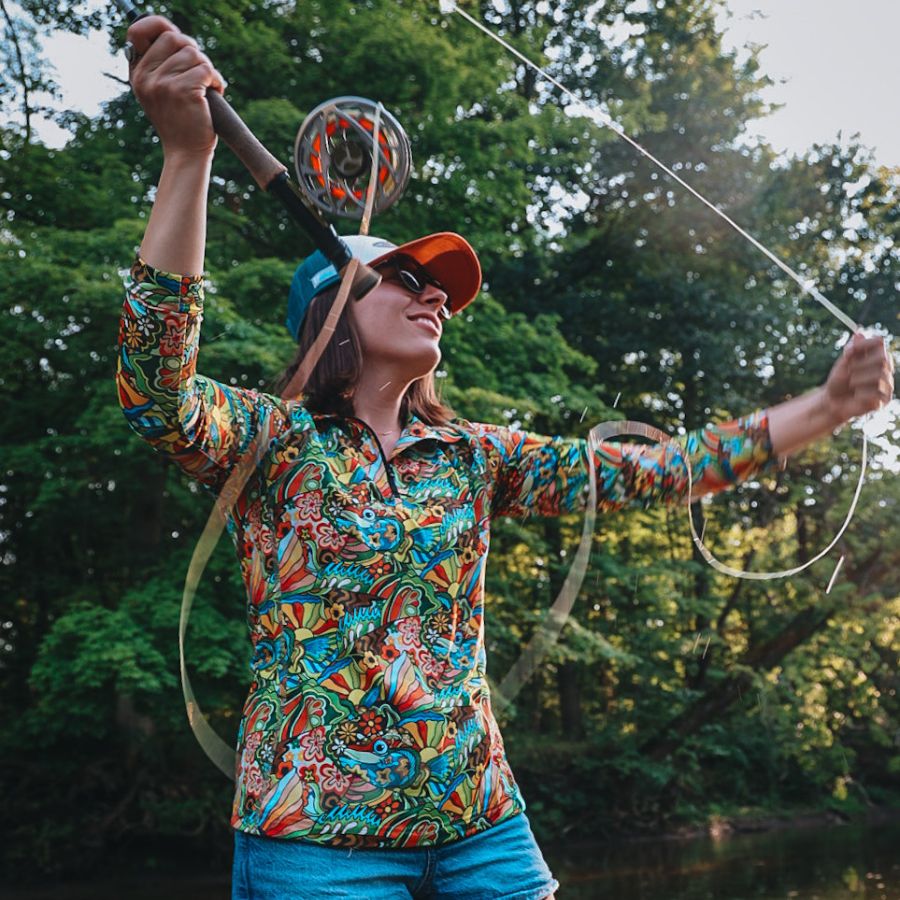
You are making repetitive upper-body movements. You may be wet wading or wearing chest waders. You might be carrying a pack, standing in moving water, hiking to a run, or constantly adjusting for temperature and exposure. That requires a blend of freedom, protection, and endurance.
Casting is a shoulder-driven motion repeated over and over. Clothing that pinches at the shoulders, binds through the back, or shifts awkwardly at the waist becomes exhausting.
Some women’s fishing gear is good on its own but awkward under waders. Great fly fishing clothing layers cleanly, does not bunch, and still regulates temperature once enclosed.
Even if you are not submerged, you are near water all day. That changes how you think about drying time, warmth, and exposure.
Fishing asks you to keep essentials handy without clutter. That is why technical apparel often pays off in small but meaningful ways.
Women’s fly fishing clothing is less about looking “outdoorsy” and more about performing inside a very specific rhythm of movement, function and weather.
This is one of the biggest reasons women have historically felt underserved in fishing apparel.
For years, the choice seemed to be:
functional but dull
feminine but impractical
That is a false choice, and thankfully, it is becoming less acceptable. Women want clothing that performs, fits, and reflects their taste. That does not make the clothing less serious. It makes it more complete. Personal style is not separate from confidence on the water. It is often part of it. The best women’s fishing fashion does not chase fashion for its own sake. It brings together:
technical fabrics
flattering but functional fits
colors and prints that feel expressive
layering that looks intentional
apparel that transitions well from river to restaurant
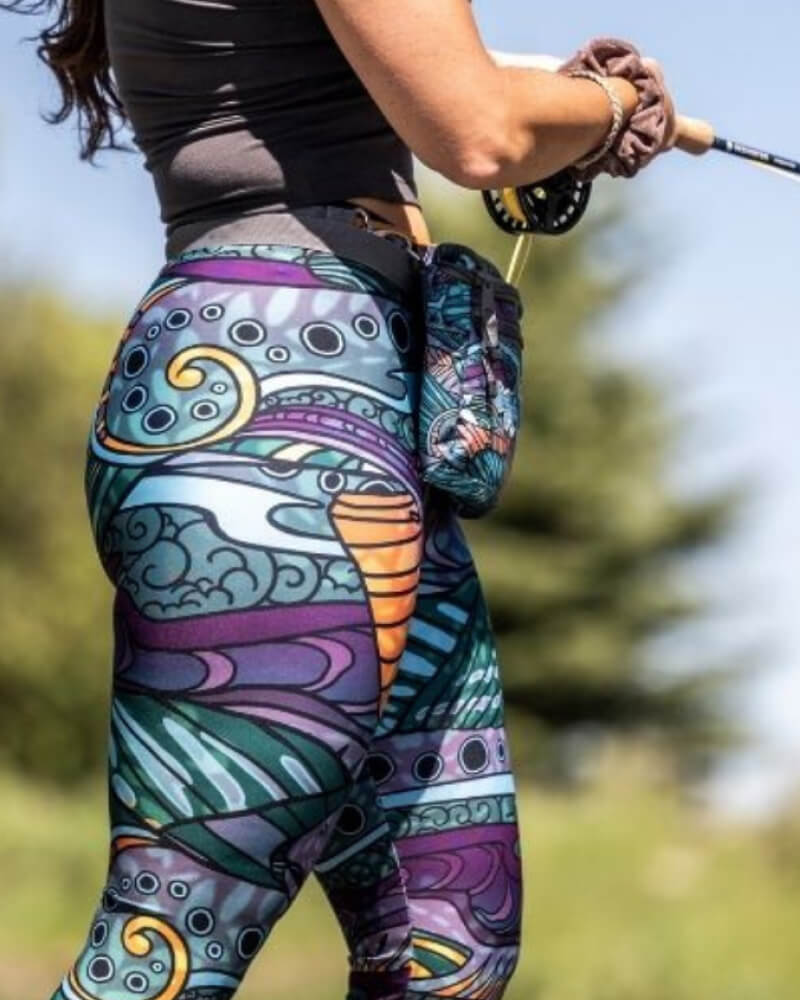
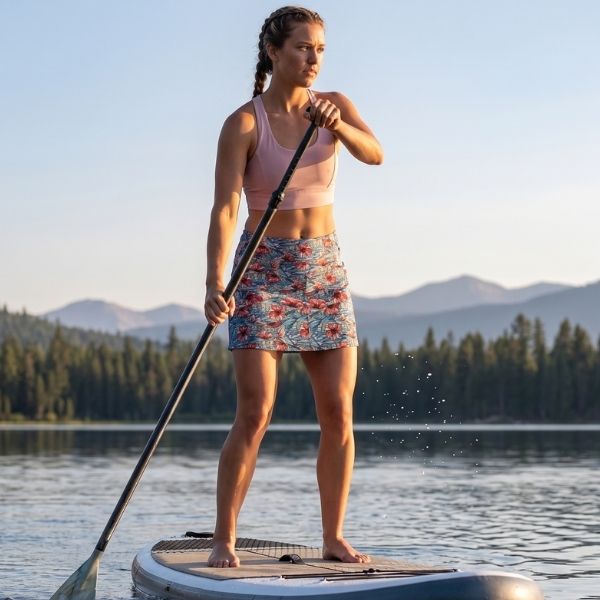
That balance fits especially well with Fishe’s long-standing brand direction: “Functional, Fashionable, Fishing” and a personality centered on being active, energetic, and trendy, while still staying product-focused and rooted in life on the water. women deserve gear that feels bold, functional, and built for how they actually fish.
And that is the point. The right outfit should not make you choose between performance and identity.
Not every angler needs a giant wardrobe. But well-chosen pieces are worth buying because they solve recurring problems. A strong piece of women’s fishing clothing earns its cost when it:
keeps you comfortable longer
reduces distraction
protects you from sun and weather
layers better than what you already own
lasts through repeated use
helps you feel ready instead of underdressed
That last point matters more than people admit. Clothing shapes endurance. Endurance shapes confidence. Confidence changes the whole day.
When you shop, ask:
Will this dry quickly?
Can I cast freely in it?
Will it work for several hours, not just the first one?
Does it protect me from sun, wind, or rain in a meaningful way?
Can it layer under or over my other fishing pieces?
Does it fit a woman’s body in motion?
Would I still want to wear it when conditions get annoying?
If the answer is yes across most of that list, you are probably looking at something useful.
The best women’s fishing clothing is not about building a perfect outfit for a photo. It is about building a system that lets you stay outside longer, fish more comfortably, and move through changing conditions with less friction.
That might mean one excellent sun shirt, a better jacket, and smarter layers under waders. It might mean replacing generic activewear with pieces designed for long exposure, repeated casting, and real weather. It might simply mean understanding that what women wear fishing should be chosen for the water, not borrowed from every other category in the closet.
When clothing works, it fades into the background. You stop tugging at sleeves, adjusting waistbands, worrying about sun, or wishing you had packed one more layer. You focus on the cast, the drift, the light, the bank, the next run. That is when apparel stops being an afterthought and starts becoming part of how you fish well.
A good place to begin is simple: build one outfit that handles sun, movement, and changing weather better than what you own now. Then keep refining from there.
Explore women’s fishing apparel that is built for movement, protection, and confidence on the water—or keep going with a layering guide that helps you dress smarter for every forecast.
Women should wear clothing that protects against sun, wind, moisture, and temperature shifts while still allowing full movement. A practical setup usually includes a technical long-sleeve fishing shirt or sun hoodie, quick-dry bottoms or wader-friendly layers, polarized sunglasses, a hat, and weather protection you can add or remove as conditions change.
The best women’s fishing clothing for fly fishing combines mobility, layering comfort, sun protection, and weather resistance. Look for women-specific fits, quick-dry materials, UPF-rated tops, low-bulk layering pieces, and outerwear that does not restrict your cast.
Not always, but purpose-built fishing shirts and jackets usually perform better than generic alternatives. They are more likely to offer better ventilation, faster drying, better sun coverage, improved weather protection, functional pockets and features and a fit that works more naturally during long days on the water.
For rain, women should wear breathable waterproof outerwear over moisture-managing base layers and mid layers suited to the temperature. A real fishing jacket or shell should protect from wind and water while still allowing free movement through the shoulders and arms.
Start with function. Choose a base layer that manages moisture, a working layer that handles sun and movement, and an outer layer for wind or rain. Then add accessories like a hat, sunglasses, socks, and packable rain protection. Build the outfit around the conditions you fish most often.
Women’s fly fishing clothing is designed around the specific needs of fishing: repetitive casting motion, water exposure, layering under waders, all-day sun, and weather shifts. General outdoor apparel may work in some cases, but fishing clothing is often better tuned for those exact demands.
The best women’s fishing apparel is worth buying when it noticeably improves comfort, protection, mobility, and layering compared with what you already own. Good gear reduces distraction, lasts longer, and helps you stay focused on fishing rather than managing discomfort.


