

Wet Fly Swing Podcast · Episode 280
From Maine Rivers to an Alaska Fishing Brand: Linda Leary on Wet Fly Swing
Long before Fishe became a women-first fishing and outdoor brand, Linda Leary was learning to cast beside her father in northern Maine. Those evenings on lakes and rivers gave her a lasting connection to fishing, family, and the confidence that comes from knowing you belong outside.
On the Wet Fly Swing podcast, Linda traces the route from Maine to Alaska, from a long career in transportation and resource industries to entrepreneurship, and from a simple vision board to a brand recognized for original fish art and functional apparel.
Quick Take
The conversation is about much more than clothing. It is a story of noticing a problem, listening closely to women, applying decades of business experience, and building products and experiences that help more people feel comfortable on the water.
In This Story
Why You Should Trust This Article
This story is based on Linda Leary’s first-person interview on Wet Fly Swing, the supplied episode transcript, and the podcast’s official show notes. Historical product and event references are described as part of that conversation rather than presented as current availability.
Current links lead to active Fishe collections, the Fishe brand story, and Women’s Flyfishing trip and class pages.

Linda’s connection to fishing began with her father in northern Maine.
Fishing Was a Way to Spend Time With Her Dad
Linda learned to fly fish when she was young. Her father worked long hours, so evenings on the lake or river became a meaningful way to be together.
She remembers him as a natural, beautiful caster. The technical details mattered, but the deeper lesson was that fishing could create time, attention, and connection in a life that was otherwise busy.
That early experience followed Linda west. After moving to Alaska, she spent more time fishing with clients, learning new waters, and refining her skills through experience.
Why Alaska Became Home
Linda moved to Anchorage after college, joining friends and family who had already headed north. Like many people who arrive planning to stay briefly, she found reasons to build a life there.
Alaska offered scale, beauty, and demanding weather. Linda describes a place where adventure is close, plans can change quickly, and people learn to be capable because conditions demand it.
“Things in Alaska go sideways real fast.”
That combination of wildness and practical resilience later became part of the Fishe identity. The brand’s color and optimism are joyful, but the clothing and gear are meant for real movement, real weather, and real days outside.
From a Long Business Career to a Blank Office and a Vision Board
Before Fishe, Linda spent nearly three decades in trucking and worked in telecom, oil and gas, and resource development. She managed complex operations and, during part of her career, helped lead a company with hundreds of employees.
Fishing with clients kept her close to the water. It also made one problem increasingly obvious: women had too few real choices.
Linda rented a small office from a friend, sat down, and began vision boarding what a different kind of fishing brand could look like.
There was no single dramatic blueprint. There was a gap, a point of view, and a willingness to start.
“I just found an opportunity.”
Her earlier career did not disappear when she became a founder. Operations, hiring, purchasing, partnerships, customer relationships, and financial responsibility all transferred into the new business—only now the team was smaller and every decision felt closer.
The Real Product Idea Was Confidence
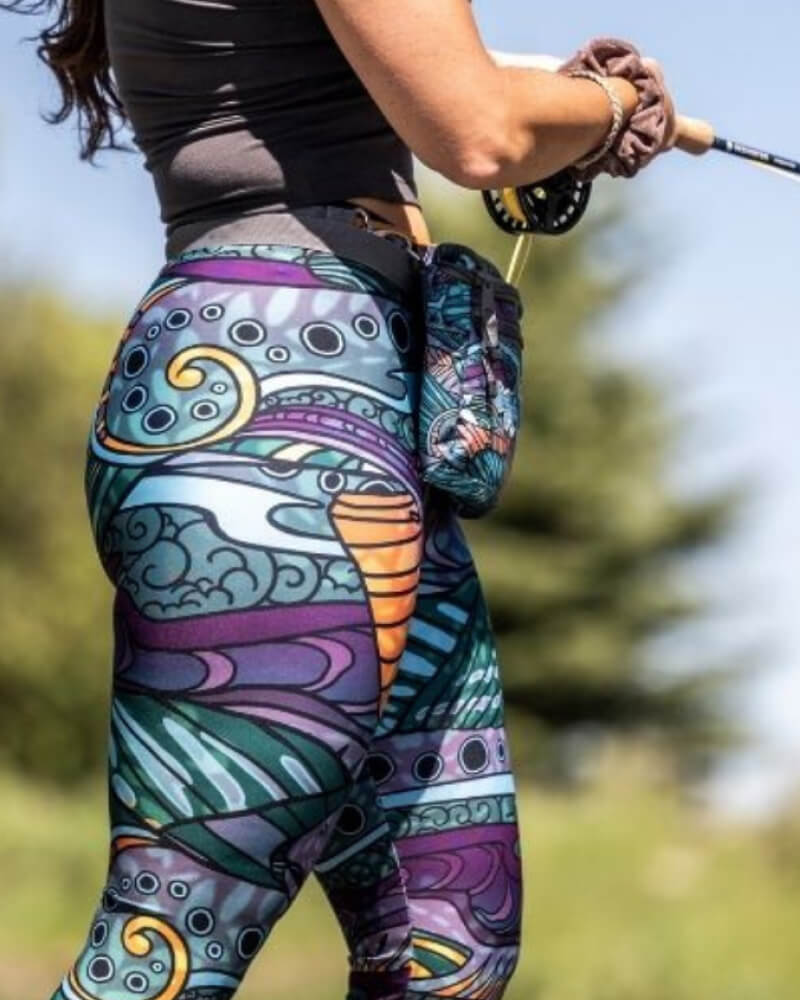
The earliest Fishe leggings answered a practical need: a comfortable layer under waders that could move easily, and continue into the rest of the day.
But Linda’s larger idea was about how clothing affects the person wearing it. In business, people dress for the role they are stepping into.
She believed women deserved that same sense of readiness and self-possession on the water.
The goal was not to make fishing apparel decorative at the expense of function. It was to stop treating function and personality as opposites.
“If it fits right, you’re going to feel like you’re going to perform better.”
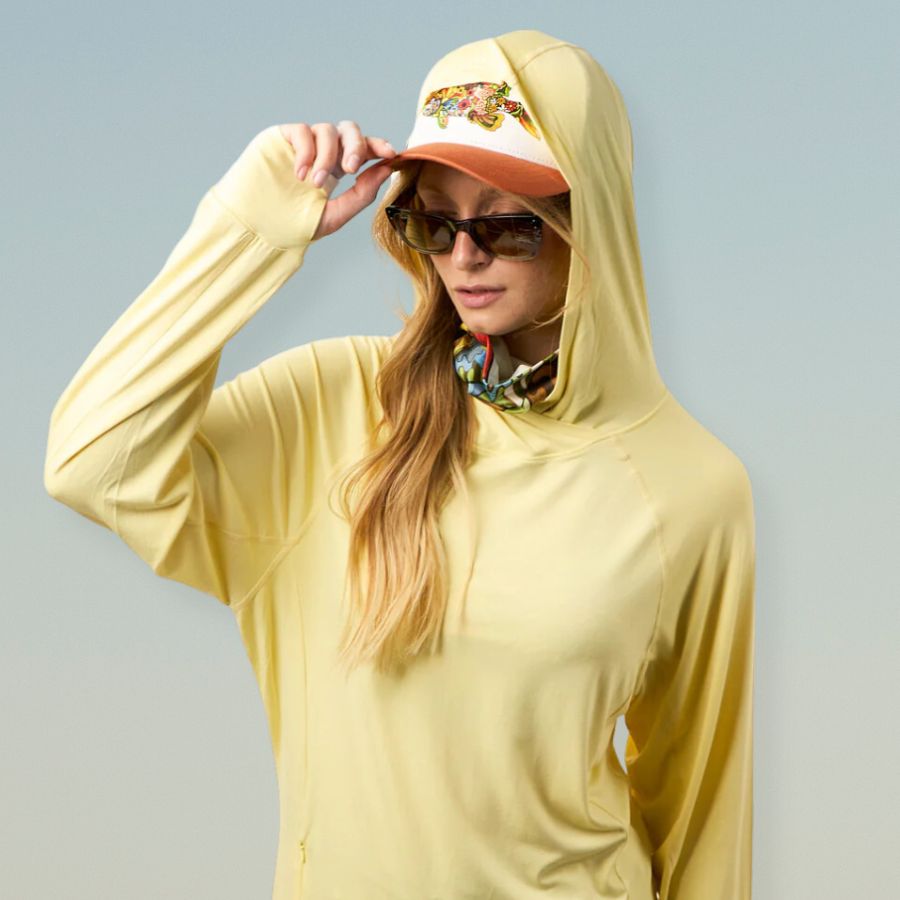
That remains visible in the current Fishe leggings collection, where fish-inspired artwork is built into apparel intended for casting, hiking, travel, camp, and everyday movement.
How a Fish Becomes a Fishe Print
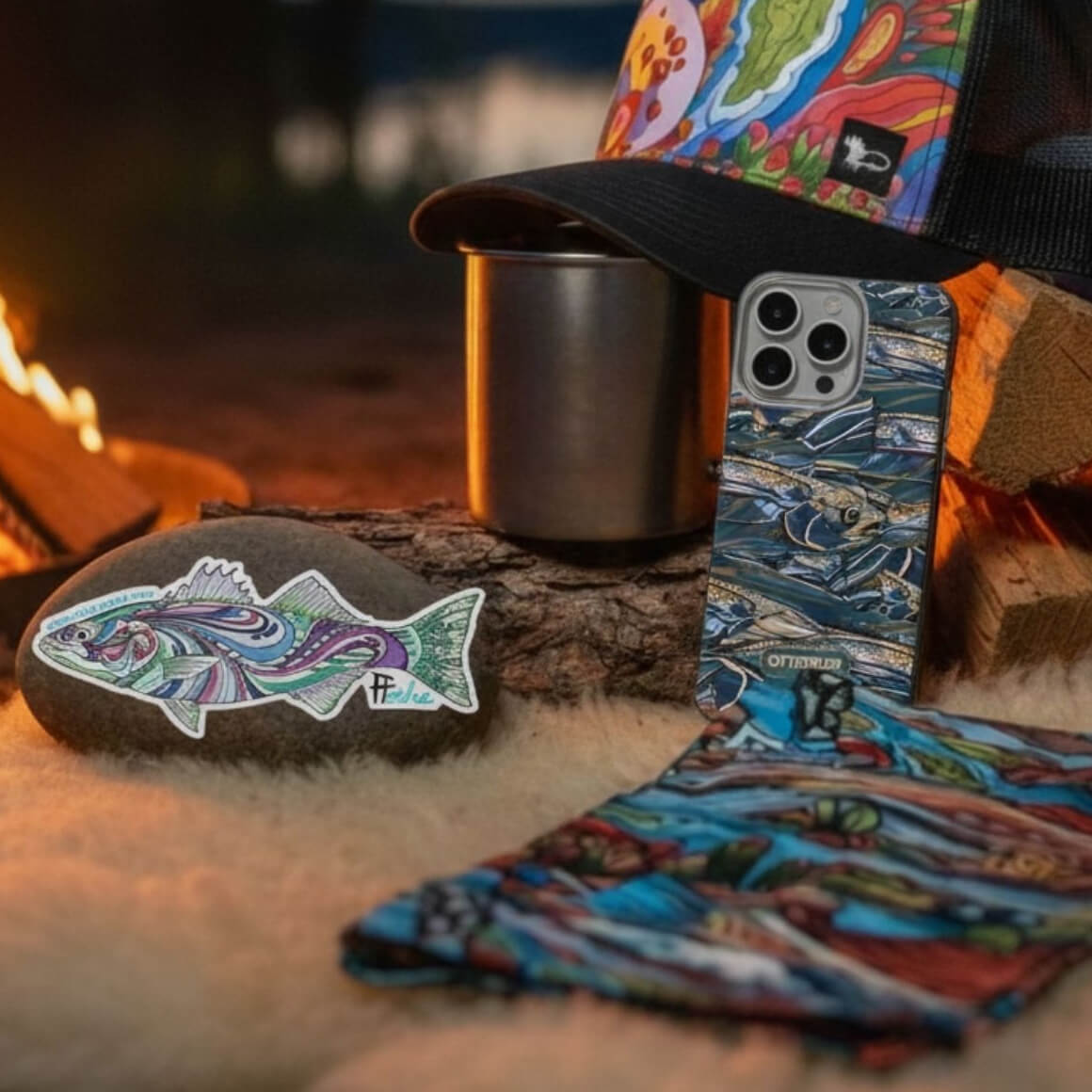
Linda explains that the product line began as an art-based idea. Artists interpret a fish, and the Fishe team can then isolate, enlarge, repeat, or abstract parts of that artwork across apparel and gear.
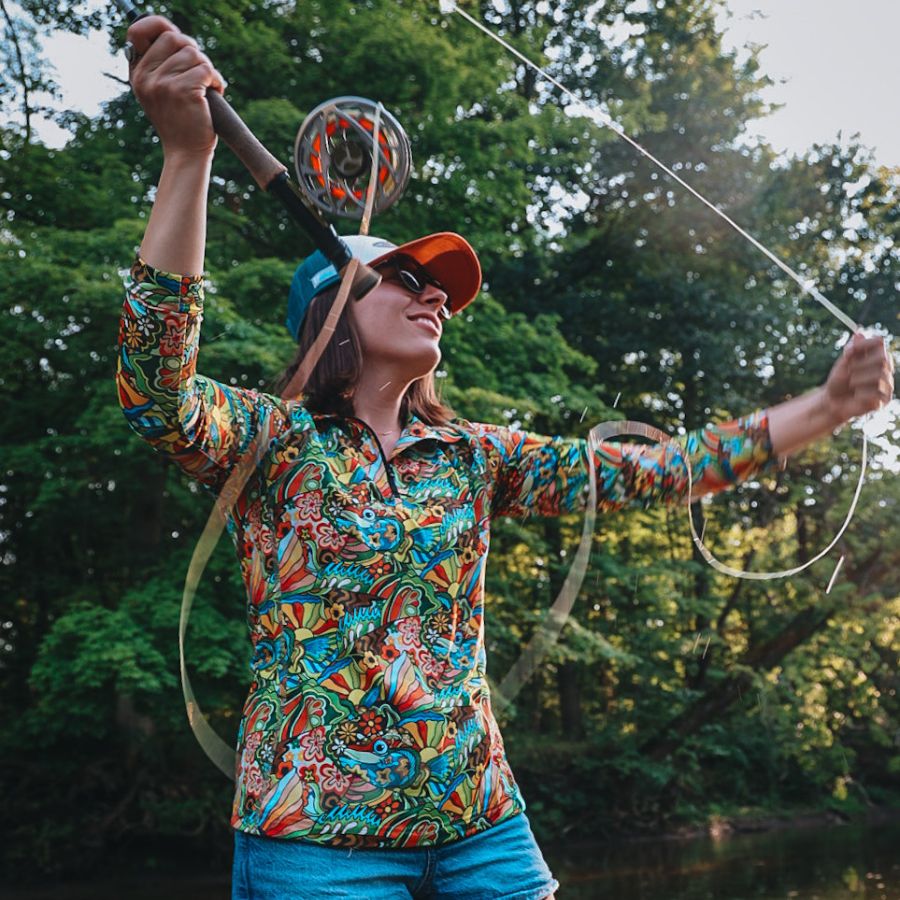
The result is not simply a fish printed on fabric. Scale, color, movement, and fragments of fins, scales, spots, and silhouettes can become a visual pattern that feels expressive even from a distance.
The naming is collaborative too. Linda’s husband and sons have helped develop the playful names attached to prints and collections, giving the brand another layer of family personality.
In the episode, Linda discusses leggings, hats, neck tubes, wading belts, dry bags, sling packs, boots, fly-fishing tools, and other collaborations that marked Fishe’s growth at that point in time.

The original artwork for Wet Fly Swing Episode 280.
Products That Cross From the River Into Real Life
Wet Fly Swing host Dave Stewart asked Linda which products had become especially important. She pointed to leggings and bags, while also describing collaborations involving sling packs, waders, deck boots, watch bands, and accessories.
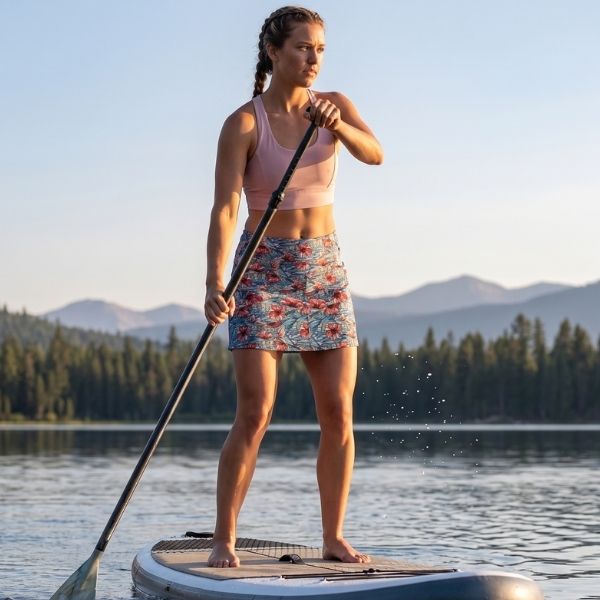
The common thread was versatility. Customers used Fishe pieces for fishing, travel, running, work, and daily life. Linda even heard from male endurance athletes who appreciated the compression of the leggings.
That customer feedback mattered because it revealed uses the team had not always planned. Linda’s response was to keep listening rather than force every product into one narrow identity.
Explore the current dry bag collection and fly-fishing sling packs.
Five Business Lessons Hidden Inside the Fishing Conversation
Lesson One
Start with a problem you have experienced yourself.
Linda did not begin with a trend report. She began with years of wearing fishing clothing that felt oversized, impersonal, or designed around someone else.
Lesson Two
Past experience is not wasted when you change industries.
Transportation and resource-industry leadership taught Linda how to manage operations, people, partnerships, pressure, and responsibility. Those skills became the foundation beneath the creative work.
Lesson Three
A small team can be more personally demanding than a large company.
Linda jokes that leading hundreds of employees could feel easier than leading a team of roughly ten because a larger company has more layers of leadership. In a startup, the founder stays close to nearly every decision.
Lesson Four
Collaboration can expand a brand without erasing its identity.
The podcast notes highlight collaborations with outdoor and Alaska-rooted companies, artists, ambassadors, and other women in the fishing industry. The strongest partnerships added capability while keeping Fishe’s artwork and perspective visible.
Lesson Five
Listen for the need behind the request.
When a nurse told Linda that compression socks would be genuinely useful, the comment represented more than a product idea. It showed how customers connect a brand’s strengths to needs the founder may not have considered.

Ambassadors, classes, and shared trips help turn gear into community.
Trips, Ambassadors, and the Invitation to Learn
The later portion of the episode moves from products into the people and experiences surrounding them. The official notes highlight Fishe ambassadors, women-led collaborations, hosted fishing trips, conservation, and Linda’s love of Arctic grayling.
That shift matters because Fishe was never meant to stop at a product. Clothing can help someone feel prepared, but a class, trip, guide, or supportive group can help her take the next step.
Linda describes hosted trips as organized experiences where accommodations and logistics are handled so guests can focus on fishing, learning, and enjoying the group.
Explore current Women’s Flyfishing classes and guided fishing trips.
Why Grayling Belong in the Story
The show notes return near the end to one of Linda’s favorite fish: Arctic grayling. Their sail-like dorsal fins, distinctive shape, and connection to northern waters make them a natural symbol for an Alaska-rooted brand built around fish art.
Grayling also represent discovery. Many anglers have never caught one, which means a grayling trip can feel like an invitation into a new species, a new river, and a new chapter of fishing experience.
The episode’s grayling conversation ties together Linda’s love of Alaska, the visual inspiration behind Fishe prints, and the hosted experiences that help more women spend meaningful time on the water.
Listen to Linda Leary on Wet Fly Swing
Episode 280 of the Wet Fly Swing Fly Fishing Podcast runs for approximately one hour and follows Linda from her Maine childhood through Alaska, entrepreneurship, product development, partnerships, team building, trips, ambassadors, and grayling.
The full conversation carries Linda’s humor and directness in a way a written recap cannot completely reproduce.
Read the Notes & Listen Listen on Apple Podcasts Listen on Spotify
Final Note: Build the Thing You Wish Existed
Linda’s story does not follow a tidy founder myth. It moves through family, decades of work, client trips, Alaska weather, a rented office, artists, collaborators, customers, and a small team learning together.
The lesson is not that everyone should leave a long career and start an apparel company. It is that close attention can reveal what is missing—and experience gives you more tools than you may realize to build an answer.
For Linda, that answer became Fishe: clothing, gear, art, trips, classes, and a growing community that makes more room for women outdoors.
Frequently Asked Questions
Which Wet Fly Swing episode features Linda Leary?
Linda Leary appears in Episode 280 of the Wet Fly Swing Fly Fishing Podcast, titled “FisheWear with Linda Leary – Women’s Fly Fishing Apparel.”
How did Linda Leary get into fly fishing?
Linda learned to fly fish with her father in northern Maine. After moving to Alaska, she spent more time on rivers and continued developing her skills.
What inspired Linda to start Fishe?
Years of wearing fishing apparel that did not fit or reflect women’s style helped Linda recognize an opportunity for functional, art-forward fishing clothing designed with women in mind.
What products are discussed in the podcast?
The episode discusses leggings, dry bags, hats, neck tubes, wading belts, sling packs, waders, deck boots, tools, accessories, and historical brand collaborations.
Where can women find Fishe-related fishing classes and trips?
Current classes and guided trip opportunities are listed through Women’s Flyfishing.
Related Reading

Growing Up Fishing: Linda Leary’s Story
Read how childhood fishing with her dad in Maine followed Linda to Alaska’s rivers.
What Linda Learned From Her Dad
A personal tribute to the fishing, confidence, community, and love of the outdoors he passed down.
Meet the Fishe Ambassadors
Meet the anglers, storytellers, mothers, and community builders helping women feel at home on the water.
Fish Outside the Lines
Explore art-forward fishing apparel and gear designed to move from the river into the rest of your day.
