

The Product Boss Podcast · Female Founder Conversation
The Collaboration Strategy That Helped Fishe Grow
Fishe did not grow by manufacturing everything itself. Founder Linda Leary grew the brand by protecting what made Fishe distinct—bold fish art, a women-first point of view, and a deeply engaged community—then pairing those strengths with companies that already knew how to make exceptional gear.
Collaborations opened new doors. In her conversation with The Product Boss, Linda explains how collaborations with Orvis, XTRATUF, Groove, SaraBella, and Taylor Made Polish opened doors to new products, audiences, and relationships. She also shares the less glamorous work behind that growth: trust, quality control, financial focus, team building, and the willingness to keep asking.
In This Conversation
Why You Should Trust This Article
This article is built from Linda Leary’s full Product Boss conversation, not a short promotional summary. Her stories, examples, business lessons, and sequence of events come directly from the episode transcript and the official episode page.
Current product links were checked. Where the article points to products available today, those links and product details were checked against the current Fishe store. Historical partnerships are described as Linda discussed them in the podcast rather than presented as promises about future availability.
Listen to the Full Product Boss Episode
Hear Linda tell the collaboration stories in her own voice, including the trade-show connection that led to Orvis, the broken-arm phone call, the COVID pivot, and the advice she gives other product founders.
Fishe Started with a Point of View the Market Could Recognize
Fishe began in Anchorage in 2015. Linda founded the brand to create clothing and accessories for women who fish, fly fish, and spend time outdoors. At the time, she saw a category dominated by black, brown, olive, and other practical but restrained colors.
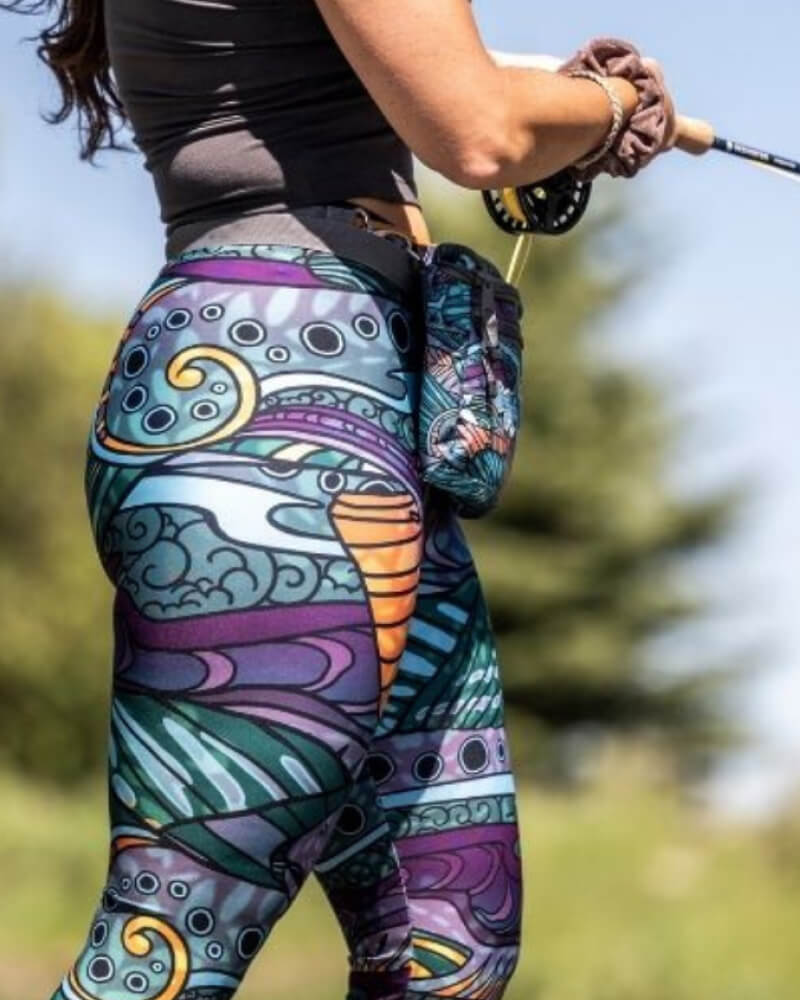
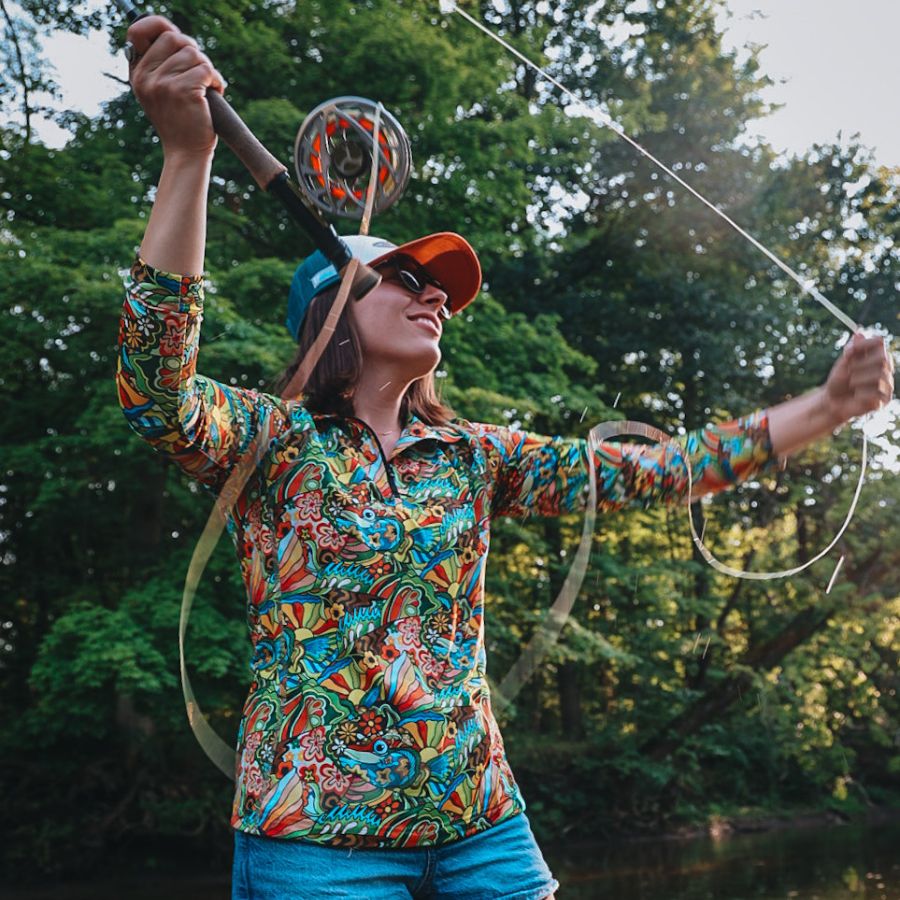
Fishe chose color, pattern, and art. The products were built around fish-inspired artwork created with women artists, giving the brand a visual language that customers could recognize before they ever saw a logo.
Each partner needed a distinct contribution: collaboration works best when each company brings something the other cannot easily reproduce. Fishe brought original art, an identifiable personality, and direct knowledge of women anglers; its partners brought specialized manufacturing, established product categories, and broader distribution.
The difference had to be unmistakable. Linda’s strategy was not to make Fishe look more like the biggest outdoor brands. It was to make the difference so clear that those brands could see the value of bringing Fishe into their world.

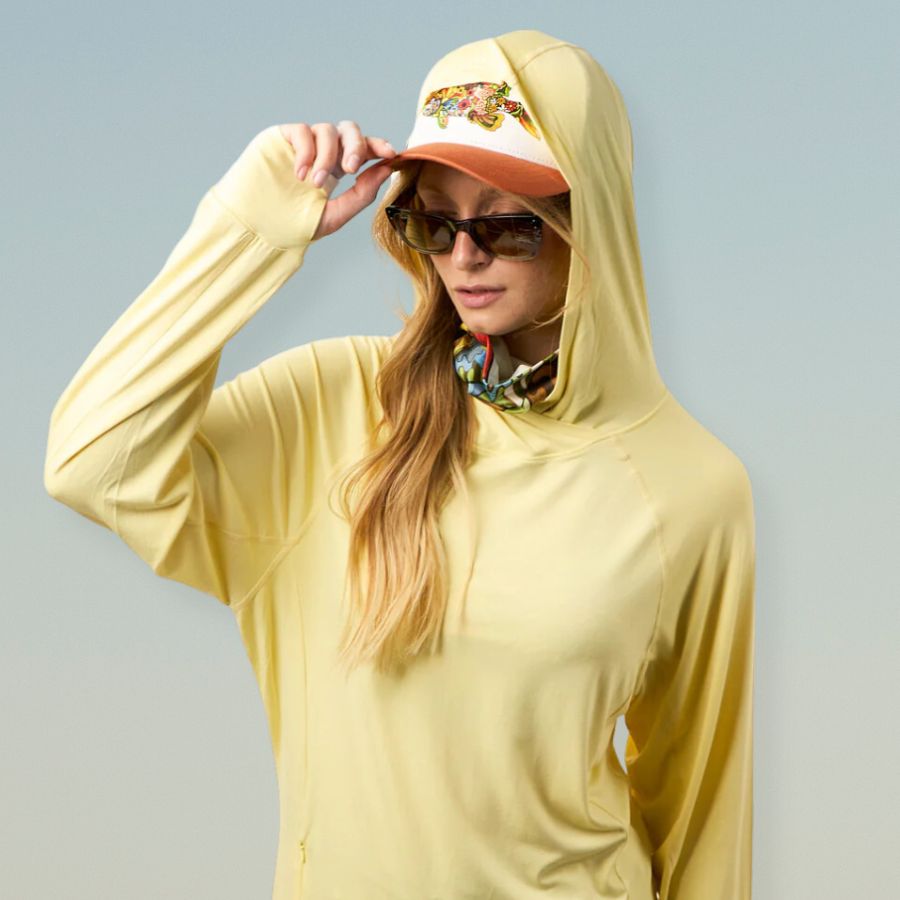
Linda Leary built Fishe around recognizable fish art, practical products, and a clear women-first perspective.
What Brand Collaboration Meant for Fishe
The model was straightforward. In the episode, Linda describes it this way: a partner licenses Fishe artwork, and the two companies work together to apply it to a product. The strongest opportunities were often items Fishe would not necessarily manufacture independently.
That distinction kept Fishe in its creative wheelhouse. Instead of learning an entirely new manufacturing category from scratch, the company could contribute art direction, customer insight, and brand energy while the partner contributed deep technical expertise.
A boot company already understands molds, rubber compounds, fit, durability, sourcing, and production. A fly-rod maker understands blanks, components, action, and performance. A pack company understands load, access, ergonomics, and construction.
When those capabilities meet a distinctive Fishe pattern and community, the result can feel fresh without asking either brand to become something it is not.
Fishe brought
Original fish art, women-angler insight, visual personality, storytelling, and an audience excited by products that feel different.
The partner brought
Specialized product engineering, manufacturing systems, category credibility, distribution, and launch experience.
Both brands shared
Product approvals, launch planning, marketing support, giveaways, customer education, and the responsibility to protect quality.
The Collaborations That Made the Strategy Real
Linda started before Fishe was enormous. Her wish list was ambitious, but she did not wait until Fishe was enormous to begin building relationships. The episode traces several collaborations that helped the brand enter product categories beyond apparel and accessories it could make alone.
Orvis: Pairing Established Product Expertise with Fishe Art
Orvis became a defining example. It was one of the clearest examples of the model. Fishe artwork could refresh an established pack or bag with a new point of view, while Orvis supplied the product-development and manufacturing knowledge behind the item.
The value flowed in both directions. Fishe gained validation, reach, and access to a technically developed product. Orvis gained distinctive art and a closer connection to women who wanted fishing gear with more color and personality.

Collaboration in the current Fishe collection
Unbound Brown Orvis + Fishe Sling
The continuing Orvis relationship shows how a collaboration can become more than one launch. A proven gear format gains new visual life through Fishe artwork, while customers receive a product shaped by both brands’ strengths.
XTRATUF: Entering a Product Category Built on Specialized Manufacturing
Boots required specialized manufacturing. Rubber fishing boots were another dream category. Linda knew that creating a technically sound boot from the ground up would require a completely different manufacturing operation, but Fishe could help make a familiar working product feel unmistakably its own.
XTRATUF had the boot expertise; Fishe had the art and audience. The collaboration allowed bright fish patterns to move onto footwear without Fishe needing to build a footwear factory, supply chain, and development team.

Another collaboration category
Fishe Art on XTRATUF Deck Boots
Current Fishe-branded XTRATUF styles continue the idea Linda described: take a product women already rely on around water and give it the color and fish art that make it feel personal.
Groove: Taking the Art into an Everyday Accessory
Smaller categories could still extend the brand. Linda also discussed working with Groove on silicone rings featuring Fishe art. The category was smaller than a pack or boot, but it followed the same principle: use a partner’s established product to bring Fishe patterns into another part of a customer’s life.
This kind of collaboration can create an accessible entry point for new customers while giving loyal customers another way to carry the brand.
SaraBella: A Women-Owned Collaboration Built Around the Water
The SaraBella partnership was deeply aligned. Fishe worked with SaraBella, a woman-owned fly-rod maker in Colorado, to bring the visual identity of Fishe into a highly personal piece of fishing equipment. The relationship connected two companies serving women anglers from different sides of the experience.
The audience, purpose, and values already overlapped. Readers can see that partnership through a Fishe ambassador’s review of her custom rod.

A Collaboration Customers Could Feel
A fishing rod is not merely a surface for a print. It must perform, feel balanced, and suit the angler. That made trust, craftsmanship, and shared standards central to the project.
Taylor Made Polish: A Fast, Playful Response to an Unusual Moment
The moment called for a playful idea. During the pandemic, Linda and The Product Boss team brainstormed products that could create a little fun while customers spent more time on video calls. That conversation led to a nail-polish collaboration with Taylor Made Polish, using colors named with fishing language.
The idea was outside Fishe’s usual assortment, but it still made sense. It was colorful, giftable, community-minded, and built through a partner that already understood the product category.
The Best Collaborations Begin as Relationships, Not Transactions
Linda is direct about the risk involved in sharing ideas. A partner may change direction, a contract may end, or a company may decide it can create something similar without you.
Choose partners carefully. She looked for companies with quality, ethics, integrity, and a genuine reason to value what Fishe brought to the table.
The relationship had to work both ways, so she rejected the idea that a partnership should exist only for Fishe’s benefit. The product, marketing, and economics need to make sense for both sides; when the relationship is reciprocal, teams are more willing to brainstorm, solve problems, and plan another season together.
That is why repeat collaborations matter. They show that the first project was not simply a logo exchange. It created enough trust and customer response for both companies to keep investing.
Ask what both brands can create together. It is “What can we create together that neither company could do as well alone?”
Linda’s Quality Filter
Linda describes herself as fussy about quality. That standard protects the customer and the Fishe name, especially when another company controls much of the production.
A collaboration expands a brand’s reach, but it also expands its exposure to another company’s decisions. Product performance, customer service, packaging, timing, and communication can all influence how customers judge both names.
Brand fit therefore has to go beyond audience size. A large partner is not automatically the right partner if the product feels off-brand, the working relationship is difficult, or the standards do not align.
The Orvis Story: Why Being Visible Matters Before the Ask
The connection began before the pitch. The Orvis relationship did not begin with a cold pitch sent into a corporate inbox. It developed around a trade show, where people connected to the company had already seen, purchased, and talked about Fishe products.
Linda said Fishe also paid attention to small moments of surprise and delight. Packages might include Swedish Fish, stickers, or another detail that made opening an order memorable.
Those details helped the brand travel through conversation. By the time Orvis reached out, Fishe was not an abstract proposal. People inside and around the company had already experienced the products and personality.
The Phone Call Linda Had to Delay
The timing was almost comical. Orvis reached out during the same week Linda broke her arm and elbow. Because she was taking medication, her doctor and family told her not to conduct business until she was fully clear-headed.
For a founder who had been hoping for exactly that kind of opportunity, waiting was painful. Orvis called back, the conversation happened, and the relationship moved forward.
The story is funny, but the lesson is serious: a strong opportunity can survive a professional pause. Protecting judgment and showing up ready is better than forcing an important conversation at the wrong moment.
Trade Shows Can Pay Off in Connections, Not Only Orders
Events can create delayed returns. Linda and the hosts discussed how events may disappoint when judged only by sales made on the floor. The bigger return can be a buyer, advisor, peer, retailer, or future partner who remembers the brand months later.
That changes how a founder should prepare. The booth still needs to sell, but it also needs to communicate the brand clearly enough that the right person knows what to talk about after the show.
Visibility compounds when the story is easy to repeat. “An Alaska brand creating colorful fish art for women anglers” is memorable, specific, and easy for someone to carry into another room.
You Can Build the Same Visibility Without Waiting for a Trade Show
Visibility can be built intentionally. The Product Boss hosts describe a process of “circling” a potential partner: becoming genuinely visible around the company before making a formal request. Social media, shared customers, thoughtful engagement, introductions, and industry communities can all create familiarity.
This does not mean flooding a brand with tags or manufactured praise. It means understanding its products, noticing where the audiences overlap, and participating in the same ecosystem long enough to make the eventual conversation relevant.
A good pitch feels like a next step. Founders can begin by supporting the brand, meeting team members, sharing useful context, and showing how their own company behaves.
A written wish list creates a plan. Some partnerships are ready now, some need more proof, and some are true swing-for-the-fences ideas. Writing them down turns a vague dream into a relationship-building plan.
The Collaboration Conversation Became a Bigger Lesson in Resilience
The sales environment changed quickly. The podcast was recorded after a year that forced product businesses to rethink how they sold. Fishe had relied heavily on travel, fishing shows, in-person events, and the energy of meeting customers face to face.
When those channels disappeared, Linda and her team shifted attention online. Fishing itself continued, and customers still wanted outdoor products, but the path from discovery to purchase changed quickly.
Online sales grew while travel and booth expenses fell. Linda said the business became more profitable, not because the disruption was easy, but because it forced the team to examine which activities truly produced a return.
Better Numbers Created Better Decisions
Linda worked with a contract CFO and a part-time bookkeeper, while also leaning on coaching and team support. She became more disciplined about financial, social-media, and day-to-day operating metrics.
That focus gave the company a clearer view of what customers were buying. Leggings and bags were important, higher-value products, and concentrating on proven categories could improve revenue without endlessly adding small items.
Growth did not require making more of everything. It required understanding the best sellers, the economics of each channel, average order value, and where the team’s time produced the strongest result.
Direct Sales and Wholesale Became Complementary
Direct sales were the dominant channel. At the time of the conversation, Linda estimated that direct-to-consumer sales represented roughly 90% to 95% of the business. That strength gave Fishe an active customer relationship, but it also revealed room to expand wholesale.
Wholesale became a second route. The company added a wholesale sales team during the disruption and kept building a second route to market. The goal was not to abandon direct sales; it was to avoid placing every future opportunity in one channel.
Collaboration, wholesale, e-commerce, retail, and education could support one another. Each channel introduced Fishe to a different audience while the art, mission, and customer understanding held the brand together.
Linda’s Earlier Career Made Fast Pivots Feel Familiar
Before Fishe, Linda spent decades in Alaska’s trucking industry. She recalled being responsible for an operation with hundreds of employees and learning to respond quickly as the economy rose and fell.
That background matters because entrepreneurship rarely offers perfect conditions. A founder must make decisions with incomplete information, protect the team, watch cash, and change direction without losing the larger strategy.
Resilience was not a slogan Linda added during the pandemic. It was an operating skill built through years of responsibility, then carried into Fishe.
Linda kept learning, and her willingness to ask questions was equally important. She entered apparel and manufacturing without pretending she already knew every answer; she attended talks, joined early Product Boss programs, sought specialists, and kept learning alongside her team.
A Practical Collaboration Playbook for Product Founders
Linda’s story is specific to Fishe, but the sequence can help many product-based businesses. The goal is not to copy her partner list. It is to understand what made those conversations possible.
1. Name your unmistakable strength
Identify the art, audience knowledge, technology, format, community, or point of view that a partner cannot simply buy from a generic supplier.
2. Look for complementary categories
Prioritize products your customers already need but that require expertise, tooling, or distribution your company does not have.
3. Build a real wish list
Separate approachable partners, developing relationships, and dream collaborations. Give each group a different timeline and next step.
4. Become visible before pitching
Meet people at shows, engage thoughtfully online, support shared communities, and make your product experience memorable enough to travel by word of mouth.
5. Make the value reciprocal
Explain what the partner gains: a new audience, fresh art, stronger relevance, useful customer insight, or a story its own team can amplify.
6. Protect quality and fit
Choose companies whose standards, ethics, communication, and product performance can carry your name without weakening customer trust.
7. Collaborate on the launch
Work across marketing teams, plan shared storytelling, coordinate giveaways, and give customers a clear reason the two brands belong together.
8. Review, learn, and create again
Study the customer response, the working relationship, and the economics. Strong partners should have a path to the next useful idea.
9. Keep your own business focused
A collaboration cannot repair weak numbers or an unfocused assortment. Know your best sellers, margins, goals, and operating capacity before adding complexity.
The Founder Lessons Beneath the Collaboration Stories
Focus runs beneath every story. The episode is about partnerships, but Linda repeatedly returns to focus. She is a goal setter and strategic planner who wants the team to understand what the company is trying to accomplish and how progress will be measured.
Goals create discipline. A famous name may be exciting, but it should still support the customer, product strategy, financial plan, and brand.
She also emphasizes stretching beyond what feels immediately comfortable. That can mean reaching out to a larger company, hiring a specialist, entering wholesale, developing a new channel, or trusting the team with more responsibility.
“Stay very focused.”
Linda Leary“Don’t be afraid to stretch.”
Linda Leary“Just put yourself out there.”
Linda LearyEducation Was Part of the Growth Plan
Linda did not keep outside learning to herself. As the Fishe team grew, team members joined programs and challenges so they could understand the thinking behind their roles and contribute more confidently.
The business also expanded its own education and experience work, helping more women learn to fly fish and feel connected to the outdoors. That reinforced the brand beyond products alone.
Fishe was becoming an ecosystem: apparel, gear, collaborations, retail, wholesale, travel, education, and community. The visual identity opened the door, but the relationships made the business larger than a pattern on a product.
The Bigger Meaning of a Good Collaboration
Value extends beyond immediate sales. A collaboration can deliver sales, but Linda’s story shows several other forms of value. It can validate a younger brand, help customers discover it through a trusted company, and give both teams a reason to create something they could not justify alone.
It can also make a customer feel seen. A technical pack, boot, ring, or fly rod becomes more personal when it reflects the color, art, and identity she wants to carry onto the water.
The best partnership is not a shortcut around building a brand. It is a reward for building one clearly enough that another company understands exactly why it belongs beside its own.
The invitation is practical. Linda’s journey offers a grounded invitation to founders: know your strength, do the numbers, build relationships, protect quality, and ask. The dream partner may not say yes today, but the work of becoming ready for that conversation can strengthen the whole business.
Frequently Asked Questions
What is Linda Leary’s Product Boss episode about?
The conversation explores how Linda grew Fishe through brand collaborations, relationship building, art licensing, trade-show connections, online growth, financial focus, and strategic goal setting.
How did collaborations help Fishe grow?
Fishe contributed original fish art, women-angler insight, and community while partners contributed specialized manufacturing, established product categories, distribution, and shared marketing.
Which brands did Linda discuss collaborating with?
Linda discussed collaborations with Orvis, XTRATUF, Groove, SaraBella, and Taylor Made Polish during the Product Boss conversation.
How can a small brand approach a larger collaboration partner?
Linda’s experience suggests building visibility first, understanding the partner’s business, showing a clear reciprocal benefit, and presenting a distinctive strength the larger company does not already have.
What makes a brand collaboration a good fit?
A strong fit combines complementary capabilities, overlapping customers, aligned quality standards, mutual benefit, clear communication, and a product that feels natural for both brands.
How did Fishe change its business during the pandemic?
Fishe shifted more attention online, reduced dependence on travel and in-person shows, strengthened financial tracking, focused on proven products, and continued building wholesale capacity.
What is Linda’s main advice for product founders?
Stay focused, set shared goals, watch the numbers, keep learning, do not be afraid to stretch, and put yourself in the places where meaningful opportunities can find you.
Related Reading
Fishe + SaraBella Fly Rod: Ryan Scavo’s Review
See how a women-owned collaboration became a deeply personal piece of fishing gear.

FisheWear Featured in Alaska Business Magazine
Revisit the early growth story behind Linda’s Alaska women’s fishing brand.

Linda Leary on Fly Fishing, FisheWear, and Building a Brand
Continue the founder story through another wide-ranging podcast conversation.
Hear the Stories Directly from Linda
The full episode includes the personality, laughter, and founder-to-founder details that make these lessons memorable.
