

From the River to FisheWear: Linda Leary’s Founder Story
Long before FisheWear became a recognizable name in women’s fishing apparel, Linda Leary was learning beside the water. She learned first from her father, then from guides across Alaska and beyond, and later from the women who told her exactly what fishing apparel was missing.
In this wide-ranging conversation with Marvin Cash, host of The Articulate Fly, Linda shares the memories, business lessons, creative decisions, and relationships that shaped FisheWear.
This is not only the story of an apparel company. It is a story about staying curious, bringing hard-earned experience into a new industry, listening carefully to customers, and building a brand that lets women carry more color and personality onto the water.
Quick Links
A Fishing Memory That Still Feels Close

When Marvin asks guests for their earliest fishing memory, Linda returns to time with her dad. One memory begins on a rock pier, where her sister somehow threw his worms into the lake. As Linda remembers it, that moment did not go especially well.
Another memory is quieter. As Linda grew older, her father took her out on the boat after work. He and her uncle would stand side by side, fly casting for brook trout while the sun dropped and mosquitoes gathered around them.
They talked softly, cast steadily, and made the lake feel almost still. Linda eventually joined them, and her father taught her how to cast. The details—the evening light, the insects, the flies, and the quiet conversation—remain part of how she understands fishing today.
She remembers her father having favorite dry flies and beautifully tied patterns. Marvin’s mention of Gray Ghosts and Carrie Stevens streamers fits naturally into the memory: fishing was technique, but it was also tradition, craftsmanship, and time shared with someone she loved.
Always Remaining a Student
MARVIN
Who helped shape your fly-fishing journey?
Linda begins with her father, but she quickly widens the answer to include the guides she has fished with over the years. Through client trips and personal travel, she has learned from people working in very different fisheries and conditions.
LINDA
Every guide teaches something different. One may show a casting adjustment for wind. Another may help when space is tight and there is little room behind the angler. Each day creates another opportunity to watch, practice, and improve.
“You’re always learning. It’s not like you’re going to figure it all out the first time.”
That student mindset follows Linda from Western Alaska to the Florida Keys. The fish, weather, water, and required presentation change, but the willingness to learn stays constant.
It is also a useful way to understand how she later entered apparel. She did not approach a new industry as though prior success meant she already had every answer. She brought business experience, then listened closely to people who knew the water, the products, and the customer from different angles.
The River Conversation That Became FisheWear
FisheWear began while Linda was still working in trucking and taking clients fishing. On what she remembers as a slower day, she found herself talking with her friend and guide Kate Taylor.
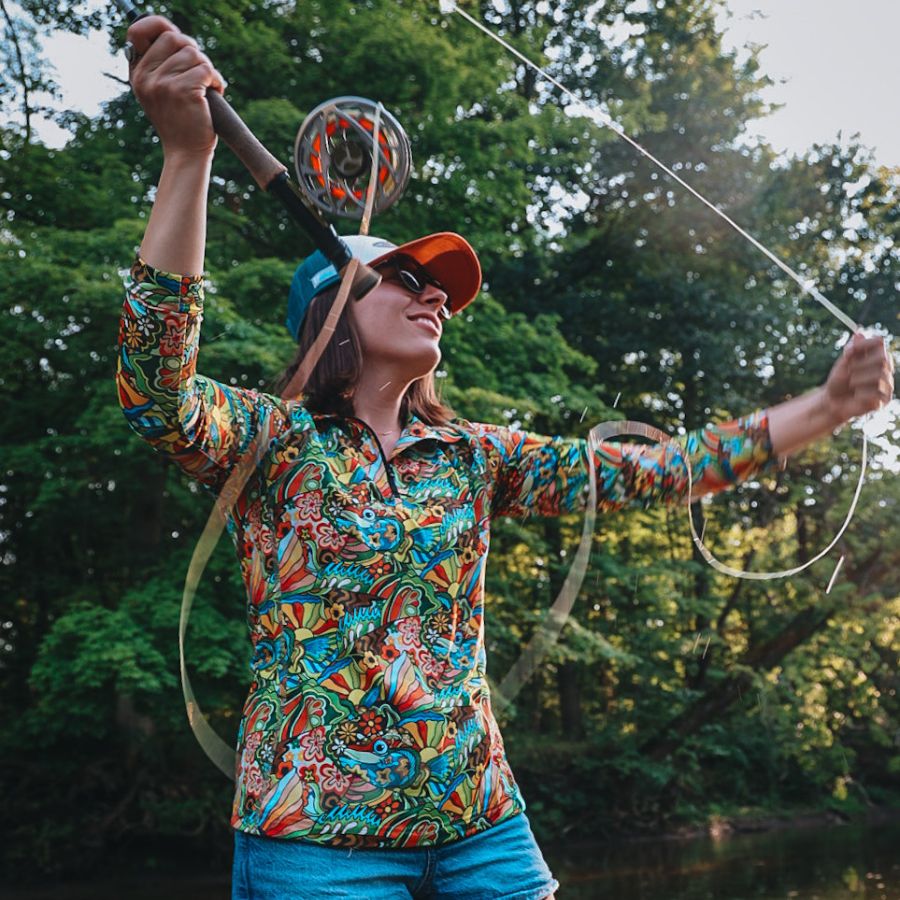
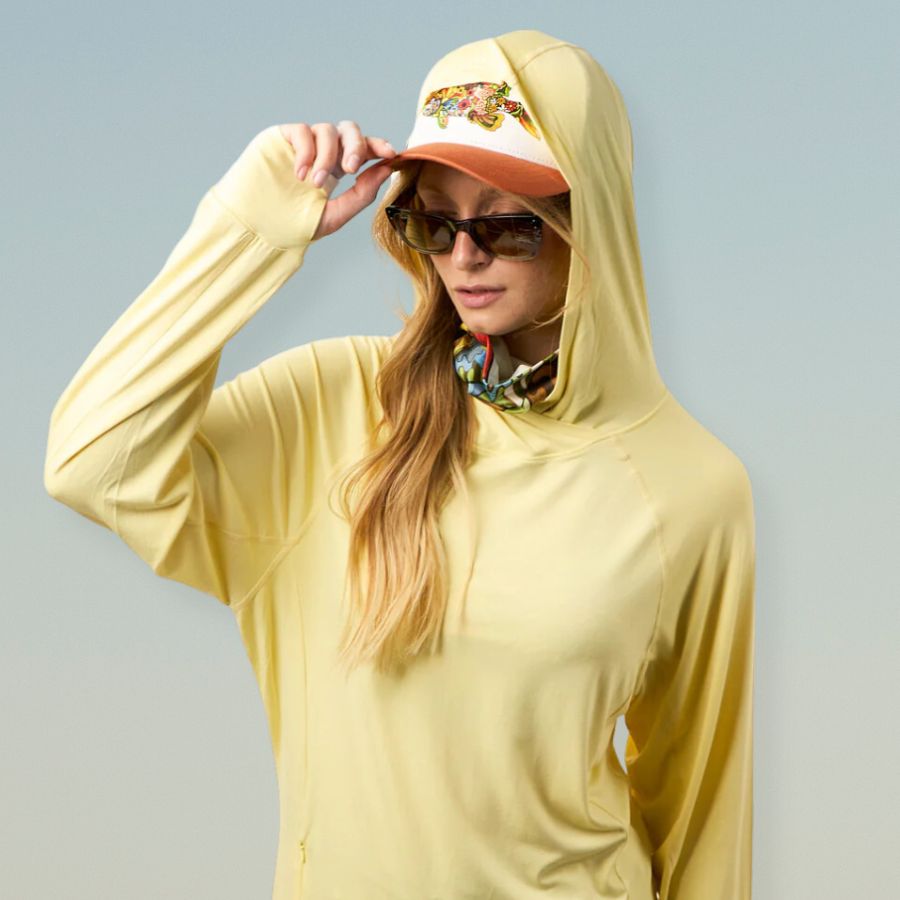
They started discussing what women wanted to wear and what could be better. The ideas were practical: clothing that could move from the river to dinner, perform while fishing, and still feel lively, artistic, colorful, and feminine.
The goal was never to make serious fishing apparel feel less capable. It was to give technical function a different visual language—one that reflected the women wearing it without becoming overly delicate or “too girly.”
Those conversations were grounded in use. They came from women who had spent time in boats, on riverbanks, in waders, and around fishing clients. They knew where ordinary apparel felt limiting and where a small design change could make an item substantially more useful.
That original “river to dinner” idea still explains much of FisheWear. A piece can be capable enough for a fishing day and expressive enough to remain part of a woman’s life after she leaves the water.
From a 700-Person Company to a Hands-On Startup
Before FisheWear, Linda spent years in transportation and logistics. The company she helped lead grew from a small trucking operation into a much larger organization with roughly 700 employees.
Marvin asks what it felt like to move from that scale into a startup with only seven or eight people. Linda’s answer is both funny and revealing: in some ways, having 700 employees can be easier.
A small company places the founder inside nearly every part of the business. There are fewer layers of expertise and fewer people available to carry distinct functions. The work is intensely hands-on.
That closeness also provides freedom. Linda could feel the business directly, shape its culture, work across its departments, and mold the company toward the experience she wanted customers and employees to have.
Large businesses bring larger consequences and more zeros, but a startup concentrates the daily decisions. Linda had to learn production, retail, product development, merchandising, and customer behavior while still making payroll and keeping the company moving.

What Trucking Taught Linda About Retail
Trucking and women’s fishing apparel may appear unrelated, but Linda sees important similarities. Both require diverse revenue streams and a broad enough customer base to help a company withstand changing conditions.
Wholesale relationships also feel familiar because they are business-to-business. Direct retail is more personal. Clothing touches identity, taste, comfort, fit, and how someone wants to present herself. Understanding that emotional side of the purchase was a newer challenge.
People Remain at the Center
Linda’s core responsibility did not change. In both industries, she believed leaders must care for employees, make payroll, understand what customers need, and create an environment where employees can take good care of those customers.
For Linda, customer experience starts with how a company treats its own people. The product matters, but so does the team answering questions, preparing orders, welcoming shoppers, and standing behind the work.
Safety Came With Her
Transportation carries a serious safety responsibility. Trucks are dispatched, freight moves over long distances, and every process must help people finish the job without getting hurt.
Linda brought that attention to FisheWear. She describes herself as a “big safety nut” and mentions facility and safety audits, even in a workplace that looks very different from a trucking terminal.
Logistics Is Creative Work
Linda also rejects the idea that her earlier industry lacked creativity. Transportation logistics often requires designing a solution around a client’s exact cargo, route, schedule, and constraints.
The final expression is different, but the habit is similar. Logistics creativity produces a transportation solution. FisheWear creativity brings fine art, product construction, field function, and customer needs into one wearable piece.
The First Signs That the Idea Was Working
Linda understood that an idea could not survive on enthusiasm alone. Cash needed to begin flowing early enough to cover bills and support the young company.
Within the first few years, stronger signs began appearing. Customers wore their pieces until they were worn out. People stopped them in airports to ask where the designs came from. Some customers learned the names of FisheWear patterns and recognized them immediately.
The patterns were becoming a shared language. They gave customers a way to express themselves while also creating the kind of visible recognition every young brand needs.
Linda wanted more than an assortment of products. She wanted a fun culture around those products—a community where women could recognize a print, talk about where they wore it, and feel connected through their time outside.
Collaborations expanded that reach. Each relationship introduced FisheWear to new audiences while allowing the company to explore products that did not make sense to manufacture entirely on its own.
Carrying Women’s Fly Fishing Forward
Hosted fishing trips were not entirely new to Linda. During her trucking career, she often took clients fishing and became comfortable helping groups through a shared experience.
A larger opportunity arrived when Pudge Kleinkauf prepared to retire. Linda had the chance to acquire Women’s Fly Fishing and continue the work Pudge had built around teaching women and bringing them together on hosted trips.
The intention was to carry on a respected legacy, not erase it. Linda wanted Pudge to feel proud of how the program continued to welcome women, teach fly-fishing skills, and create pathways into future adventures.
Women’s Fly Fishing and FisheWear naturally strengthened each other. Women joining a trip needed dependable clothing and equipment. Product ideas could also be observed in real situations, where weather, movement, travel, and long days quickly reveal what works.
A Calendar Built Around Different Waters
Linda describes a season that included bonefishing at South Andros in the Bahamas, a Yakutat trip for steelhead, and Western Alaska travel for kings and reds.
Other plans included Nome, Henry’s Fork for rainbows and browns, and a women’s retreat on the Kenai with opportunities for silvers, rainbows, pinks, and the species moving through at that time.
The destinations differ, but the purpose remains consistent: help more women spend meaningful time on the water, learn from capable guides, and leave with the confidence to keep fishing.
The First FisheWear Products
FisheWear did not begin with a massive catalog. Linda remembers launching a small group of foundational products at roughly the same time.
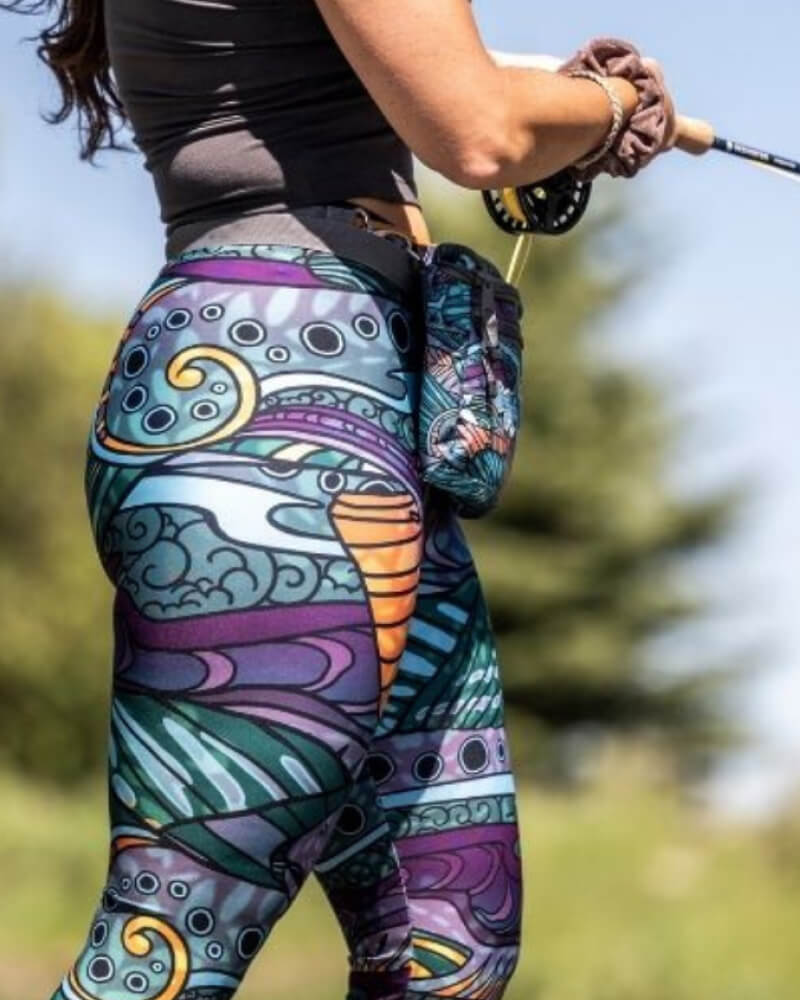
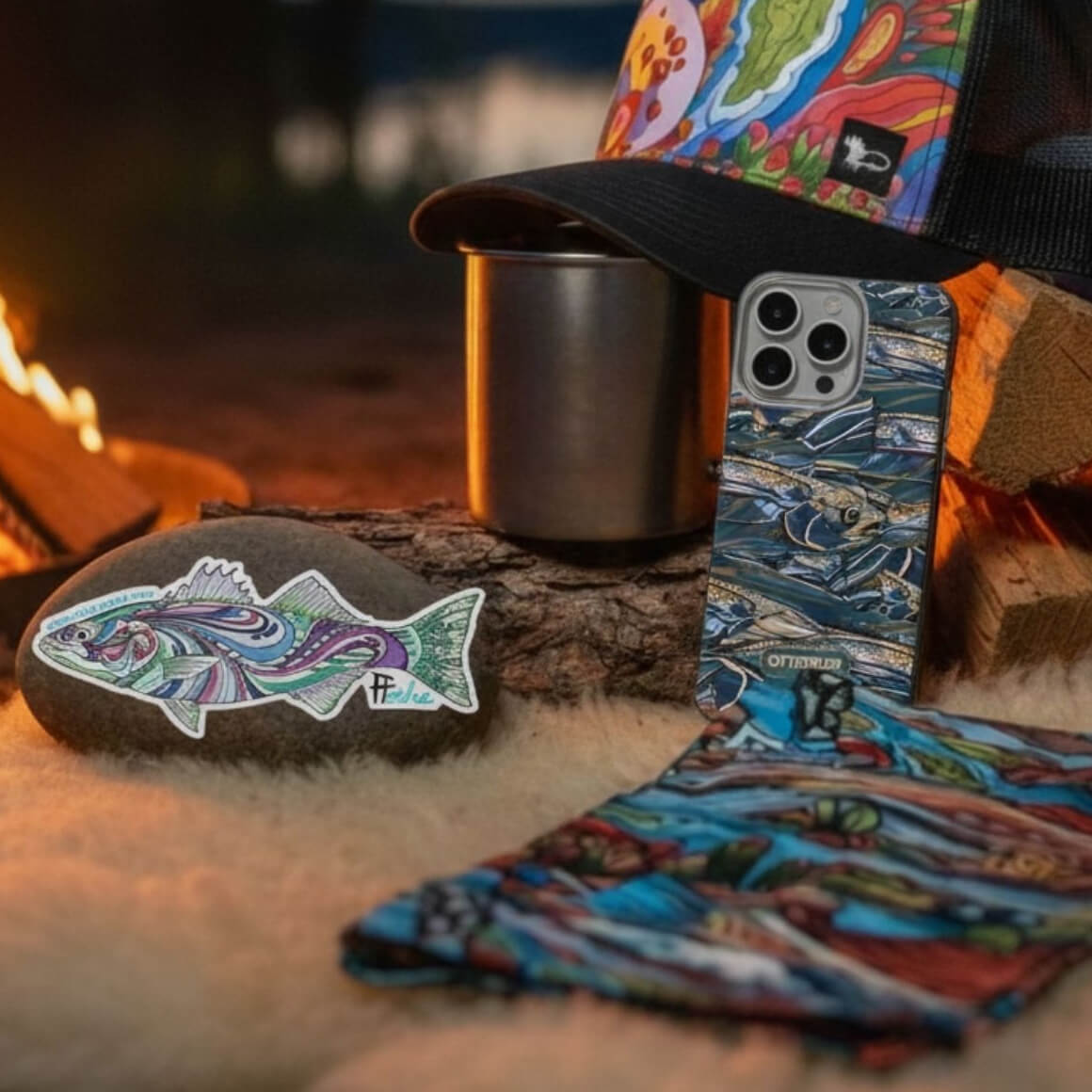
There were art-covered leggings in several patterns, coordinating trucker hats, neck tubes, and wading belts. T-shirts were tested alongside those early pieces.
Leggings, bags, hats, and useful accessories gave the brand its first recognizable shape. Dry bags followed, and the apparel assortment gradually expanded into more tops and technical layers.
The early mix reflects the original idea. Each product needed enough purpose for fishing, but it also had to carry the art and color that made FisheWear distinct.
That balance remains difficult. Function can become visually anonymous. Fashion can lose usefulness under real conditions. FisheWear was built in the space where both sides have to earn their place.
Why Good Product Development Takes Time

When Linda entered apparel, people warned her that bringing a product to market could take 18 months. She initially found that timeline difficult to believe.
Experience changed her mind. If a product is going to be developed carefully, tested, revised, manufactured, and aligned with the correct selling season, the process can take that long.
FisheWear works with a team that helps develop products and tries to align releases with the fly-fishing calendar. Linda mentions producing at least four new prints in a year, along with experimental items around summer and the holidays.
Field testing is part of deciding whether an idea deserves to become a product. Linda tests pieces herself and asks friends who spend time outside to use them in real conditions.
The question is not simply whether Linda likes an idea. It is whether the product works correctly and solves something women have experienced while fishing, traveling, hiking, paddling, or layering for weather.
Everyday Style With a Fishing Purpose
Linda uses a crossbody bag to explain how the team approaches design. At first glance, it can work as an everyday fashion piece.
Straps on the back allow it to attach to a wading belt, turning it into a compact case for essentials while someone is standing in the water. A seemingly small construction choice gives the product a second, fishing-specific life.
That dual purpose is one of FisheWear’s clearest design principles. The item should make sense as part of a lifestyle, but it should also offer a reason for an angler to bring it to the water.
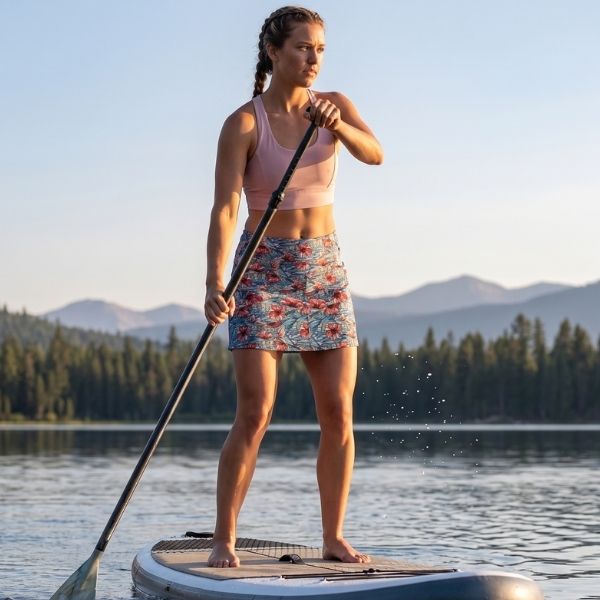
Not every FisheWear customer fishes. Some are drawn to the art, the color, or the community and use the products for running, hiking, skiing, kayaking, rafting, and travel.
Linda recalls male triathletes using early leggings as compression layers. Other customers treated them as fast-drying outdoor pants, sun-protective layers, or a base layer under cold-weather gear.
Rather than weakening the fishing identity, those uses demonstrate the versatility that inspired the brand from the beginning. The same piece can hold its purpose while moving through more than one part of a customer’s life.
How Different Artists Still Create a Recognizable Brand
Marvin points out that FisheWear works with multiple artists, yet the products remain easy to recognize. Linda credits that consistency to a careful balance between creative freedom and product parameters.
She believes artists need room to do what makes their work special. They need time to think, explore color, and develop a pattern in their own voice.
FisheWear does not ask every artist to draw in the same way. Instead, the team learns which elements translate successfully onto apparel and gives artists enough structure to create work that can be used well.
Graphic designers then help lay out components of the original art across specific products. Placement, scale, repetition, seams, and shape all influence how a piece of artwork becomes a wearable pattern.
This process allows individual artists to remain visible while maintaining the energy customers associate with FisheWear: bold color, movement, aquatic inspiration, and an unmistakable connection to life outside.

Growing Region by Region
FisheWear expanded through a combination of wholesale representation, fly shops, outdoor stores, direct online sales, and patterns capable of connecting with customers in different regions.
Linda describes the company as trying to stay reasonably focused. The team continues strengthening categories customers already know while occasionally making room for a product that is simply fun.
Collaborations make disciplined expansion possible. They let FisheWear enter a useful category through a partner with established expertise instead of trying to design, manufacture, inventory, and support every item alone.
Partnerships That Expanded the Possibilities
In the interview, Linda discusses work with XTRATUF and Orvis, along with past collaborations involving Groove Life, custom rods with April Archer and SaraBella Fishing, and Apple Watch bands.
She also shares her enthusiasm for Anchorage Brewing, where a beer collaboration became another meeting point between art, local makers, and the FisheWear community.
The relationships work best when both partners contribute something authentic. FisheWear brings its patterns, audience, and point of view. The collaborator brings product expertise, manufacturing strength, or a category the FisheWear team would not reasonably build alone.
Why FisheWear Has a Physical Store

Marvin notes that a niche apparel brand does not always operate its own retail location. Linda’s explanation is refreshingly practical: she did not know she was not supposed to have one.
The company needed office and warehouse space. Since products were already stored there, creating a showroom gave local customers a place to shop and pick up orders.
The warehouse became a destination almost by accident. Alaska visitors who had followed FisheWear online could finally see the products in person and make the store part of their trip.
Linda remembers a young couple visiting during their honeymoon and making FisheWear their first stop. Moments like that transformed the showroom from a practical retail solution into a place where customers could enter the brand’s world.
The setting also feels connected to Linda’s past. It is not polished prime retail space removed from operations. It combines offices, inventory, work, and customer interaction in one hands-on environment.
What Linda’s Story Leaves With Us
Linda’s path from trucking executive to fishing-apparel founder can look like a dramatic industry change. Listening to the full conversation reveals a stronger thread of continuity.
She carried forward the ability to build teams, diversify revenue, solve logistical problems, protect employees, serve customers, and keep learning when the environment changed.
FisheWear grew because Linda combined that experience with the humility to listen. She listened to guides, artists, product testers, customers, collaborators, employees, and women who wanted something different from fishing apparel.
The brand’s color may catch the eye first. Behind it is a disciplined process: long product timelines, field testing, wholesale growth, careful partnerships, and a founder who still sees herself as a student.
That may be the most useful lesson in the episode. Reinvention does not require leaving previous experience behind. It can mean carrying the strongest parts forward and applying them to a problem that matters deeply enough to begin again.
Frequently Asked Questions
Who is Linda Leary?
Linda Leary is the founder of FisheWear, an Alaska-born company known for art-driven fishing apparel, accessories, and collaborations. Before FisheWear, she spent many years building and leading a large transportation and logistics company.
How did the idea for FisheWear begin?
The idea grew from conversations on the river between Linda and guide Kate Taylor. They discussed fishing apparel women wanted: technical and functional, but also colorful, artistic, feminine, and capable of moving from the river into everyday life.
What were FisheWear’s first products?
The early assortment included printed leggings, coordinating trucker hats, neck tubes, wading belts, and some T-shirts. Bags, dry bags, tops, and additional technical products expanded the collection over time.
How long can a FisheWear product take to develop?
Linda explains that a carefully developed apparel product can take around 18 months to reach the market. The process can include design, artwork adaptation, sampling, field testing, revision, manufacturing, and timing the release for the right season.
What is Women’s Fly Fishing?
Women’s Fly Fishing is a teaching and hosted-travel program that Linda acquired when founder Pudge Kleinkauf retired. Its purpose is to help women learn fly fishing, build confidence, and experience fisheries in Alaska and other destinations.
Where can I hear Linda Leary’s full Articulate Fly interview?
The full episode is available through The Articulate Fly website and major podcast platforms. The video interview is also embedded near the beginning of this article.
Related Reading

How FisheWear Revolutionized Women’s Fishing Apparel
Explore the problem Linda set out to solve and how function, art, and women-led design became the foundation of FisheWear.

Focus, Patience, & Reward
Continue Linda’s story through a conversation about confidence, leadership, patience, and the lessons fishing carries into life.

Linda Leary on Growth Mindset and Reinvention
Read how Linda carried transferable skills across industries and learned to see career change as an opportunity to keep growing.
