





By Erica Hickey, with Megan Hess
Photographs and fly tying instructions: Megan Hess
The Grey Ghost Fly That Still Swings Through New Water
Some flies carry more than feathers and thread. They carry decades of river stories, hand-tied tradition, and the kind of confidence anglers only give to patterns that still catch fish.
The Grey Ghost fly is one of those patterns. First tied in Maine’s Rangeley Lakes region in the early 1900s, it became one of the most famous classic streamer flies in American fly fishing.
Designed by Carrie G. Stevens, the Grey Ghost still matters because it does more than look beautiful. It imitates a slender baitfish, moves naturally in current, and continues to fool brook trout and landlocked salmon.

In This Story
The Legacy of Carrie Stevens and the Grey Ghost Fly
Carrie Stevens helped define the featherwing streamer tradition from her home near Upper Dam in Maine. Her patterns became known for their sleek baitfish shape, careful material choices, and effectiveness for salmon and brook trout.
The Grey Ghost’s colors and profile are closely tied to rainbow smelt, a small baitfish found in Maine waters. During smelt runs, trout and salmon feed heavily around tributaries, river mouths, runs, and riffles. That is exactly where a streamer like the Grey Ghost shines.
For more background on Carrie Stevens and her legacy, see the Rangeley Outdoor Sporting Heritage Museum. For the forage connection, see the Maine Department of Marine Resources overview of rainbow smelt.
Fishe Questions & Answers With Megan Hess
Registered Maine Guide, commercial fly tyer, aquatic biologist, and Fishe enthusiast Megan Hess helps show why the Gray Ghost streamer still belongs on the water, not just behind glass.
Fishe asks
What should anglers know about the fisheries where you guide?
Megan says I guide in the North Maine Woods, a large portion of northern Maine owned by logging companies and families. One unique part of fishing here is the rainbow smelt runs. Smelt move from lakes or coastal areas into streams and rivers to spawn, creating prime locations to swing a streamer.
Fishe asks
Why were you so excited to mention the Gray Ghost?
Megan says The story is neat. Carrie Stevens reportedly took a break from chores, grabbed her husband’s vise, tied material on in a way that was not traditional at the time, and then caught a 5-pound brook trout behind her house.
Fishe asks
Why do you think the Gray Ghost is so effective?
Megan says The smelt runs. The peacock herl and wrapped tinsel can resemble a baitfish lateral line, the gray-olive featherwing can resemble the color of a smelt, and the orange and yellow can look like a shimmer from the fish’s body.
Fishe asks
How do you usually fish it?
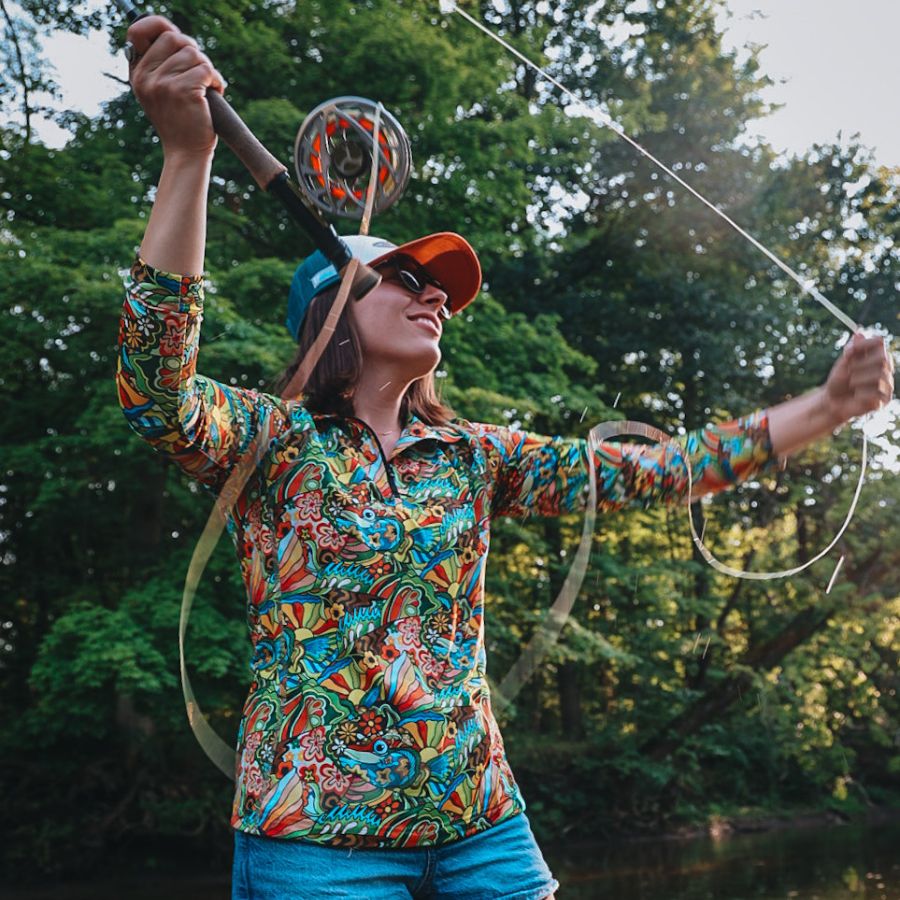
Megan says I fish it in moving water by casting at 45 degrees across and downstream, letting it swing and dangle at the end, and then stripping it back. Usually the hit comes at the end of the swing, right before the dangle.
Fishe asks
Do you tie the traditional version exactly?
Megan says Not always. The traditional pattern is beautiful, but some materials are harder to get and it can take hours to tie flawlessly. For guiding and fishing, I use a more durable version with the same general profile.
Gear for Streamer Days
Streamer fishing often means covering water, wading cold current, and carrying the gear that keeps the day moving. These verified Fishe product cards keep the next step useful without interrupting the story.


Fishing the Gray Ghost Fly Today
Classic flies do not stay alive because they are nostalgic. They survive because they still catch fish.
Modern anglers continue to fish the Grey Ghost across New England, the Great Lakes, and anywhere smelt or similar baitfish are present. The pattern works especially well for landlocked Atlantic salmon and brook trout.
Cast slightly across the current, allow the line to tighten, and let the fly swing downstream. That natural arc mimics a wounded baitfish moving through the water column. Be patient at the end of the swing—the pause and turn can be the exact moment a fish commits.

Conclusion
The Grey Ghost fly carries the history of a pioneering fly tyer, the rhythm of Maine’s smelt runs, and the kind of confidence that only comes from generations of anglers still tying it on.
What keeps it alive is not nostalgia. It is that quiet second when a streamer swings through current, the line comes tight, and an old pattern proves it still has work to do.
How to Tie the Gray Ghost Fly
Below is Megan’s practical tying sequence. The layout alternates image-left and image-right so the tutorial is easier to read through on desktop, then stacks cleanly on mobile.

Step 1
Tie in the silver tinsel behind the eye of the hook with UTC Pumpkin UNI-Stretch floss. Wrap the floss over the tinsel and back up toward the hook eye.
Step 2
Add a dot of Wapsi Z-Ment at the top of the hook bend, wrap the tinsel to create a tag, then space the tinsel evenly up the hook shank.


Step 3
Tie on black thread, then add sparse white bucktail under the hook to create the belly. Smelt are skinny baitfish, so sparse is better.
Step 4
Strip yellow schlappen from the stem and tie in the throat. Traditionally, a golden pheasant crest is used here.


Step 5
Tie in peacock herl on top of the hook so the points extend a little beyond the bend. Megan likes this placement because it can resemble a baitfish lateral line.
Step 6
Add rusty orange bucktail on top and keep the thread wraps flat. This creates a cleaner platform for the feather wing.


Step 7
Pick matching saddle hackles for the feather wings. Measure them to extend beyond the hook bend, then tie them directly on top so they stay straight.
Step 8
For a fishing version, Megan sometimes uses marabou instead of feather wings because it is easier to tie and creates more movement in the water.


Step 9
Add matching silver pheasant feathers for the cheeks. The two cheeks should gently compress the fly into a straight, streamlined shape.
Step 10
Finish with a whip finish and UV resin. If tying a display version, jungle cock eyes can complete the classic look.


Fishe Family Note
The Gray Ghost Fly is Linda Leary’s father Lindy’s favorite fly. Fish on.
Frequently Asked Questions
What is the grey ghost fly?
The grey ghost fly is a classic featherwing streamer designed by Carrie G. Stevens in Maine. It imitates baitfish, especially smelt, and is widely used for trout and landlocked salmon.
What fish does the gray ghost streamer catch?
The gray ghost streamer is most commonly used for brook trout and landlocked Atlantic salmon, though it can also work for other predatory freshwater species that feed on baitfish.
Why is the grey ghost fly so famous?
The fly became iconic because of Carrie Stevens’ featherwing designs and its consistent effectiveness in smelt-based fisheries.
When should you fish a gray ghost streamer?
Many anglers fish it during spring smelt runs, but it can work year-round whenever fish are feeding on small baitfish.
Who invented the grey ghost fly?
Carrie G. Stevens created the pattern in the Rangeley Lakes region of Maine in the early twentieth century.
How do you fish a grey ghost fly?
It is often fished by swinging it across and downstream in moving water, allowing the fly to imitate a wounded baitfish drifting in the current.
Can beginners tie the gray ghost streamer?
Yes, though traditional versions can be complex. Many modern tiers simplify materials and techniques to create durable fishing versions of the fly.
What does the grey ghost fly imitate?
The fly primarily imitates rainbow smelt and other slender baitfish common in northern lakes and rivers.
Is the grey ghost fly still used today?
Absolutely. The gray ghost streamer remains popular among anglers who fish classic streamers for trout and salmon.
Related Reading

Related article
Continue reading on the Fishe blog.

Fishing Gear for Women: How to Build Your Complete Setup
A practical guide to building a complete fishing setup for women—from rods and clothing to waders, tools, dry storage, safety, and smart upgrades.

Related article
Continue reading on the Fishe blog.
