


A complete fishing-system guide
Build a Fishing Setup That Works as One System
Fishing gear works best as one connected system. A rod affects the line you need, while the water affects your footwear and clothing.
The way you move through the day determines which pack, tools, and storage will actually help.
The best fishing gear for women is not a pile of products labeled “women’s.” It is a connected system chosen around your body, your water, your fishing method, and the conditions you expect to face.
This guide shows how those pieces fit together, where women-specific fit can make a real difference, and what beginners can confidently leave for later.
Quick Summary
- Choose your fishing style and water before choosing gear.
- Build the rod, reel, line, and tackle as one matched system.
- Treat clothing, footwear, storage, and safety equipment as functional gear.
- Prioritize women-specific fit where body shape affects movement, layering, and comfort.
- Do not assume a rod or reel is better because it is marketed by gender.
- Start with reliable essentials, then add specialized equipment after real days on the water.
In This Guide
Why You Should Trust This Article
Fishe understands fit from real days on the water. The brand grew from years of women adapting to clothing and gear that did not always move or layer the way they needed.
That experience gives us a practical perspective on the parts of a setup that affect comfort, confidence, and time outside.
We also know that useful advice should not turn every question into a product pitch. This guide separates the equipment almost every angler needs from the specialized pieces that depend on the water, technique, weather, and individual body.
Product examples in this article were checked against Fishe’s current Shopify catalog.
Safety recommendations are grounded in current guidance from the National Weather Service and the U.S. Coast Guard.
Start With the Fishing You Plan to Do
Start with the fishing you will actually do. A complete setup begins with a specific day in mind, whether that means a neighborhood pond, trout stream, saltwater skiff, lake boat, or alpine water.
Those experiences share a few essentials, but they do not require identical equipment.
Bank, dock, or pond fishing
Prioritize a straightforward spinning setup, a small tackle selection, comfortable footwear, sun protection, and a compact bag you can set down nearby.
Fly fishing and wading
Think in systems: fly rod, reel, line, leader, tippet, flies, nippers, forceps, net, wading footwear, and safe water access.
Boat or charter fishing
Space is limited and weather exposure can be intense. Non-slip footwear, sun coverage, secure dry storage, and a properly fitted life jacket move to the top of the list.
Saltwater fishing
Expect more sun, wind, spray, and corrosion. Choose tackle and tools for the target species, secure loose gear, and rinse salt-exposed equipment afterward.
Still deciding between the two most common starting systems? Read our comparison before buying either one.
Build the Rod, Reel, and Line as One System
The rod is only one piece of the casting system. A good setup matches the rod, reel, line, leader or terminal tackle, target species, and water you expect to fish.
Compatibility matters more than branding. A beautifully marketed rod will still feel frustrating if the line is wrong, the reel is poorly balanced, or the setup is too heavy for the technique.
For a spinning setup
Keep the first spinning setup versatile and simple. Choose a rod-and-reel combination suited to local fish and common lure weights.
Add appropriate line, then carry a few proven lures or bait rigs with spare hooks, weights, and swivels.
For a fly-fishing setup
Match the fly rod, reel, and line by weight. Add leaders, tippet, and flies selected for the water and species.
A five-weight is common for general freshwater trout fishing, but it is not a universal answer for every river or fish.
Grip comfort, swing weight, and balance can matter more than a catalog’s listed rod weight. For a deeper decision guide, read How to Choose a Fly Rod for Women.
Treat Clothing as Fishing Equipment
Clothing controls how long you can stay comfortable. It manages sun, temperature, moisture, and movement, so it belongs inside the fishing system rather than beside it.
Build from the conditions outward:
- Next to skin: choose soft, movable layers that manage sweat and do not bunch under outer layers or waders.
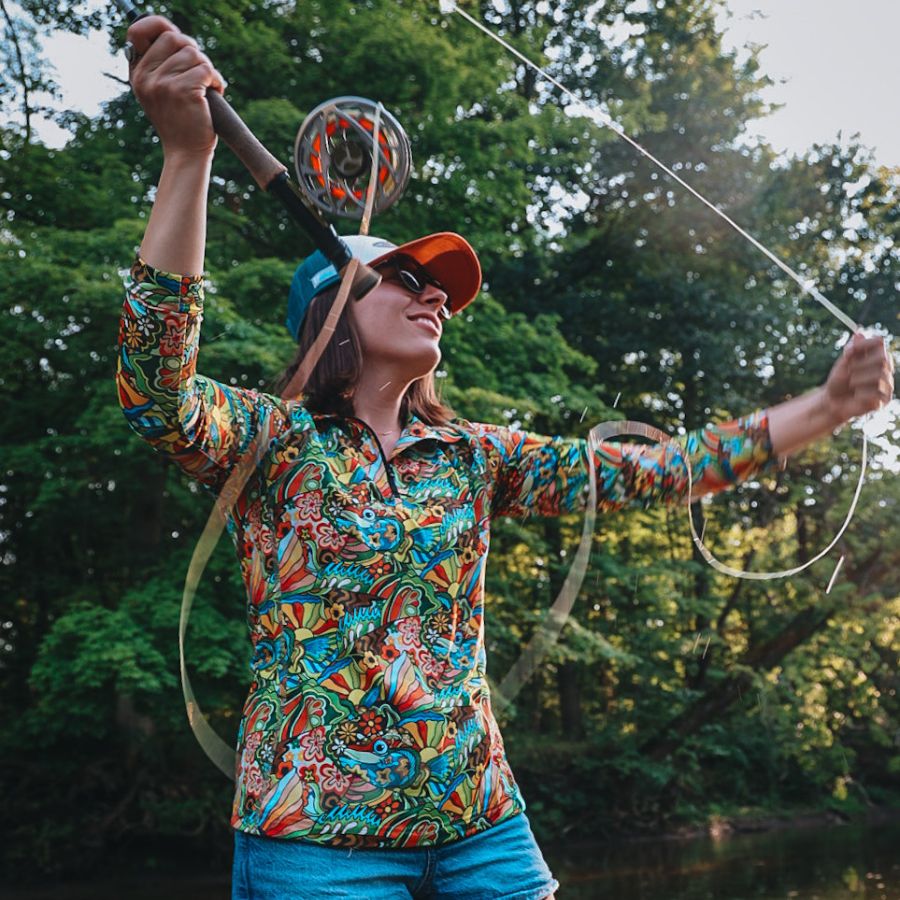
- Sun and heat: use breathable long sleeves, a hood or brimmed hat, sunglasses, and sunscreen for exposed water.
- Cold: add insulating layers without creating so much bulk that movement becomes difficult.
- Wind and rain: carry a shell that fits over the layers already on your body.
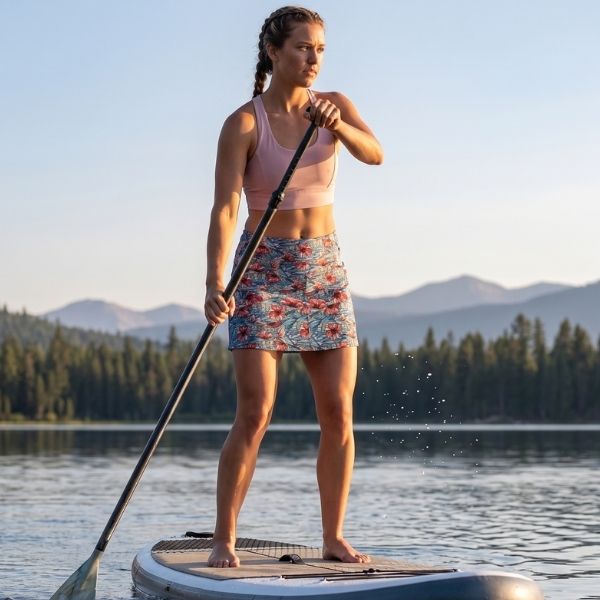
- Bottoms: choose leggings, pants, shorts, or a skort based on movement, coverage, pockets, insects, brush, and whether you will wear waders.

Sun-protective top layer
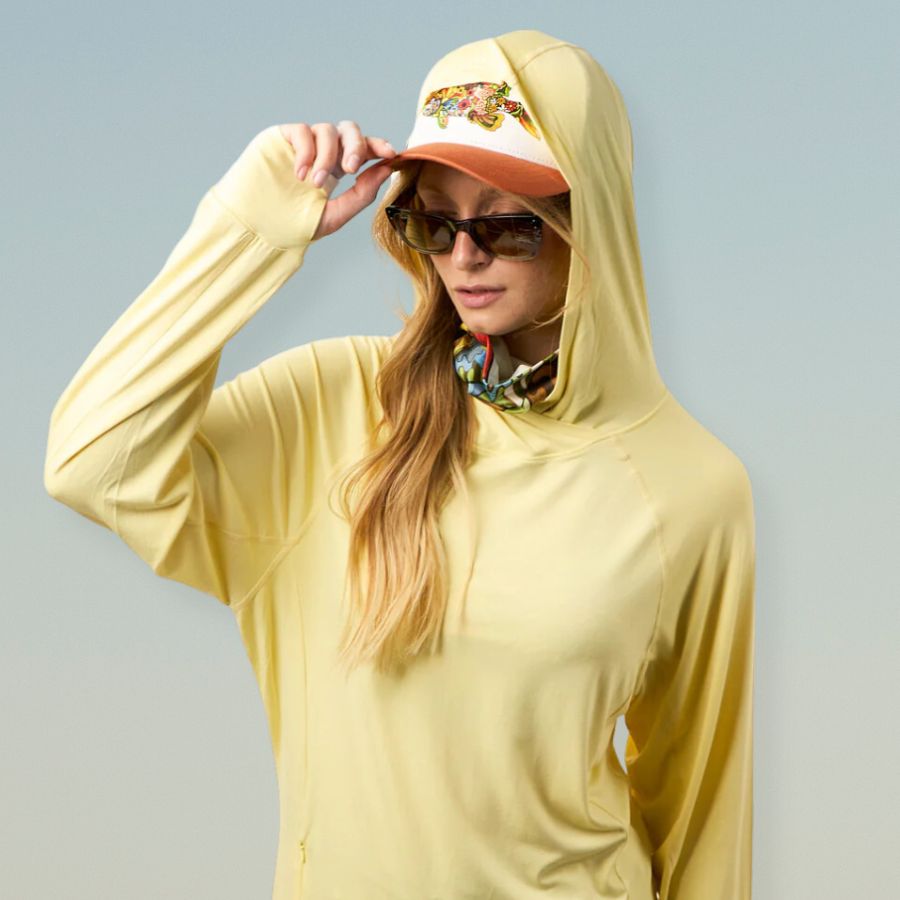
The Radiant Redfish Solstice Hooded Sunshirt combines UPF 50+ coverage with a hood, thumbholes, and a ponytail opening.

Movable fishing bottoms
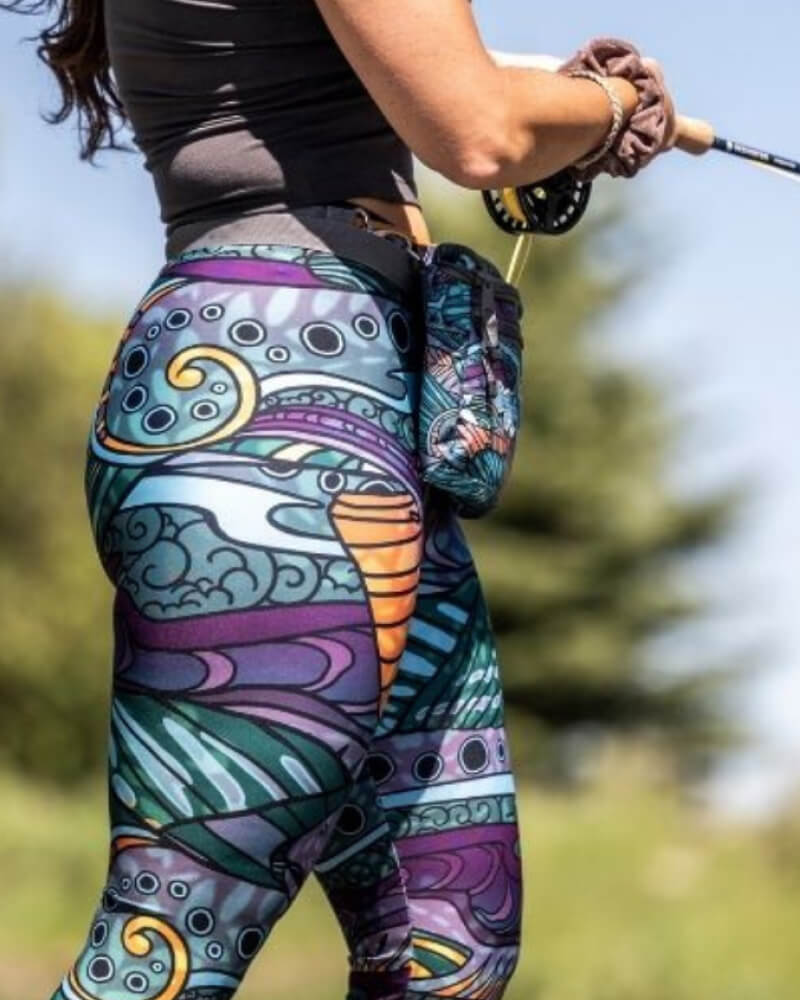
Beauty and the Bonefish Pocket Leggings use a high-rise fit, stretch fabric, and side pockets for active days and smooth layering.
The complete apparel discussion belongs in our dedicated guide: Women’s Fishing Clothing That Actually Works.
Choose Waders, Boots, and Belts as a Safety-and-Mobility System
Waders solve a specific water-access problem. They become useful when you need to enter cold water, cross shallow channels, reach casting positions, or stay dry through repeated splashes.
Wader fit affects both movement and safety. You need room to bend, step, squat, layer, and climb without excess material creating drag or pressure points.
Waders
Choose the correct size, inseam, bootie fit, and chest or waist style. Test movement while wearing the layers you expect to use underneath.
Wading boots
Match the sole and traction system to the riverbed, local rules, and hiking distance. Leave enough room for the wader bootie and insulating socks without crushing your toes.
Wading belt
A securely worn belt helps limit the rapid entry of water if you fall. Position it firmly around the waist and keep it accessible rather than buried beneath loose layers.

Wading conditions can change quickly. Avoid entering water you cannot read confidently, use a staff when footing is uncertain, and turn around before current, depth, or fatigue removes your margin for error.
Carry the Tools That Solve Frequent Problems
Carry tools for tasks you perform repeatedly. A fishing vest or pack quickly becomes crowded when every gadget earns a permanent pocket.
Cutting
Nippers or line cutters should make clean cuts on the line, leader, or tippet you use. Keep them attached where either hand can reach them.
Hook handling
Forceps, hemostats, or fishing pliers help pinch barbs, remove hooks, and manage small materials while keeping fingers farther from sharp points.
Landing and release
Use an appropriately sized net when it improves control and fish handling. Wet your hands before touching fish and prepare tools before lifting a fish from the water.

Keep tackle small and intentional
A beginner does not need every size, color, and shape. Ask a local shop, guide, or experienced angler which few options consistently work for the species and season, then learn those before expanding.
Choose Storage by Access, Movement, and Water Exposure
The right bag protects movement and access. It keeps essential gear organized without interfering with casting, walking, rowing, or climbing in and out of a boat.
Sling or waist pack
Useful when you need hands-free access while moving or wading. Check strap placement, rotation, and whether the loaded pack stays clear of your casting arm.
Backpack
Better for longer approaches, extra clothing, food, and larger loads. Look for a harness that fits your torso and does not create pressure where wader suspenders or life jackets sit.
Tote or boat bag
Easy to load and reach on docks, boats, and road trips. Secure it so a wake, gust, or sudden stop cannot scatter the contents.
Dry bag
Use waterproof storage for items that must remain functional, including medication, keys, a phone, an insulating layer, and emergency supplies.
Protect the things that cannot get wet
Separate wet equipment from dry essentials. A single open tote is convenient until a wet rain shell, leaking bottle, or wave reaches everything at once.
The Boho Bass Roll Tote Dry Bag has a 32-liter capacity, welded waterproof construction, a roll-top closure, and removable shoulder straps. It works well as a central boat, dock, or vehicle bag when you need meaningful water protection.

Where Women-Specific Fishing Gear Matters—and Where It Does Not
Women-specific design matters when fit changes function. The label is useful only when the product responds to a genuine movement, proportion, comfort, or access need.
Rods and reels are usually selected by mechanics, not gender
Rod weight, length, action, grip shape, swing weight, and balance affect every angler. Smaller hands may prefer a slimmer grip, while an injured shoulder may benefit from a lighter, better-balanced outfit.
Those are individual requirements, not assumptions that apply to all women.
Test a rod when possible. Hold it in fishing position, make repeated casting motions, and notice whether your hand, forearm, elbow, or shoulder begins working harder than expected.
Fit-sensitive equipment can benefit from women-specific design
Waders, apparel, boots, and pack harnesses interact directly with body proportions. Better patterning can improve:
- Room through the hips, seat, thighs, and chest without excessive fabric elsewhere.
- Torso and inseam proportions.
- Bootie or footwear fit.
- Layering without pressure or bunching.
- Bathroom access and ease of dressing.
- Strap placement across the chest and shoulders.
- Pocket access while wearing outer layers, waders, or a life jacket.
The goal is not to buy gear simply because it is women-specific. The goal is to choose equipment that lets you move naturally, stay comfortable, and use the gear safely for the full length of the day.
Build Your Setup in Three Stages
Stage 1: Start fishing
- One reliable rod-and-reel system.
- Appropriate line and a small tackle selection.
- License and current regulations.
- Line cutters and hook-removal tool.
- Water, sun protection, and safe footwear.
- Basic storage for valuables and gear.
Stage 2: Improve comfort and organization
- Better layering for the conditions you encounter most.
- Polarized sunglasses.
- A pack that fits your fishing style.
- A landing net when appropriate.
- Dry storage and a first-aid kit.
- Spare line, leader, or terminal tackle.
Stage 3: Specialize
- Additional rods for different water or species.
- Waders, boots, and a wading system.
- Saltwater-specific tackle and corrosion-resistant tools.
- Cold-weather or technical outerwear.
- Specialized packs, electronics, or boat equipment.
- Travel gear for destination fishing.
Buy for the next real problem, not every possibility. Your first trips reveal whether you need more warmth, easier access, a different grip, stronger line, better traction, or less weight.
Spend in the Order That Protects the Day
Protect the day before chasing upgrades. Put money first where failure would end the trip, create a safety problem, or repeatedly cause discomfort.
- Safety and legal requirements: license, life jacket when required, safe footwear, weather protection, hydration, and communication.
- The core fishing system: a dependable rod, reel, line, and basic tackle matched to the water.
- Fit and comfort: layers, waders, boots, and packs that do not restrict movement or create pressure points.
- Reliable tools: cutters, forceps or pliers, and a net where appropriate.
- Organization and protection: bags, waterproof storage, and attachment systems.
- Specialization: extra rods, advanced tackle, niche accessories, and trip-specific upgrades.
Guided trips can be a smart way to try equipment before buying it. Ask what the guide provides, what guests most often forget, and which pieces are worth testing locally.
For the trip-specific version of this discussion, use our Fishing Trip Checklist for Women.
Make Gear Last With a Simple Post-Fishing Routine
A short reset protects your equipment. Salt, sand, moisture, sunscreen, and dirt can shorten the life of gear when they remain trapped between trips.
- Rinse saltwater-exposed rods, reels, tools, boots, and bags with fresh water.
- Dry waders and footwear completely before storing them.
- Open wet packs and remove damp clothing, food, and used tackle.
- Check leaders, line, knots, hooks, and sharp tools before the next trip.
- Loosen reel drag for storage when recommended by the manufacturer.
- Keep breathable apparel clean according to its care label so fabric performance is not buried under oils and residue.
- Restock first aid, sunscreen, medication, and emergency supplies immediately.
A ten-minute reset after fishing prevents the frantic search for a dry sock, working headlamp, or untangled leader the next morning.
Frequently Asked Questions
What fishing gear does a woman need to start?
Start with one rod-and-reel system suited to the local water, appropriate line and basic tackle, a fishing license, essential tools, water, sun protection, safe footwear, and simple storage. Add specialized gear only when the trip requires it.
Is women’s fishing gear actually different?
Some equipment benefits from women-specific patterning, especially waders, clothing, boots, and pack harnesses. Other equipment, including rods and reels, should usually be selected by technique, balance, grip comfort, species, and water rather than gender alone.
Do women need special fishing rods or reels?
No universal women’s rod or reel is necessary. Choose a setup that matches the fishing method and feels balanced in your hand.
Grip diameter, total weight, action, length, and repeated-casting comfort are more useful criteria than a gender label.
What should women wear fishing?
Wear breathable sun protection, movable quick-drying layers, polarized sunglasses, a hat, and footwear suited to the surface. Add insulation, rain protection, or waders based on the weather and water.
When do I need fishing waders?
Waders are useful when you need to enter cold water, cross shallow areas, or stay dry through repeated splashing. They are unnecessary for many bank, dock, and boat trips.
When wearing chest waders in water, use a securely fitted wading belt.
Which tools belong in a basic fishing kit?
A basic kit should include reliable line cutters and a hook-removal tool such as forceps, hemostats, or pliers. Add a landing net, hook sharpener, measuring tool, or species-specific equipment only when it solves a regular task.
What fishing gear should always stay dry?
Protect medication, keys, a phone, identification, emergency communication, a dry insulating layer, matches or fire-starting supplies where relevant, and any first-aid item that must remain usable. Store wet tools and clothing separately.
How much should a beginner spend on fishing gear?
There is no single correct budget. Spend first on safety, a dependable matched rod system, weather protection, and the few tools you will use every trip.
Borrow, rent, or use guide-provided specialty gear until you know which upgrades fit your fishing style.
Conclusion: Build the System, Then Let the Water Teach You
A complete fishing setup is not complete because it contains everything. It is complete because the pieces work together for the angler, the water, and the day.
Start with the method you want to learn, then match the rod, reel, line, and tackle. Add clothing and footwear that protect movement and comfort.
Keep essential tools accessible, valuables dry, and safety equipment ready to use.
Then go fishing. Real days on the water will show you which upgrade matters next—and which pieces you never needed in the first place.
Related Reading

Fly Rod vs. Spinning Rod
Compare casting, learning curve, presentation, and versatility before choosing your first setup.

How to Choose a Fly Rod for Women
Choose by line weight, action, balance, grip comfort, water, and the fish you plan to pursue.

What to Bring on a Fishing Trip
Turn your complete gear system into a practical packing list for the specific day ahead.
