

The Best Women’s Fishing Shirts for Layering, Movement, and Sun Coverage
|
|
Time to read 13 min

|
|
Time to read 13 min
A great day on the water can fall apart over something as ordinary as a shirt.
The wrong one clings when it gets damp, rides up under straps, binds through the shoulders halfway through a casting session, or leaves you sun-tired long before you feel truly tired.
The right fishing shirts for women do something quieter and far more important: they disappear into the day. They move when you move, keep your skin covered without feeling heavy, and still make sense when the weather shifts, the light gets harsher, or the boat ride turns windy.
That is why this category is worth understanding on its own. A fishing shirt is not just a long sleeve with a logo on it.
It sits at the center of your comfort system. It affects how you layer, how much sunscreen you are chasing, how much airflow you get, how easy it is to cast, and whether you still feel good in hour six.
The best fishing shirt for women is not the one with the most features. It is the one that solves the most real problems at once.
Fishe’s own brand materials make the point clearly: this is a brand built around “Functional, Fashionable, Fishing,” with a personality meant to feel active, energetic, and trend-aware rather than generic or watered down.
Fishe came out of frustration with ill-fitting “shrink-it-and-pink-it” gear, and the brand’s standard is gear designed by women, for women, with fits that move with the cast, plus UPF 50 fabrics and quick-dry technology tested in real use.
This guide is also grounded in technical sun-protection, layering, and apparel-performance sources. Where the details matter, I’ve leaned on dermatology guidance, travel-health guidance, textile-based UPF references, and real apparel specs instead of vague shopping-language. That matters here, because fishing shirts are one of those gear categories where small construction details change the whole experience.
At the most basic level, a fishing shirt is a top built for long sun exposure, repetitive movement, and changing on-the-water conditions.
In practice, that usually means some combination of UPF-rated fabric, better drying behavior, more thoughtful sleeve and cuff design, ventilation, and a fit that holds up under motion.
That last part is where the category separates itself from generic activewear. Regular workout tops are often built around short bursts of movement, gym temperatures, or trail use.
Fishing asks something different. You repeat the same upper-body motion for hours. You stand near reflective water. You add and remove layers.
You bend, strip line, row, hike in, scramble banks, pull on waders, and sometimes stay in the same shirt from first light into the evening.
That is not just “athleisure, but outside.” It is a very specific performance brief.
Fishing shirts also come in several subtypes, and the names can blur together:
sun shirts or sun hoodies
guide shirts or button-up fishing shirts
performance long sleeves
quarter-zips and technical midweight tops
They are all trying to solve the same core problem, but they solve it in different ways.
A lot of new anglers assume long sleeves are mainly about warmth. In fishing, they are usually about exposure management.
The Skin Cancer Foundation notes that UPF measures how much ultraviolet radiation can pass through fabric, and that UPF 50 blocks 98 percent of UV rays while allowing only 1/50th through. It also points out that UPF measures both UVA and UVB, whereas SPF measures only UVB. The CDC and American Academy of Dermatology both recommend protective clothing as part of real-world sun protection, and the CDC specifically notes that water can reflect UV radiation and increase exposure.
That is why long sleeves make so much sense on the water. They are not just covering skin; they are reducing how much exposed surface you have to manage all day. And unlike sunscreen, clothing does not wear off between applications. The Skin Cancer Foundation also notes that regular clothing can lose protective ability when stretched or wet, and that a white T-shirt offers only about UPF 7 dry and about UPF 3 when wet.
That is the hidden reason purpose-built fishing shirts are worth it: not because every angler needs a “special” shirt, but because the water punishes casual assumptions about sun protection.
The best fishing shirts for women do not treat these as separate features. They solve them as one system.
A shirt can have great coverage and still be miserable if it traps heat.
It can feel airy in the first hour and still be wrong if it twists under a pack strap or binds when you cast. It can be soft and flattering and still fail if the sleeve length, collar, or hood design leaves the highest-exposure zones half-covered.
This is why the best-performing shirts often seem simple on the hanger but smart in the details.
Orvis’s Open Air Caster long-sleeve shirt, for example, uses strategic venting at the back shoulders, armholes, and chest, plus an extended collar for neck protection and an active fit aimed at keeping the shirt light and cool in high sun.
Fishe’s Backcast Hoodless Sunshirt uses UPF 50+, quick-dry fabric, and thumbholes to keep sleeves positioned while casting; the Stonefly Hooded Sunshirt adds hood-and-thumbhole coverage in a softer rayon-from-bamboo build with UPF 30.
Those details matter because the right fishing shirt should make you feel more covered without feeling more trapped.
If movement is your main issue, start with fit before fabric.
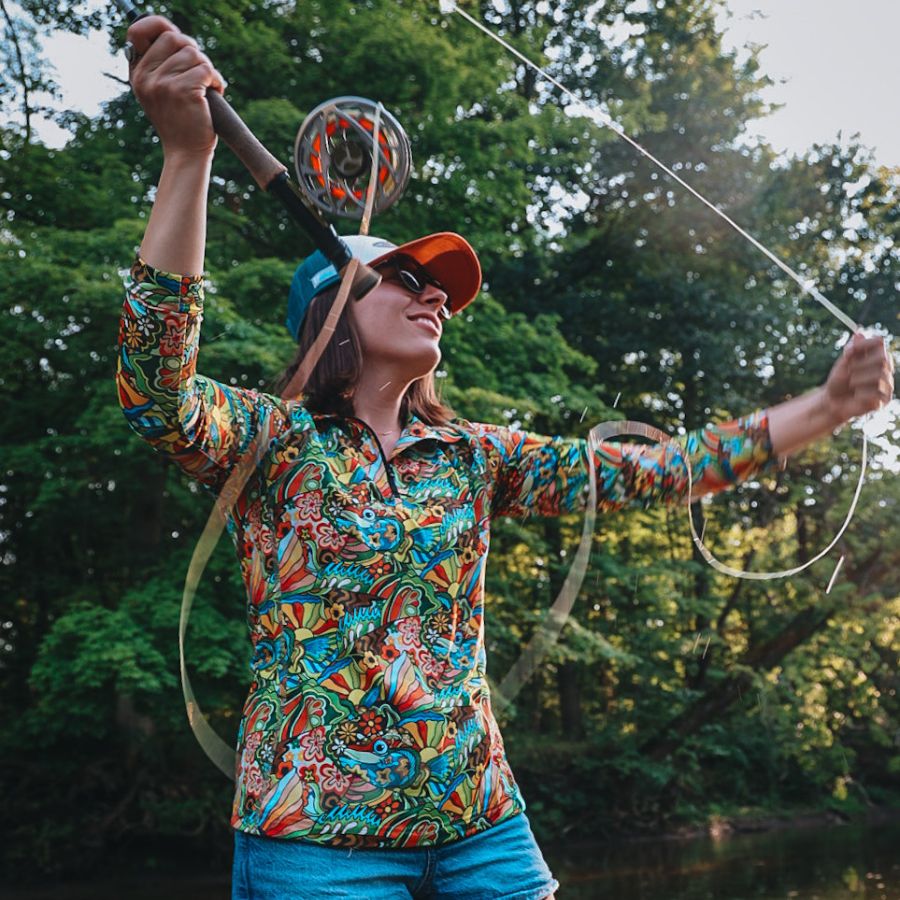
A shirt that is technically breathable can still feel awful if it is cut poorly through the shoulders, chest, or upper back. Fly fishing, especially, exposes bad patterning fast. Repeated casting is a shoulder-driven motion. If the shirt pulls across the back, bunches at the underarm, or rides up every time you raise your arm, you notice it all day.
Women-specific fit matters here, and not in the lazy “pink it and shrink it” sense. It matters because a shirt designed around how women actually move can reduce tugging, improve layering, and sit better under packs or wader straps. Fishe’s founder note makes that point directly in its emphasis on fits that “move with your cast” and women-first design rather than borrowed men’s templates.
Construction details help, too. REI’s apparel guidance notes that flat seams reduce irritation in layered systems, longer-cut tops give better coverage during movement, and full-zip or partial-zip designs can make body-temperature regulation easier.
So if you tend to get frustrated with shirts, do not start by asking whether you want a hood. Start by asking whether the shirt lets you cast, reach, hike, and row without fighting your own clothing.
A shirt can feel wonderful in the fitting room and still be the wrong tool for real fishing.
For hot, wet, and variable conditions, synthetics still make an unusually strong case because of how they handle moisture and drying time. REI’s layering guidance notes that synthetic base layers are especially popular for people who sweat a lot or spend time in wet climates because they dry more quickly than wool.
That does not automatically mean polyester is always best, or that every soft natural-feeling fabric is wrong. It means you should think beyond handfeel.
A few practical rules tend to hold up below.
Look for lightweight knits or woven shirts that create airflow and dry fast. Venting, textured fabrics that sit slightly off the skin, and low-cling construction often matter more than marketing words like “cooling" or "wicking".
Look for low-bulk fabrics, smooth seams, and just enough stretch. A shirt that feels slightly more “technical” can actually be more comfortable because it slides under shells and waders instead of bunching.
Pay attention to tradeoffs. Softer fabrics can feel amazing but may run warmer, dry differently, or provide lower UPF unless the garment is engineered carefully. Fishe’s Stonefly, for example, pairs a softer rayon-from-bamboo fabric with UPF 30 and full hooded coverage; the Backcast uses polyester and UPF 50+ for a more stripped-down sun-shirt approach.
The best fabric is not the one that feels nicest in your hand. It is the one you still like after sweat, spray, wind, and six hours of wear.
This is not a purity test. Some days truly are short-sleeve days. But the decision should come from conditions, not habit.
Long sleeves usually make more sense when:
sun is intense
you are fishing open water, sand bars, or bright rivers
you want less sunscreen dependence
bugs, brush, or wind are part of the day
layering is likely
Short sleeves usually make more sense when:
heat is extreme and direct exposure is brief
you are fishing low-exposure windows
you know you will stay shaded or covered in other ways
you prefer sleeves off and are disciplined about sun protection elsewhere
The American Academy of Dermatology recommends lightweight, long-sleeved clothing when possible, and both the AAD and CDC caution that exposure near reflective surfaces such as water can increase risk.
That does not mean short sleeves are wrong. It means long sleeves are often the smarter default on the water, even in heat, if the shirt is built well enough to breathe.
This is where style, fishing type, and personal tolerance all intersect.
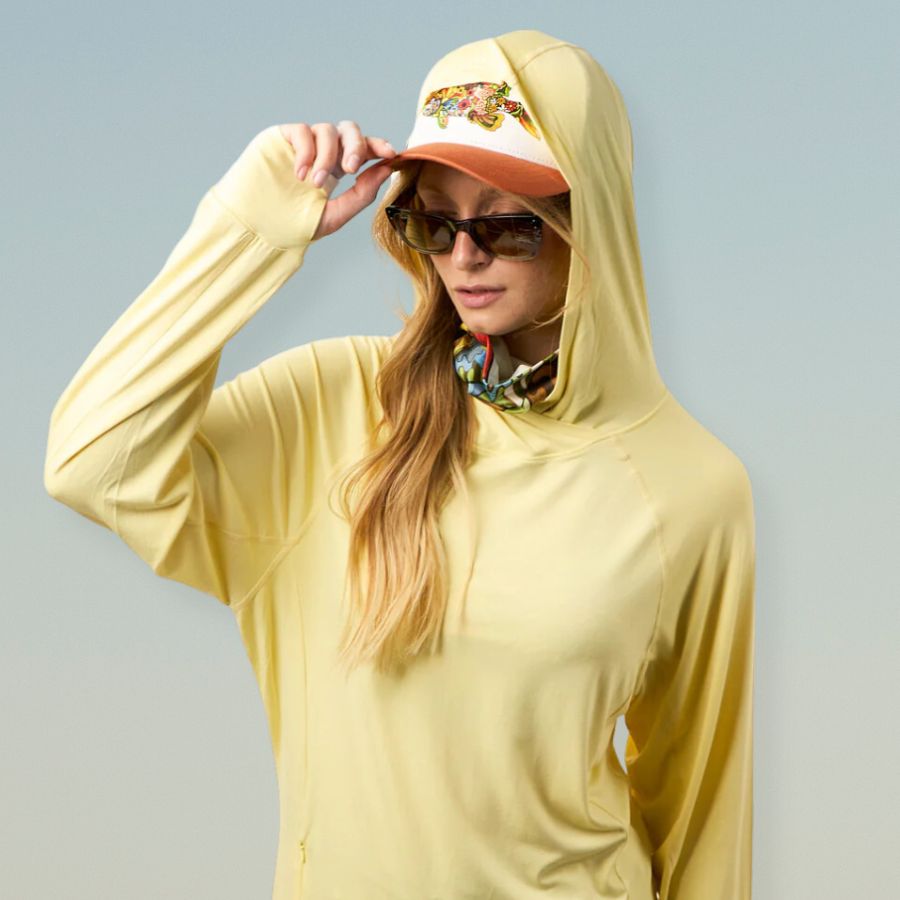
A hooded sun shirt is often the simplest answer for all-day exposure. It gives immediate neck and ear coverage, layers well under a cap, and usually works best for hot, bright days when coverage matters more than storage. Fishe’s Stonefly and many modern sun hoodies follow this logic with hood-and-thumbhole coverage built into a light layer.
A button-up fishing shirt usually wins on airflow, structure, and adaptability. It is especially good for anglers who like collars, chest storage, and the ability to vent manually. Well-built examples often include mesh or shoulder venting, hidden pockets, and neck coverage that a plain athletic shirt does not give you. Orvis’s guide-style shirts are a good example of this design language.
These are often the best layering pieces. They can regulate temperature well, sit neatly under outerwear, and feel more refined under waders or jackets than bulkier casual tops. REI notes that zip tops can make temperature regulation easier in layered systems.
There is no universal winner here. A hood is excellent until you hate the extra fabric. A button-up is excellent until you want more stretch and less structure. A quarter-zip is excellent until you need better neck coverage in full sun.
This comparison comes up more than it should, because on paper they sound interchangeable.
They are not.
A swim shirt or rash guard is usually built for close fit, high stretch, and in-water use. That can be useful for paddling, surf, or wet-wading in very specific contexts. But for many anglers, they run too clingy, too warm once damp, or too limited in ventilation for all-day fishing outside the water.
A true fishing shirt is more likely to prioritize airflow, easier layering, longer wear comfort, and fishing-specific details like collars, thumbholes, hoods, pockets, or rollable sleeves. Fishing shirts often pair UPF with quick-dry behavior, venting, casting-friendly design, and extra coverage features rather than just body-hugging stretch.
If you are mostly swimming, paddling, or being in the water, a swim shirt can be fine. If you are spending the day fishing, hiking in, rowing, or layering through temperature changes, a fishing shirt usually makes more sense.
Most disappointment in this category is predictable.
The first mistake is buying only for the weather at the trailhead or boat ramp. Fishing lasts longer than the first impression of the day.
A shirt that feels cool in the parking lot can feel exposed by noon, sticky by two, and awkward under a wind layer by evening.
The second mistake is trusting fabric feel over performance. Softness matters. But softness without drying speed, sun protection, or structure is how people end up going back to the same “fine but not great” shirt over and over.
The third mistake is underestimating how much fit affects endurance. A shirt does not need to be painfully wrong to be wrong.
If you are tugging sleeves down, shifting a seam off your shoulder, or peeling damp fabric off your forearms to cast, the shirt is already costing you energy.
And the fourth mistake is assuming more features automatically means a better shirt. Not every cuff tab, chest pocket, vent, or zipper is worth paying for. The best shirts tend to have just enough detail to make the day easier, not enough to turn the garment into a gadget.
Prioritize coverage you will actually keep on. A breathable long-sleeve or hooded sun shirt usually beats a short sleeve plus constant sunscreen maintenance. Look for low-cling fabric, quick drying, and either a hood or meaningful collar coverage. The AAD recommends lightweight long sleeves when possible, and the Skin Cancer Foundation emphasizes that more coverage generally means more protection.
Movement becomes the filter. You want a shirt that vanishes during repetitive casting, layers cleanly under waders or shells, and does not bunch at the waist or under straps. Lower-bulk knits, stretch where it helps, and smart seam placement matter more than extra pockets.
Ventilation, drying speed, and sun coverage usually matter most. Button-ups shine here because they regulate well and often provide useful neck coverage. Open decks and reflected light make long sleeves especially practical.
Choose the shirt that plays well with the rest of your system. Low-bulk long sleeves and quarter-zips usually outperform bulkier or more elaborate guide shirts if luggage space is tight and weather will vary.
Often, yes—but only if you buy the right kind.
If budget matters, I would prioritize in this order:
reliable sun coverage
good movement
fast drying
layering compatibility
extra features
That usually means one very good long-sleeve fishing shirt before multiple mediocre tops. The shirt you actually want to wear for heat, wind, and changing light is worth more than three shirts that each solve only one problem.
If you mostly fish in sun and heat, start with a long-sleeve UPF shirt or sun hoodie. If you mostly fish shoulder seasons, start with a low-bulk layering piece that can run under outerwear. If movement is your biggest complaint, pick the shirt that feels the least noticeable through the shoulders and underarms—even if it looks plainer on the page.
A fishing shirt is a top designed for long sun exposure, repetitive movement, and changing outdoor conditions. It typically focuses on UPF protection, breathability, drying speed, and better range of motion than an ordinary casual shirt.
Yes, when they noticeably improve comfort, coverage, and mobility. The good ones reduce distraction, manage sun exposure better, and layer more cleanly than generic tops.
Because long sleeves offer more consistent sun coverage, especially near reflective water, and reduce how much exposed skin you need to manage with sunscreen.
Usually lightweight long sleeves or hooded sun shirts with strong UPF, quick-dry fabric, and enough airflow to stay comfortable. The key is coverage that does not feel suffocating.
It depends. A hooded shirt is usually better for full sun and simplicity. A button-up is usually better for venting, collar structure, and a more adaptable feel across changing conditions.
Start with women-specific fit, low-bulk fabric, and shirts that do not bind through the shoulders or bunch under straps. Range of motion matters more than extra pockets if you fly fish or cast all day.
Usually when exposure is brief, heat is extreme, or you are very disciplined with other sun protection. For many anglers, long sleeve is still the safer all-around default.
The best fishing shirts for women are not “best” because they look technical, or because they come with the longest feature list. They are best when they make the day easier: when sun protection becomes less stressful, movement feels less restricted, layering gets simpler, and the shirt still feels good long after the first cast.
That is why this category deserves more respect than it usually gets. A fishing shirt sits right at the intersection of comfort, performance, and endurance. It can help you fish longer, stay sharper, and think less about your body in the moments when you most want to think about the water.
Choose the shirt that matches the way you actually fish—not the fantasy version of yourself, not the catalog version, and not the one that only makes sense in perfect weather.
Explore fishing shirts built for the way real days unfold on the water—then compare hoods, button-ups, and layering styles until you find the one you will actually want to wear from first light to last cast.


